

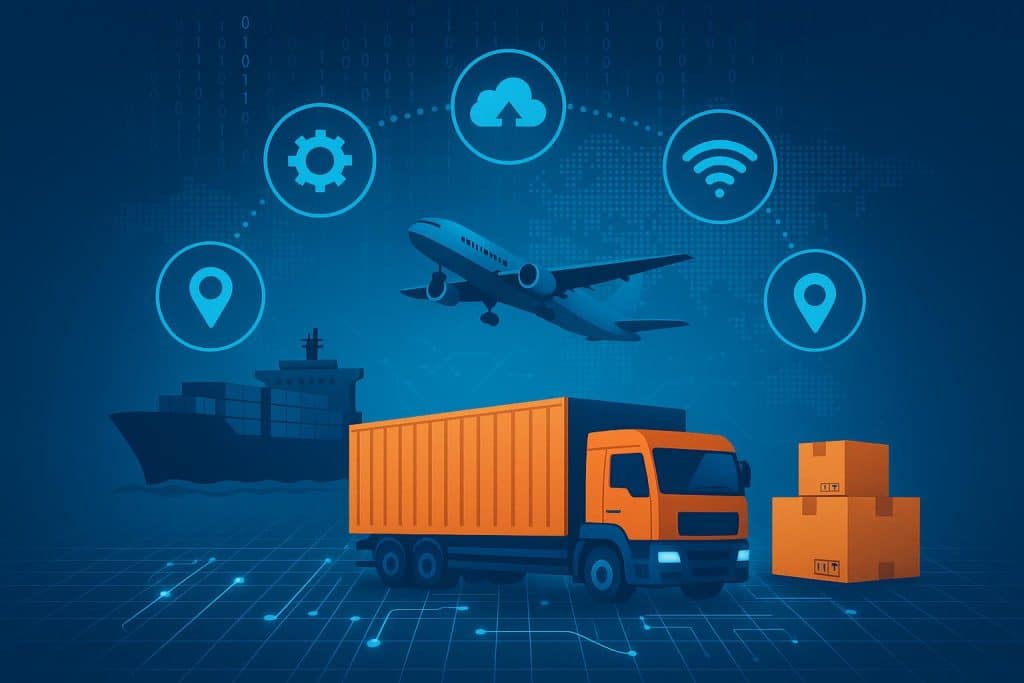
The logistics sector, which for a long time has been dominated by manual processes, paper-based documentation, and broken supply chains, is in the middle of a large-scale transition. At the root of this change is digital transformation in logistics, which in turn is enabling companies to improve performance, increase transparency, and meet the ever-growing customer demand for speed and dependability. From predictive analytics to automation and AI-powered solutions, logisticians are seeing to it that they are in the game in a very dynamic market.
What is Digital Transformation in Logistics?
Digital transformation in the field of logistics is the incorporation of digital technologies throughout the supply chain. This includes warehousing, transportation, inventory management, and customer service. The industry sees a shift towards a more efficient, responsive, and data-driven system that is based on real-time info instead of gut feel or out-of-date reports. A large part of this is the issue of reducing opex at the same time as the industry maintains high standards of service. Also, the industry sees companies put in place digital solutions that enable them to track shipments, check in on vehicle performance, and predict issues before they arise.
Enhanced Visibility Across the Supply Chain
In terms of what digital transformation does for logistics, one of the great benefits is increased supply chain visibility. The industry sees real-time tracking, which is made possible by the IoT, as a prime example of this. What the industry is able to do is track goods from the point of origin all the way to the destination. Also, the industry sees that this degree of transparency, which did not used to be the case, enables logisticians to identify issues as they come up, to better route products, and also to reduce delays. Also into the mix, there is very advanced tracking, which reports back to the customer with accurate delivery time frames and automatic updates, which in turn leads to higher customer satisfaction and loyalty.
The Power of Predictive Analytics
Another key issue is what the industry does in predictive analytics which uses past and present data to project demand, see off possible disruptions, and improve inventory levels. Through study of trends and patterns logistics companies are able to make pro active choices which in turn reduce out of stocks, minimize over stock issues and also prevent expensive delays. Also in sectors like e commerce which see great variation in demand and at the same time put great value in timely delivery predictive analytics is a great asset.
Automation Driving Efficiency
Automation is a key player in the transformation of logistics. The industry sees robotic process automation (RPA) and AI powered systems which are improving on repeatable tasks like order fulfillment, invoice issuance and in warehouse management. Also there are automated sorting and packing systems in fulfillment centers which reduce human error and increase operational efficiency. Also the industry is able to see the introduction of autonomous vehicles and drones into transport networks which promise faster and more flexible delivery in the near future.
Collaborative Digital Platforms
In this shift the industry sees the growth of digital platforms and ecosystems, which bring together various players in the supply chain. The industry has platforms that enable collaboration between suppliers, carriers, and retailers, thus creating a more agile and responsive network. These platforms also facilitate the exchange of data, real-time communication, and better coordination, which is very much the need of today’s global market. Companies that adopt these platforms see a reduction in inefficiencies; they cut costs and are also able to react faster to changes in the market.
For businesses that are out to adopt these changes, teaming up with specialized technology providers is a way to speed up the process. For example, the industry sees companies like Lumitech helping in the design and rollout of full digital solutions, which range from implementing IoT-based tracking to putting in place AI-powered analytics. Through this, the industry sees that companies that play into the digital space can smoothly transform to digital operations without breaking their present workflows.
Sustainability and Environmental Responsibility
The push for digital transformation also sees an increase in focus on sustainability and the environment. In today’s world logisticians implement eco friendly practices which include the optimization of transport routes to reduce fuel use and the use of energy efficient warehouses. Also, digital tools are used to track carbon footprints across supply chains, which in turn helps companies to comply with environmental regulations and to improve their CSR profile.
Overcoming Challenges
Despite the fact that the industry sees great benefits in it, it is still at the crossroads when it comes to digital transformation in logistics. There are legacy systems and data silos that still can’t be broken out of, and also the issue of employee resistance to change, which is being addressed. Also a great concern is that of cybersecurity, which increases as more connected devices and digital platforms are integrated into systems, thus leaving companies open to attack. To address these issues, a mix of strategic planning, workforce development, and investment in strong tech infrastructure is required.
The Future of Logistics
In the future, the industry sees the logistics sector at a stage of great innovation. The introduction of upcoming tech like blockchain and AI will transform supply chains. In the case of blockchain, it will present secure and transparent transactional documentation, which in turn will reduce fraud and improve the accountability of the network. Also, AI is expected to play a large role in better decision-making, in the optimization of processes, and in the development of smarter routing and forecasting.
Conclusion
Increased efficacy, better transparency, lower costs, and high customer satisfaction. Companies that adopt these changes will not only keep up but also put themselves in a position to do very well in a very complex and interlinked global market. As technology grows, the industry sees the rate of change in logistics only speed up, which means digital transformation is not a choice but a requirement for future success.