

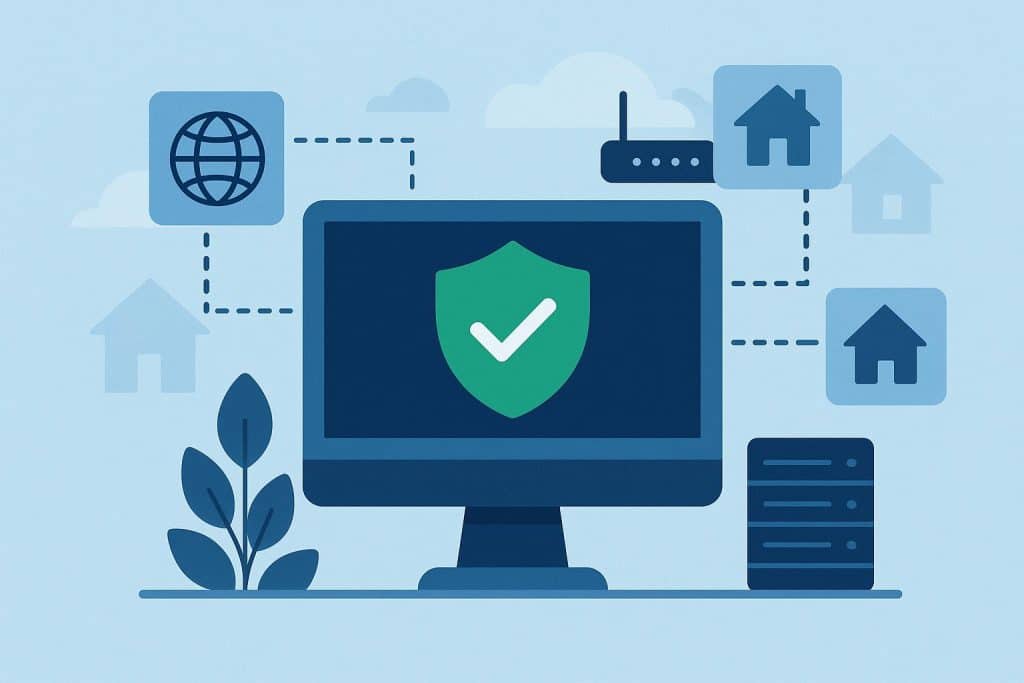
In today’s digital landscape, businesses need accurate online information to understand competitors, monitor market trends, and make informed decisions. However, collecting public web data at scale can be challenging because websites often apply traffic restrictions and automated request controls. Choosing the best residential proxy can help businesses manage these challenges while improving the reliability of their data collection processes.
What Is a Residential Proxy?
A residential proxy routes internet requests through an IP address associated with a residential internet connection. Unlike conventional datacenter proxies, residential proxies can make requests appear more similar to ordinary household browsing. This can be useful for accessing publicly available information across different websites and geographical regions.
Companies commonly use residential proxies for market research, price monitoring, advertising verification, and search engine data collection. When configured responsibly, they can support large-scale research without requiring businesses to operate a separate network of internet connections.
Key Features to Consider When Choosing the Best Residential Proxy
Not every proxy service offers the same performance or flexibility. Before selecting a provider, consider several important factors.
Global IP coverage: A large residential IP pool helps businesses collect localized information from different markets. Country, city, state, and postal-code targeting can be especially valuable when researching regional pricing or product availability.
IP rotation and session control: Rotating proxies change IP addresses between requests, while sticky sessions maintain the same IP for a specified period. The appropriate option depends on whether a project involves collecting information across many pages or maintaining continuity during a browsing session.
Performance and reliability: Consistent response times, stable connections, and high request success rates can improve productivity. Businesses should evaluate these metrics against their own workloads instead of relying exclusively on advertised performance figures.
Security and ethical sourcing: Responsible proxy providers should explain how residential IPs are obtained and how user consent is handled. Transparent sourcing and clear usage policies are important considerations for organizations concerned about privacy and compliance.
Why Consider Oxylabs Residential Proxies?
Oxylabs offers a residential proxy network designed for businesses that require flexible access to public web data. According to its official product page, the service includes more than 175 million residential IPs across 195 countries, with several geographical targeting options.
Its features include rotating and sticky sessions, support for HTTP, HTTPS, HTTP/3, and SOCKS5 protocols, and options for filtering IP versions and operating systems. The platform also supports concurrent sessions and provides integration resources for developers working with tools such as Python, Selenium, and Playwright.
These capabilities can help teams build data collection workflows for competitive intelligence, e-commerce research, and advertising verification. Available plans vary according to traffic requirements, making it important to review current pricing and estimate expected bandwidth before purchasing.
Common Applications of Residential Proxies
Residential proxies can support several legitimate business activities. E-commerce teams can compare publicly displayed prices across regions, while marketing professionals can verify how advertisements appear in different locations. Researchers can also collect publicly accessible information to identify industry trends and evaluate consumer markets.
Organizations should always respect applicable laws, website terms, privacy requirements, and access restrictions when gathering data.
Conclusion
Finding the best residential proxy means balancing network coverage, connection stability, session flexibility, transparent sourcing, and overall cost. Oxylabs is one option worth evaluating for businesses that need scalable infrastructure and location-specific data access. Comparing its capabilities with your project’s technical requirements can help you choose a solution that supports reliable, responsible, and efficient online research.