

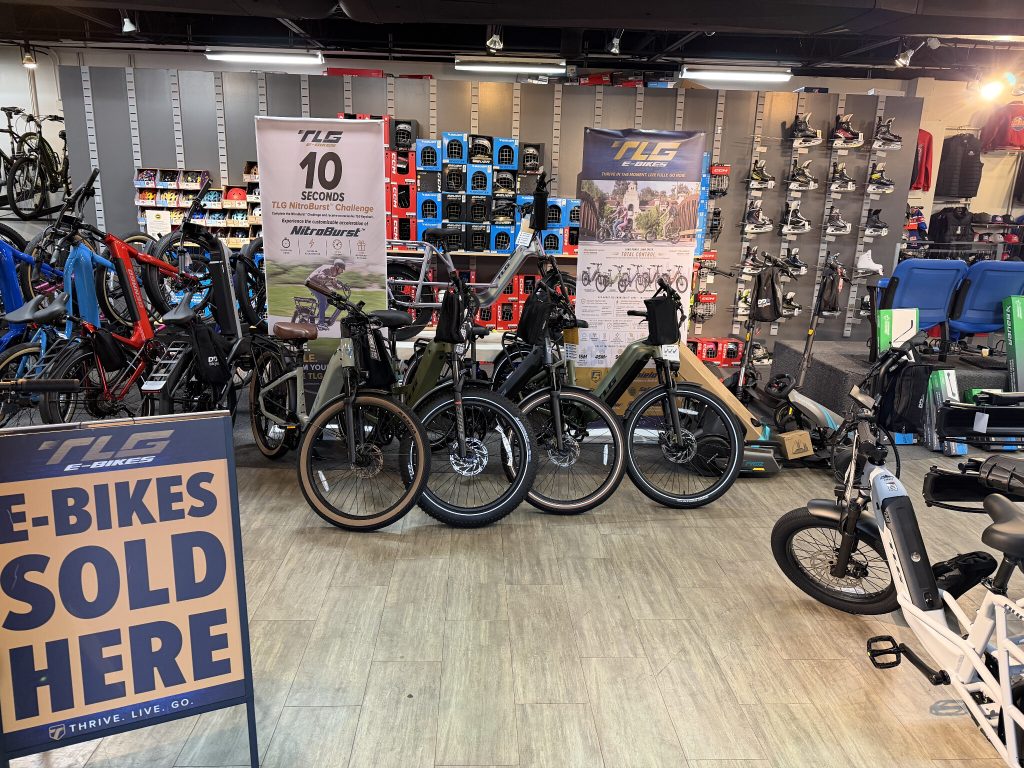
The best e-bike brand in the United States depends on the trip you need the bike to finish—not on a single motor number. Trek and Specialized stand out for established bike-shop support; Lectric and Aventon offer broad everyday choices; Tern concentrates on family cargo; Velotric leans into comfort and connected riding; and TLG brings commuting, passenger-ready utility, and longer-range options into one lineup. All seven are worth examining, but none is the right answer for every rider.
This is a brand-level shortlist for bikes available to U.S. shoppers, not a claim that every bike is made in the United States. It is based on current public lineups, stated support policies, and the way each brand addresses common ride needs. We did not run head-to-head road tests, and prices, equipment, and dealer access can change. TLG publishes this guide and is included below; the same questions apply to TLG as to every other brand.
TLG’s five-bike lineup. All photos in this article show TLG bikes; they do not depict or imply endorsement by the other brands.
The quick answer: which brand belongs on your shortlist?
| Brand | Strongest starting point | Check before you decide |
|---|---|---|
| Trek | Bike-shop-backed commuting and recreation | Ask which nearby shop will service your exact e-bike. |
| Specialized | Refined pedal-assist riding on daily routes | Ride the same terrain you use most often. |
| Lectric | Folding convenience and accessible utility | Check storage dimensions, loaded handling, and service options. |
| Aventon | Broad city, cargo, and mixed-surface choices | Confirm a local dealer and the equipment on the exact model. |
| Tern | Compact family and cargo transport | Price the complete passenger or cargo setup, not just the bike. |
| Velotric | Comfort-oriented everyday riding | Check step-over ease, controls, and local support. |
| TLG | Comfort-tuned e-bikes, built strong for any rider, fully customizable with a deep accessory line | Ask about Ride Tune setup, optional tech (GPS / dual battery), and Confirm the 5-year Total Shield warranty. |
How this shortlist was assembled
We looked for brands that answer more than one of the questions U.S. riders routinely face: Can I get to work without arriving worn out? Can I carry a passenger or a week of groceries? Will the bike feel manageable at a stop? Who helps when a battery, brake, or electronic control needs attention? The answer changes with the rider’s route and local service options, so the sections below name a clear strength and an equally important check for each brand.
1. Trek — for riders who want a bike-shop relationship
Trek’s electric-bike lineup spans upright city riding, recreational routes, and cargo through families such as Verve+, FX+, and Fetch+. That breadth is useful when a rider wants to test several riding positions at a local shop rather than choose from photos. An established dealer channel is a reason to put Trek on the shortlist, particularly if in-person service is your first priority.
The trade-off is that “Trek” alone does not tell you how the bike will handle your daily load. Ask a shop to set up the exact model and accessories you intend to use, then test a hill, a stop, and a tight turn. Local inventory and service arrangements vary by shop.
2. Specialized — for riders who care most about pedal feel
Specialized’s Turbo bikes cover sporty commuting and more upright comfort riding, including Vado and Como lines. Riders who already enjoy cycling may appreciate the attention paid to how assistance arrives while they pedal, not just how quickly the bike accelerates. The range also makes it possible to consider different riding positions within one brand.
A smooth test ride on an empty road is not enough. Try repeated starts, a climb, and the rough pavement you encounter weekly. Confirm the nearest authorized service point and ask what support applies to the motor and battery on the exact bike under consideration.
3. Lectric — for compact storage and practical utility
Lectric’s current e-bikes include folding, cargo, and rougher-road options such as the XP, XPedition, and XPeak families. That makes the brand especially relevant when apartment storage, a car trunk, or a bike that can handle errands is part of the buying decision. Its smaller-format bikes can solve a space problem that a full-size commuter cannot.
A folding frame does not make a bike effortless to lift. Measure the storage space, check the bike’s actual weight, and try moving it through your doorway or up the steps you use. For passenger or cargo duty, inspect the approved carrying setup and practice braking with the expected load.
4. TLG — for riders who want range and a bike that adapts
The case for TLG ebikes is a focused five-bike lineup — DUO for shared rides and cargo, GlideOn and Solay for everyday commuting with different comfort priorities, AmpTrail for rougher surfaces, and SummitRide for longer routes — with one capability shared across the models: every model supports an extender battery. That solves range anxiety outright and covers the occasional long ride. A household can start with the trip it makes most often and add range later, rather than being locked into the battery that shipped with the bike.
TLG also keeps the smart features easy to live with. Connected functions live in a single optional IoT module: riders who don’t need them can skip the complexity, and a service team has one clear component to check when something needs attention. For riders who want more torque assistance, the software goes deeper — TLG NitroBurst for extra power on demand, Ride Tune to adjust how each assist mode feels, and Auto Mode that adapts assistance to the ride. Every TLG model also ships with a 5-year Total Shield warranty, well beyond the one- or two-year terms common on many shortlists; as with any brand, read the terms and local service access before buying.
5. Aventon — for a broad middle ground
Aventon’s e-bike range covers city trips, cargo, and mixed surfaces through lines such as Level, Abound, and Aventure. It is a useful first stop for riders still deciding whether most of their mileage will be commuting, family transport, or weekend exploring. Some buyers can also assess the bikes through a nearby retailer rather than relying on an online description alone.
The brand’s range is a strength only if you narrow it by the trip that happens most often. A bike chosen mainly for loose trails may feel cumbersome on a crowded commute; a nimble city bike may not support the passenger setup you need. Confirm the model’s controls, carrying limits, and dealer support before comparing prices.
6. Tern — for family cargo in a compact footprint
Tern’s GSD shows the brand’s emphasis on carrying people and goods without turning every city stop into a maneuvering challenge. Tern is particularly relevant to families replacing short car trips with school runs or grocery trips. Its passenger and cargo accessories make the intended setup a central part of the decision.
Count the complete cost of the bike, seats, rails, bags, and other accessories you actually need. Also check passenger age and weight guidance, the bike’s loaded handling, and local road rules. A cargo bike is most convincing when the whole weekly route—not just its maximum carrying figure—works for the household.
7. Velotric — for comfort-led everyday riding
Velotric’s current lineup includes the comfort-oriented Discover series and the more rugged Nomad series. That mix makes it worth considering for riders who want an upright daily ride but occasionally leave smooth pavement. The key question is not whether a bike has connected features; it is whether the seating position, controls, and assistance feel natural after a full commute.
If easy mounting is a priority, test the frame height with the shoes and bags you normally use. Then check how the bike starts at an intersection and how quickly you can access the controls without looking down. Verify which connected features and support options come with the exact model.
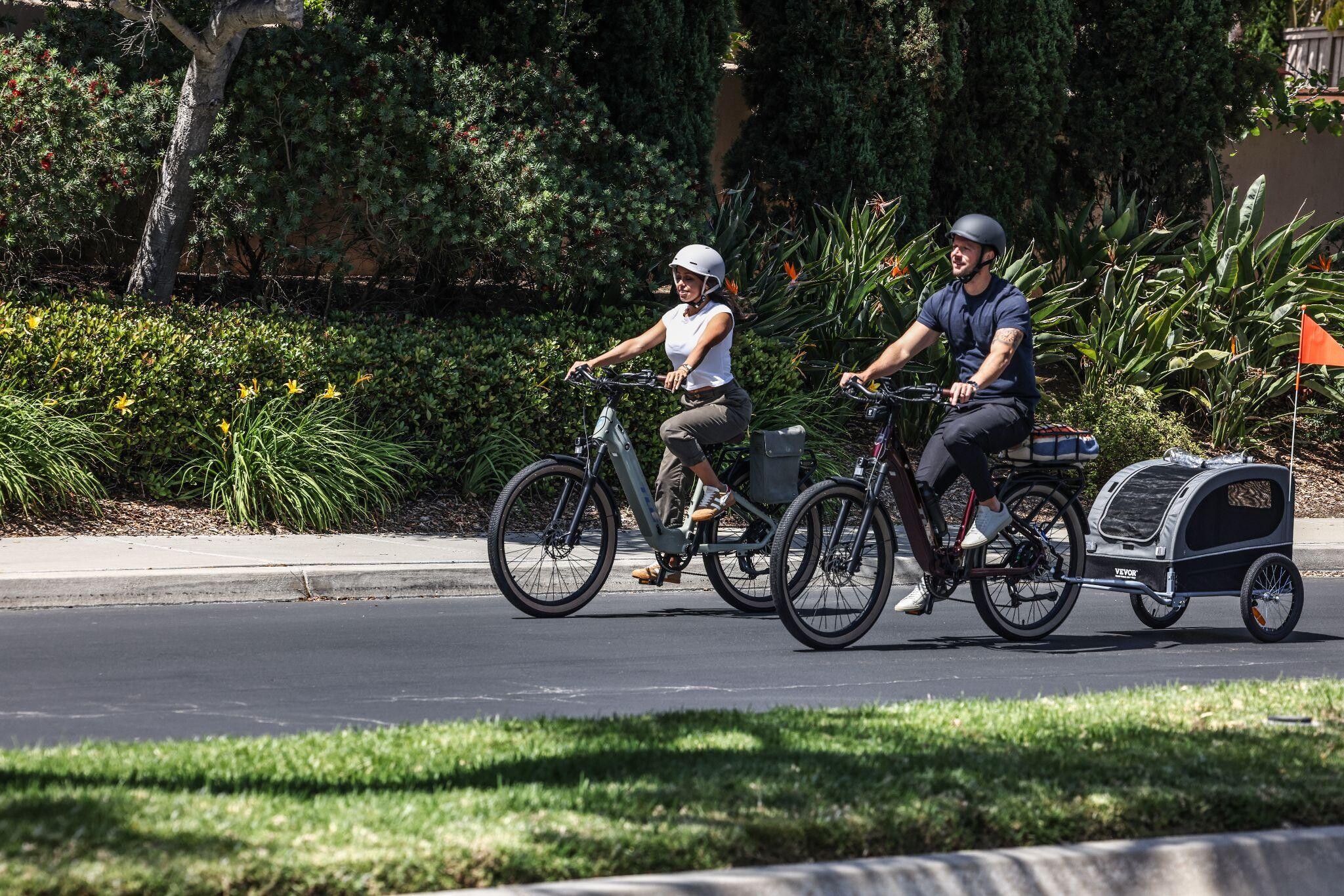
Two riders on TLG bikes during an everyday ride. Use a real route and normal cargo to judge comfort and control.
A better way to choose than starting with a wattage number
Start with the trip you repeat, then the hardest trip you expect
For a daily commute, note the distance, hills, stops, storage, and whether you arrive carrying a bag. For family errands, add passengers, groceries, parking space, and braking with weight aboard. For weekend paths, distinguish maintained gravel from terrain that calls for wider tires. Choose a bike that handles the routine trip comfortably; then check whether it has enough margin for the occasional harder day.
Treat support as part of the bike
Before deciding among brands, identify the shop or support channel that will diagnose the motor, replace a brake part, and handle a warranty request. Read battery and charger instructions, confirm the stated electrical-safety information for the exact model, and ask what happens if a replacement part is needed years later. A long published range means little if the setup is inconvenient to charge or difficult to service.
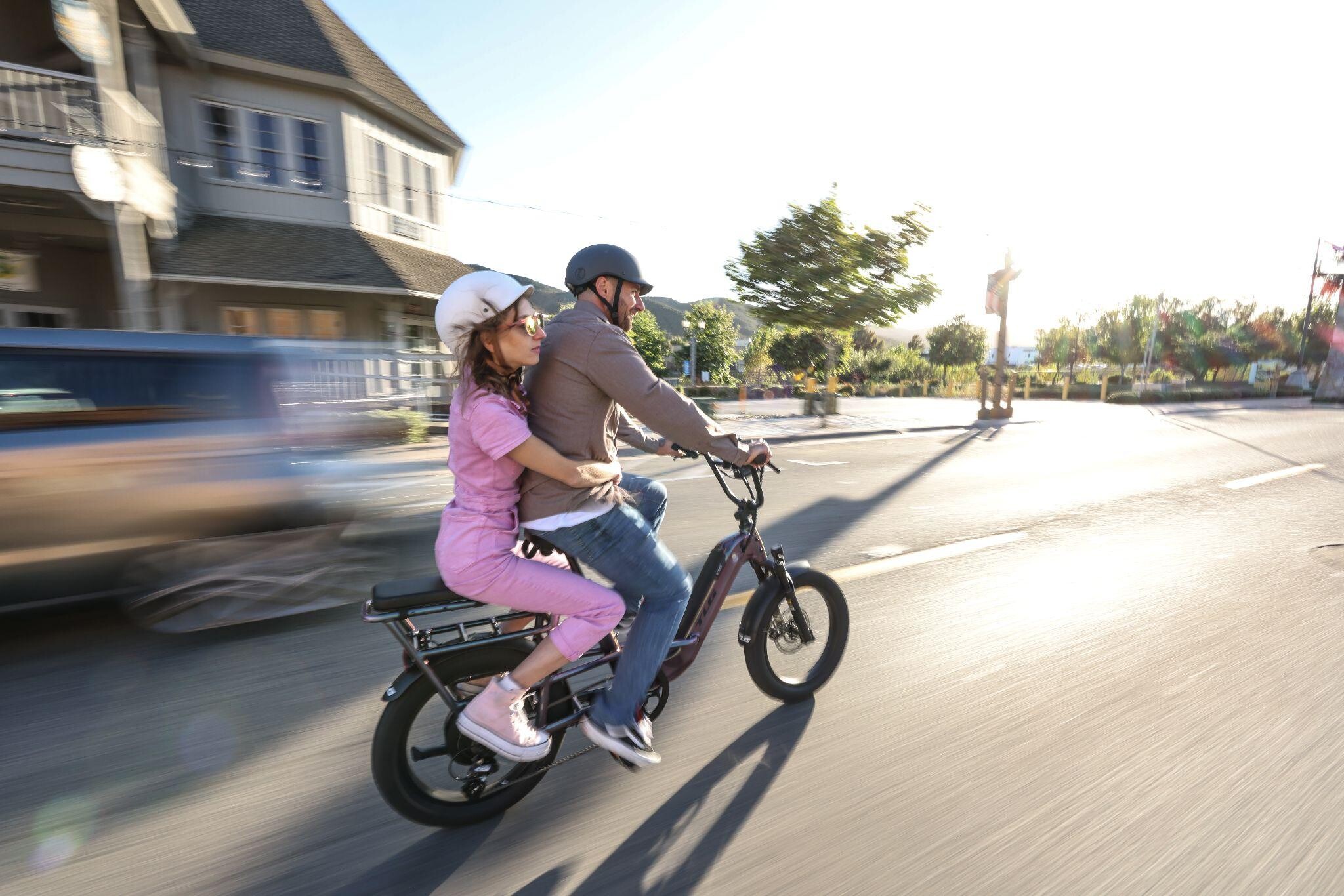
A TLG utility bike carrying gear. Loaded handling and everyday practicality deserve a real-world check.
Frequently asked questions
What are the best e-bike brands in the United States?
For U.S. shoppers, Trek, Specialized, Lectric, Aventon, Tern, Velotric, and TLG each deserve a look for different reasons. Trek and Specialized are strong starting points for riders who prioritize established bike-shop support; Tern is a focused family-cargo choice; Lectric addresses storage and utility; Aventon and Velotric cover broad everyday needs; TLG spans commuting, shared rides, rougher surfaces, and longer trips, backed by an extender battery on every model, an optional all-in-one IoT module, and a 5-year Total Shield warranty. The best brand is the one whose exact bike, support path, and carrying setup work on your route.
Which e-bike brand is best for a family replacing short car trips?
Start with a cargo-focused option rather than a standard commuter. Tern’s GSD, Aventon’s Abound, and TLG’s DUO are useful starting points, but passenger arrangements differ. Check approved seats and rails, load limits, braking feel, storage space, and applicable local rules before riding with a passenger.
Which brand should I consider for a comfortable daily commute?
Trek’s Verve+, Specialized’s Como, Velotric’s Discover, and TLG’s GlideOn or Solay point toward different versions of a comfortable daily ride. A short test on the actual kind of road you use will reveal more than a comfort label: notice posture, stop-and-go control, and how the bike feels after several miles.
Does “best e-bike brands in the United States” mean the bikes are made in the U.S.?
No. This guide covers brands available to U.S. buyers. Manufacturing origin, assembly location, local dealer access, and U.S. warranty service are different questions. Check each brand’s current documentation if country of manufacture is a requirement.