

The automation market has been growing steadily, with some companies and startups billing their products as robotization solutions. These solutions enable businesses to enhance profitability and improve productivity through automation. They can generate significant cost savings and improve customer experience, making business more profitable and helping spur business growth.
Recent advancements in machine learning and cognitive computing technologies have enabled organizations to deploy powerful, intelligent automation solutions that can learn from the actions performed and deliver more sophisticated results. Cognitive automation will help enterprises and small businesses to achieve better business performance by augmenting human capabilities. RPA tools and solutions are primarily used to automate business process tasks such as reporting, document generation, data entry, and payment processing that require not a lot of complex processing.
What is Robotic Process Automation?
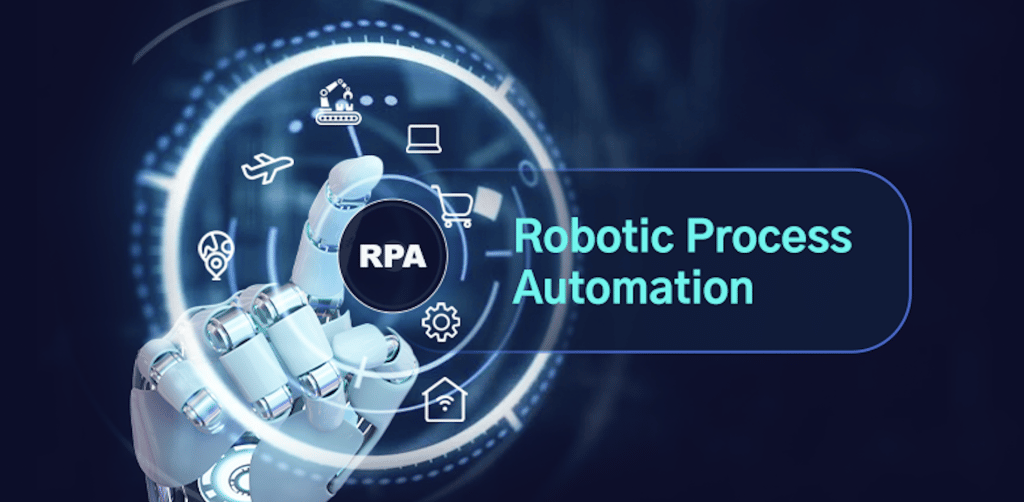
Robotic process automation (RPA) is advanced task automation powered by artificial intelligence, machine learning, and natural language processing (NLP). RPA combines advanced analytics and cognitive computing technologies, enabling businesses to streamline their workflows by automating often repetitive tasks. RPA solutions can be implemented through automation scripting, AI, and NLP solutions. They provide automated workflows built from the ground up on a cloud platform. The automation framework used in RPA applications can be designed to interact with human employees effectively without disrupting them or requiring significant upfront training. Here we will discuss some robotic process automation trends affecting the industry in 2023.
1. Generative AI
Generative AI is a new paradigm that could help advance RPA. This automation trend is a model of AI systems that learn from data, experience, or the outcomes of previous actions. They can also create new data or actions without being explicitly programmed. A machine learning model can be trained to extract the essence from data and apply it to other data sets. The generative AI model is unsupervised machine learning (ML). It can be used to produce output that was not previously provided in the input data set.
In healthcare, generative AI can automatically detect new and emerging diseases and treatments that might be useful in mitigating their effects. The AI can learn from data, predict the likelihood of different conditions, and determine which treatments have a high probability of curbing the disease. Other industries that could benefit from generative AI include manufacturing, aerospace, and defense, where AI can automate data acquisition and processing, improve system uptime and predict failures.
2. Collaborative Robots
Collaborative robots (cobots) can work autonomously with human workers. They are designed to collaborate with humans when needed, such as in warehouses, manufacturing environments, and hospitals. They can operate safely alongside humans without fencing or other physical barriers. They are task-specific, programmed to perform precise jobs such as picking and placing objects, machine tending, manual handling of items, quality inspection, or assembly using force feedback. They can be used to automate high-volume, low-value tasks safely.
Cobots are suited for multiple industries, especially those that require repetitive or hazardous tasks to be automated. These tasks can be learned, trained, and scheduled in advance, avoiding human intervention. The cobot can be used in healthcare, logistics, and manufacturing industries. They can be reprogrammed easily, move from one task to another quickly, access hard-to-reach places or handle dangerous chemicals or materials that would harm a human directly. They are specialized for single tasks. Employers do not have to worry about retraining the cobot if the task changes or shifts.
3. The Internet of Things (IoT)
The Internet of Things (IoT) is a network of physical objects connected to the internet to communicate with each other and with users. The IoT refers to the large number of devices connected to the internet. Embedded sensing devices in mobile devices, smart appliances, vehicles, wearables, and other objects can collect and transmit data. The devices and sensors can be accessed through an internet connection, even on a different network.
Businesses can use the IoT in RPA solutions for efficient data collection and processing. Your data is going to be collected, processed, and analyzed with the help of your IoT-connected devices. RPA solutions can also monitor and manage the connected devices’ condition while coordinating with other automated machines. Data processing and analysis can be achieved at a lower cost using IoT in RPA solutions because IT companies do not have to invest in people and infrastructure investments. Data collection can be done automatically, or it can be triggered manually by the system operator. This information can augment human intelligence, enabling humans to make better decisions.
4. New Financing Models
The fintech industry is evolving to the point where new, disruptive FinTech business models are being developed. The focus has shifted from disrupting traditional banks and financial services providers to providing innovative and convenient services. The automation of banking systems offer convenience and leverage emerging technologies to bring in newer sets of customers seeking greater ease, speed, and oversight regarding their finances.
Robotic process automation is one service that falls under personal finance management (PFM). The new FinTech business models are designed to provide value-added services to accommodate the needs of the growing customer base. Personalized financial intelligence enables customers to make informed decisions and experience the convenience of automated processes.
5. Chatbots in RPA
Chatbots are software programs designed to simulate intelligent conversations with human users. Chatbot technology will support customer service and sales processes within organizations. It provides natural language processing that can help businesses simplify end-user training and improve customer service by eliminating the need to pick up the phone.
Chatbots can replace basic customer service functions like email, phone, and live chat support. They act as automated assistants that can learn from human interactions to answer common questions and help overcome fundamental customer service issues. This makes the experience more seamless while reducing costs.
6. Collaboration
RPA involves a group of people working together to achieve a common goal. This can occur within the exact location or across several locations, including multiple countries. RPA tools can be used to monitor and manage processes more effectively, improving efficiency and reducing errors. By consolidating work activities and task distribution, employees can better balance workloads and handle tasks more efficiently.
RPA platforms have the potential to reduce errors, increase productivity, and leverage data to improve business processes. Combining RPA with work automation technology can bring greater efficiencies, helping to reduce costs and improve other aspects of enterprise processes. Companies looking to implement RPA should look for applications built on a platform that provides real-time data and alerts to prevent production delays or errors.
Conclusion
RPA benefits many industries by replacing manual processes with automated, machine-based operations. With these RPA trends, an enterprise can enact several strategies that can be tailored to adapt to changing business needs. Your office can be a training ground to develop new software and algorithms. Businesses should also look for RPA tools to help process information and make decisions in real-time.