

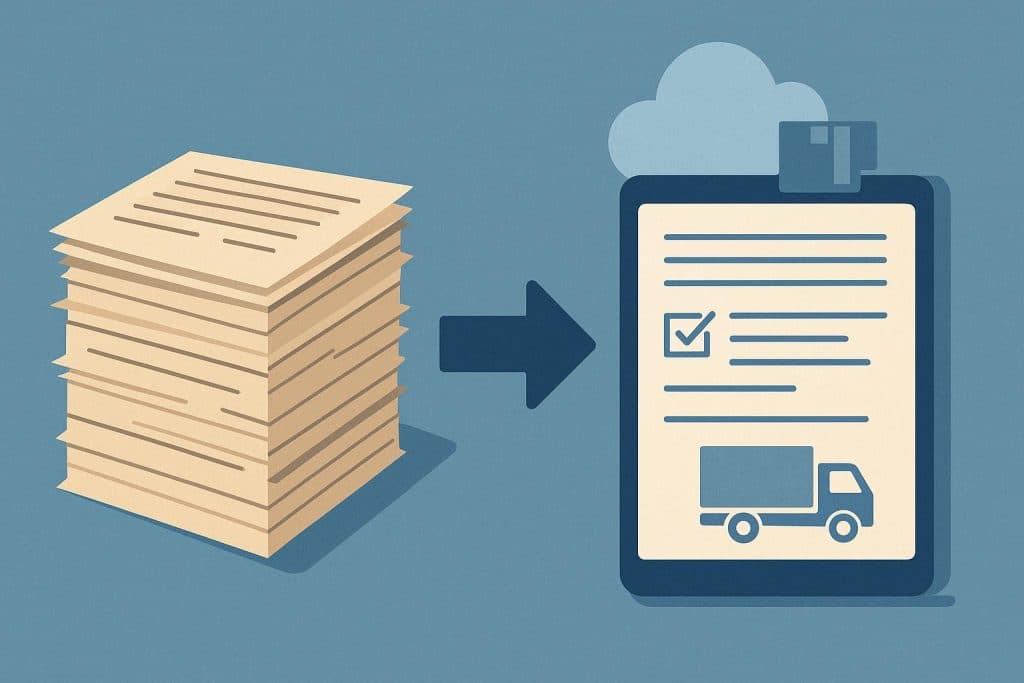
In today’s logistics environment, managing paperwork manually is more than an administrative chore — it has become a bottleneck that slows down entire operations. Paper-based workflows create delays at every step, from shipment coordination to customs clearance, because documents must be physically routed, scanned, stored, and retrieved. This friction adds up: logistics shipments often generate dozens of individual forms, and less than 1% of global document exchanges are fully digitized, leaving the vast majority of processes dependent on slow, error-prone manual handling. On average, this results in significant wasted time per shipment and contributes to costly delays across supply chains.
At the same time, the volume and complexity of logistics documents are rising fast. Companies face growing compliance demands from regulators and clients, and pressure to provide real-time access to information across partners and systems. Surveys of industry leaders show that 57% report shipment delays directly tied to documentation errors, and 42% acknowledge lost revenue opportunities because manual processes slow down onboarding or scaling during peak demand. Only about 24% have fully digitized internal document handling end-to-end, while many still rely on email and spreadsheets.
This environment makes clear that traditional paper workflows are no longer fit for purpose. The transition from paper to digital document management in logistics is not just a tech trend but a necessary business evolution. Digital tools reduce routine paperwork, speed up processes, cut costs, and improve accuracy and compliance. For example, digitally enabled systems can cut document flow volumes by up to 50% and lead to faster access and processing times that are essential for competitive performance in global logistics.
By embracing digital document management, logistics firms can keep pace with rising document volumes and compliance complexity while enabling real-time visibility and collaboration across their networks. This shift supports smoother operations and better decision-making, ensuring that logistics functions are agile, efficient, and ready for the demands of 2026 and beyond.
Understanding paper-based logistics workflows
Paper-based workflows are still common in logistics and transportation, even in digitally mature organizations. Daily operations rely on documents such as bills of lading, delivery notes, invoices, packing lists, customs declarations, proof of delivery forms, and compliance certificates. These documents move between carriers, warehouses, customs brokers, finance teams, and customers, often in physical form or as scanned files sent by email. As shipment volumes grow, managing this paperwork becomes increasingly complex and time-consuming.
The main problems with paper-driven processes are closely linked to manual handling. Documents can be lost, damaged, or duplicated, and manual data entry increases the risk of errors. Approvals often take longer because files must be physically passed between departments or searched for across shared drives. Visibility is limited, making it difficult to track document status or confirm whether critical paperwork has been received, approved, or archived. This lack of transparency complicates audits and slows down issue resolution.
These inefficiencies have a direct impact on costs, delivery speed, and customer satisfaction. Manual processing increases administrative workload and operational expenses, while errors can lead to billing disputes, customs delays, or penalties. Slow document flows often delay shipments and invoicing, affecting cash flow and delivery reliability. For customers, missing or late documents reduce trust and make it harder to get accurate, timely updates, ultimately weakening the overall logistics experience.
Step-by-step transition to digital document management
The first step is assessing current document flows across logistics operations. This means understanding what documents are created, who uses them, how they move between teams, and where delays or errors occur. Common bottlenecks include manual data entry, repeated approvals, and documents stored in multiple locations. Mapping these flows helps identify processes that should be digitized first and sets clear priorities for improvement.
Choosing the right logistics document management system is a strategic decision. The system should support core logistics documents, integrate with existing ERP or TMS platforms, and provide secure access for internal teams and external partners. Scalability, compliance features, and ease of use are equally important, as the solution must adapt to growing shipment volumes and regulatory requirements without adding complexity.
Digitization involves more than scanning paper files. Documents should be captured in structured formats, indexed automatically, and linked to shipments or transactions. Automating approvals and storage reduces manual effort and ensures that documents are routed, approved, and archived consistently. This improves visibility, shortens processing times, and reduces the risk of errors or lost files.
Training teams are essential to ensure successful adoption. Employees need clear guidelines on how to use the system, follow standardized workflows, and meet industry compliance standards. Ongoing support and clear ownership of document processes help reinforce best practices and ensure that digital document management delivers long-term operational and compliance benefits.
Business value of digital logistics document management
Digital document management significantly accelerates document processing while improving operational transparency. Automated capture, routing, and indexing reduce manual effort and shorten approval cycles, allowing teams to access accurate information in real time. With a centralized system, logistics managers gain better visibility into document status across shipments, making it easier to identify delays, resolve issues quickly, and maintain compliance.
Improved collaboration is another key benefit. Digital platforms enable carriers, warehouses, freight forwarders, and partners to work with the same up-to-date documents without relying on emails or physical transfers. This shared access reduces misunderstandings, eliminates version conflicts, and supports smoother coordination across the supply chain, especially in multi-location and cross-border operations.
Digital document management also supports scalability and long-term growth. As shipment volumes and regulatory requirements increase, automated workflows handle higher workloads without a proportional rise in administrative costs. Standardized processes and structured data make it easier to expand into new markets, onboard partners, and adapt to changing compliance demands.
Companies such as COAX Software bring practical experience to this transition by building custom logistics software solutions tailored to complex workflows. Their approach focuses on aligning document processes with real operational needs, ensuring that digital systems support efficiency, compliance, and future scalability rather than simply replacing paper with digital files.
A smarter way forward for logistics documents
Digital document management transforms logistics operations by improving control, speed, and reliability. Centralized storage, automated approvals, and real‑time access ensure that critical documents are always accurate and available, reducing errors, delays, and compliance risks. Teams can respond faster to shipment changes, regulatory requirements, and customer inquiries, creating a smoother and more predictable workflow.
Moving away from paper is more than a technological upgrade—it is a strategic step toward resilient logistics operations. By adopting digital solutions, companies gain the flexibility to scale, collaborate efficiently across partners, and adapt quickly to market demands. Embracing this smarter approach positions logistics organizations to operate more efficiently, satisfy customers, and stay competitive in an increasingly complex and fast‑moving industry.