

Key Takeaways
- Three standout Independence Day 3D printing ideas bring the festive spirit to your celebration: a front-yard “Stars & Stripes” sign for the lawn, a glossy firework centerpiece for the table, and glow-in-the-dark star favors that light up after the fireworks.
- The secret to a great print is matching the filament to the project: weather-resistant PETG Filament for outdoor decor that resists sun, heat (up to 80°C), and humidity; PLA Silk Filament for centerpieces with a glossy, eye-catching shine; and PLA Glow in the Dark Filament for favors that light up the night.
The Fourth of July is the one weekend where your driveway, porch, and dinner table all get to show off a little red, white, and blue. While everyone else is grabbing the same flags and paper plates off the store shelf, you’ve got something far better sitting in the corner of your room: a 3D printer. With the right idea and the right filament, you can turn a spool of plastic into custom decorations no one else at the party will have — pieces that look the part, last for years, and start the conversation before the first firework even goes off.
So what’s actually worth printing? The most memorable pieces are the ones that capture the spirit of the day: the bold Stars and Stripes that define the Fourth, a dazzling firework centerpiece for the table, and the warm glow that keeps the celebration going long after dark. Here are three ideas worth firing up the printer for.
What Are the Best 3D Printing Ideas for the Fourth of July?
The Front-Yard “Stars & Stripes” Sign
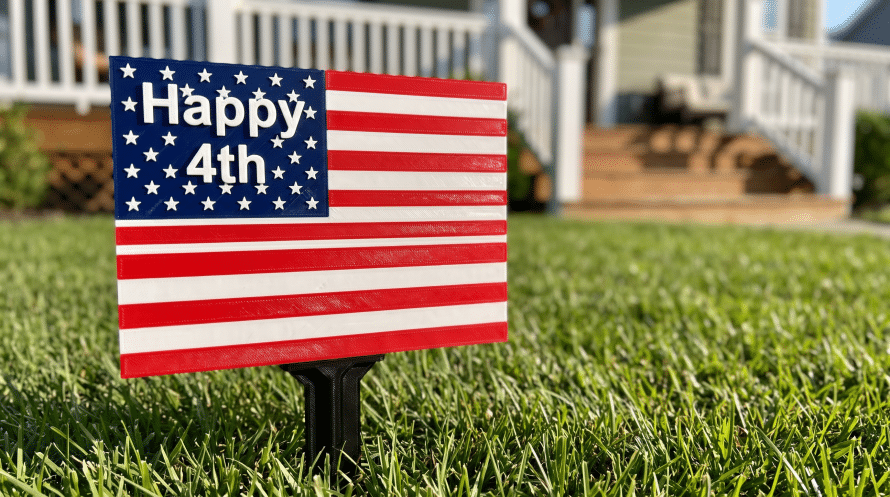
Nothing makes a front yard feel ready for the Fourth like a clean, custom sign staked in the lawn. A two-layer “Happy 4th” or “Land of the Free” sign,A two-layer “Happy 4th” or “Land of the Free” sign features white lettering raised over a blue star-field backplate. It reads beautifully from the curb, and it’s simple enough to print in a single afternoon.
How to make a 3D Outdoor Stars & Stripes sign?
Start with a simple two-part design: a star-studded backplate and the raised lettering on top. You can model basic text yourself in a free beginner tool, or grab a ready-made “4th of July yard sign” file and tweak the colors to your liking. Print the backplate and letters separately so each comes out in its own crisp color, then press-fit or glue them together for that clean, layered look. Pop it onto a printed stake, and your front-yard centerpiece is ready to plant in the lawn.
What makes a 3D printed sign last outdoors?
The key is choosing a weather-ready filament. Since the sign will be exposed to direct sun and humidity all day, it needs a material that can withstand the heat. A standard filament may soften or warp over time, whereas a weather-resistant filament keeps its shape and color throughout the summer.
The Glossy Firework Centerpiece
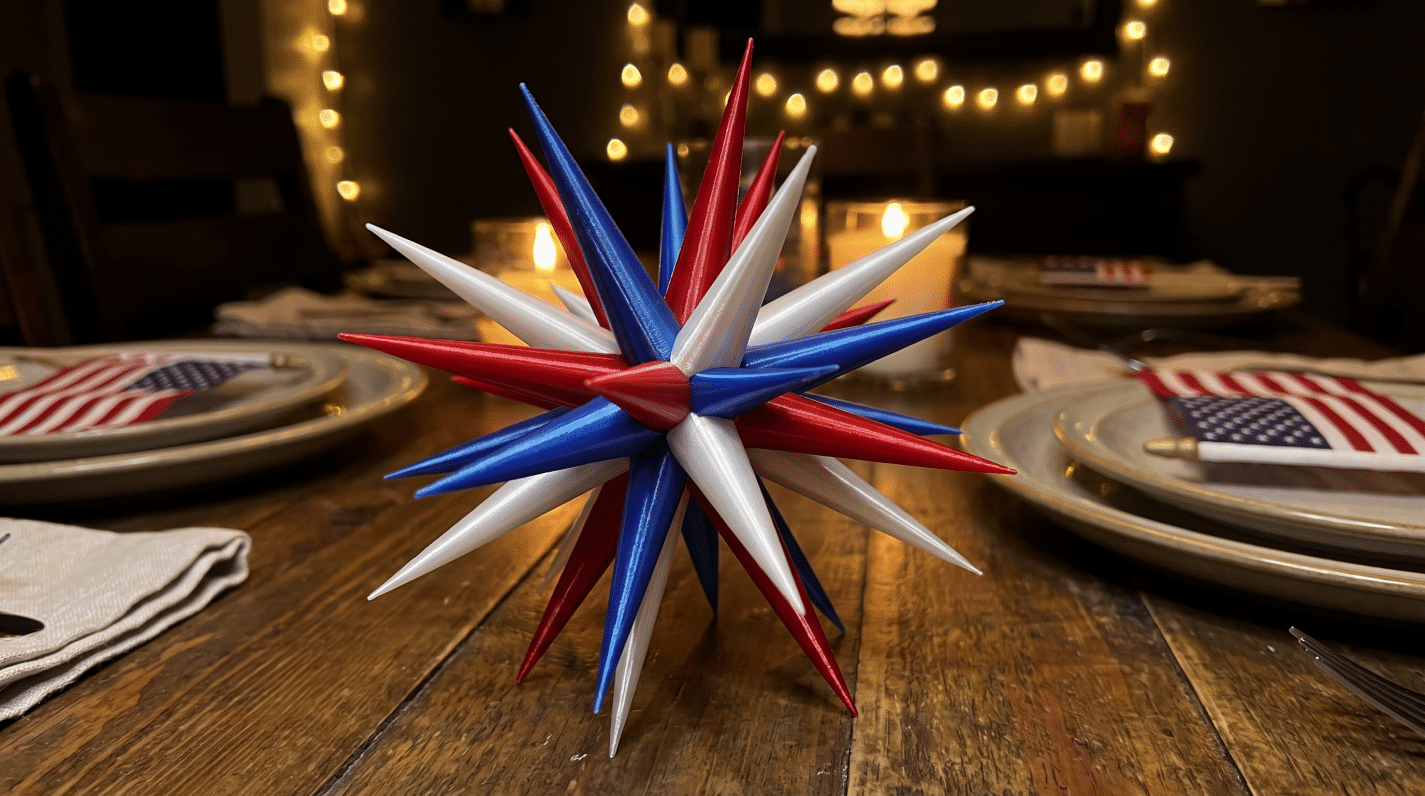
This is the piece guests pick up and ask about. A layered “firework burst” or a clustered set of stars, printed in high-gloss red, white, and blue, becomes the natural anchor of your dinner table or dessert spread: sleek, eye-catching, and uniquely yours.
How to Make a Glossy 3D Print Centerpiece?
Choose a firework or starburst design, ideally one that prints in a single piece. The real difference comes from the filament: a glossy silk material gives the surface a rich sheen that catches candlelight and string lights beautifully. For a multi-color burst, you can switch filament colors partway through the print, or simply print a few pieces in different shades and fit them together.
What colors work best for a Fourth of July centerpiece?
A classic red, white, and blue palette is hard to beat. Printing each element in a different shade, or combining all three in one piece, gives the centerpiece a bold, festive look. Glossy silk filaments make these colors especially vivid, giving the finished piece a rich, saturated look.
Glow-in-the-Dark Party Favors
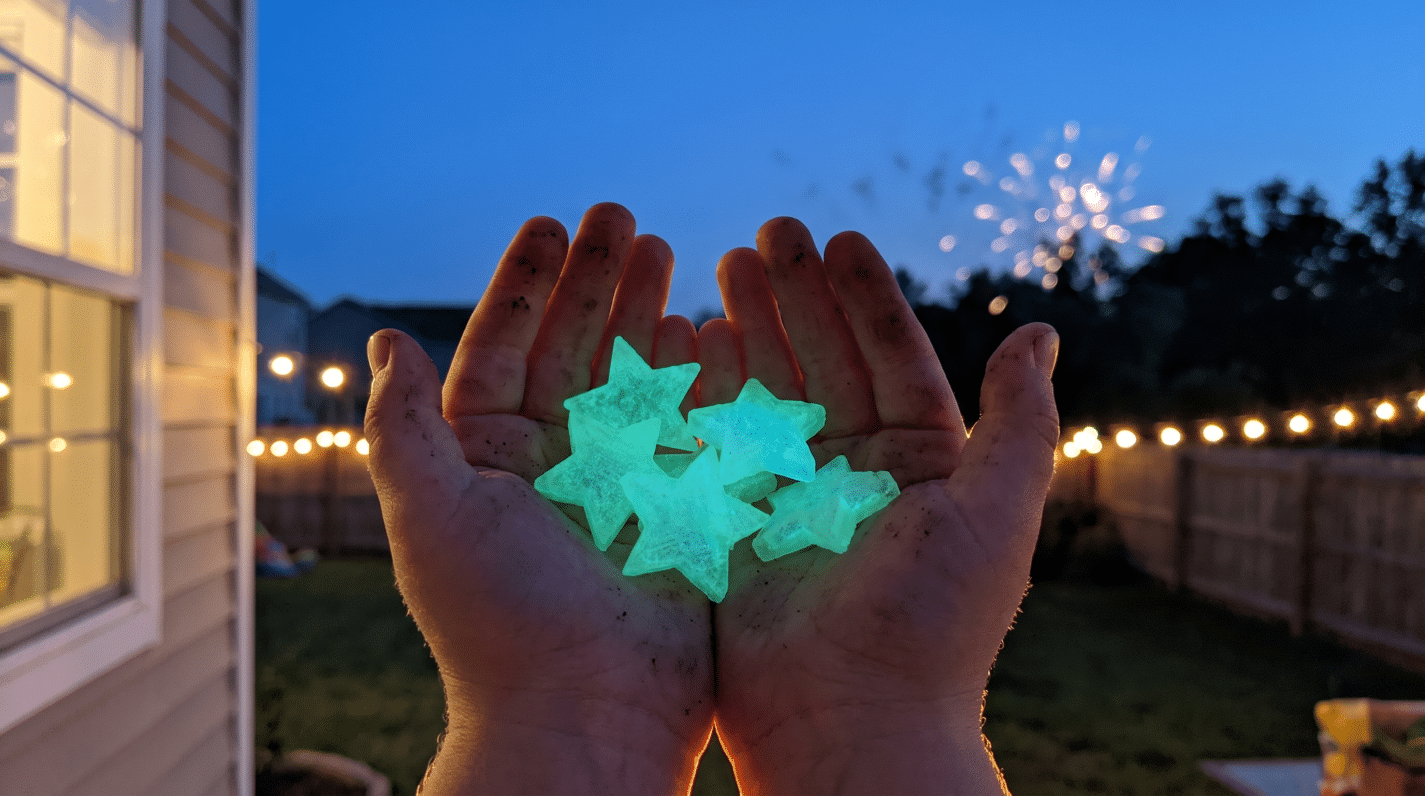
Independence Day truly comes alive after dark, and the favors that steal the show are the ones that glow. Print a batch of little stars, bracelets, or mini-flag charms, leave them to soak up the light on a windowsill or under the porch lamp, then hand them out just as the first fireworks light up the sky. Watch the kids’ faces light up as those tiny stars start to glow in their hands, a small moment that makes the whole night.
How to Make Glow-in-the-Dark Party Favors?
Pick a small, simple shape such as a flat star or charm, which lets you crowd 20 to 30 of them onto the print bed to run in one batch. If you’d like to string them onto necklaces or keyrings, just add a small loop to the design before printing. Once they’re done, give them a few minutes under a bright light to charge, and they’re ready to glow all evening.
What makes a 3D print glow all night?
The key is a true glow-in-the-dark filament. The glow effect comes from special pigments in the material that absorb light and release it slowly in the dark. A high-quality filament absorbs light more efficiently and gives off a brighter glow that lasts well into the night, keeping the fibers luminous throughout the evening.
Which CaiLab Filament Should You Use for Each Project?
A great design only delivers when it’s printed in the right material. Below is the CaiLab filament best suited to each project, and why it’s the right pick.
Best Filament for Outdoor Prints: CaiLab PETG
CaiLab PETG Filament is the right pick for outdoor signs. Built to handle sun, heat, and humidity, PETG keeps a print’s edges crisp and its lettering sharp through a full season outdoors.
Beyond weathering the elements, CaiLab PETG is also a strong performer on large, flat prints. Its low-warp formula gives large pieces better dimensional stability, so a wide backplate stays true and flat rather than curling at the corners. With 29 colors to choose from, including deep reds, blues, and crisp whites, you can print the full Stars & Stripes palette without reaching for paint.
What’s the difference between CaiLab PETG Filament and PLA Filament for outdoor prints?
The main difference is heat and moisture tolerance. PETG withstands temperatures up to 80°C and resists humidity well, which suits it to outdoor use, while PLA softens at around 60°C and is better kept to indoor or decorative prints. Both are easy to print, so the right choice simply depends on where the finished piece will live.
Does CaiLab PETG Filament hold up to rain and UV exposure?
Yes. PETG is naturally moisture-resistant and handles outdoor humidity and rain well without cracking or clouding. For prints left outside long-term, choosing a UV-stable color and storing them over winter helps them keep their finish for years.
Best Filament for a Glossy Centerpiece: CaiLab PLA Silk
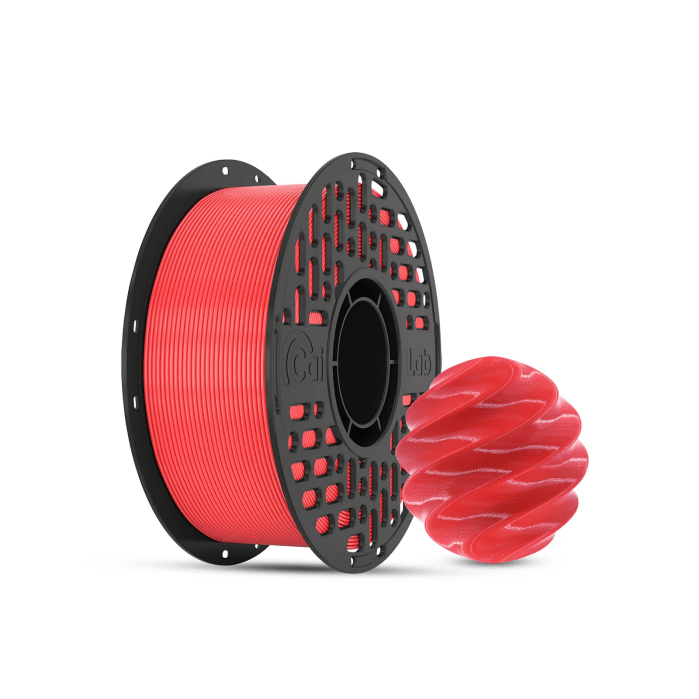
CaiLab PLA Silk Glossy Filament is what gives the centerpiece its standout shine. Built on an enhanced PLA+ silk formulation, it produces an ultra-high, almost ceramic-like gloss straight off the printer — a finished, premium look with no sanding, coating, or post-processing.
The glossy surface does more than catch the eye: its reflective sheen helps disguise the fine layer lines that show up on a matte print, so even a quick, beginner-level print can look polished and professional. With 17 rich, consistent colors to choose from and easy, low-warp printing, it’s an effortless way to turn a simple model into a showpiece.
What is CaiLab PLA Silk Glossy Filament best used for?
Silk PLA is best suited to decorative and display pieces: centerpieces, vases, ornaments, figurines, and gifts, where appearance matters most. Its glossy finish gives these projects a premium, store-bought look, while its PLA+ base provides enough durability for regular handling and storage.
What nozzle temperature does CaiLab PLA Silk Glossy Filament need?
Around 210–240°C. Printing toward the higher end of that range, with reduced part cooling, helps the surface stay smooth and bring out the maximum gloss. A smooth PEI or glass bed also produces a clean finish on the underside.

Best Filament for Glow Favors: CaiLab PLA Glow in the Dark
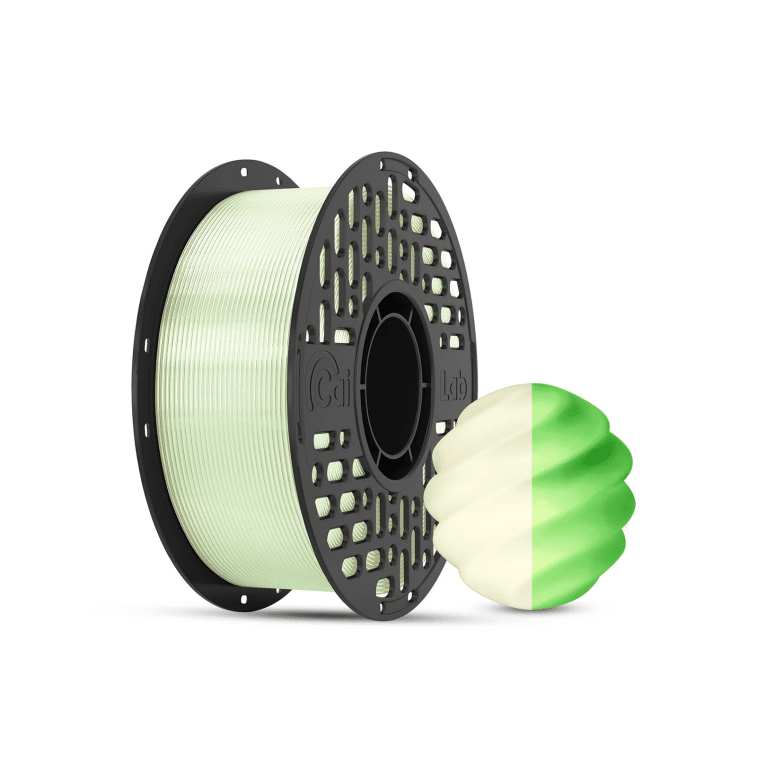
CaiLab PLA Glow in the Dark Filament is made for a holiday that peaks after dark. Infused with phosphorescent additives, it charges quickly under sunlight or a UV lamp and then glows brightly for hours, enough to last through a full evening of celebration.
It comes in two options to suit the occasion: a classic Green that glows a vivid green in the dark, and a multi-color Glow Rainbow for a more playful effect. Both print as easily as standard PLA, with reliable results across a full batch. They’re also available in 200g and 1kg spools, so a small run of favors won’t require a full reel.
How long does CaiLab PLA Glow in the Dark Filament glow for?
It can glow for several hours on a full charge. Giving it a few minutes under sunlight or a UV lamp beforehand ensures the brightest, most lasting glow.
Is CaiLab PLA Glow in the Dark Filament safe for children?
Yes. CaiLab Glow in the Dark PLA is non-toxic, ROHS compliant, and odorless to print, making it a safe choice for children. Made from an eco-friendly, plant-based PLA, it’s well suited to toys, party favors, night lights, and other kid-friendly prints.
Conclusion
Independence Day is at its best when it feels personal — and a few well-chosen prints are an easy way to put your stamp on the celebration. Whether you stake a Stars & Stripes sign in the lawn, set a glossy firework centerpiece on the table, or send the kids off with star favors that glow into the night, each project turns a simple spool of filament into a decoration with a story behind it.
Regardless of the project, the final result ultimately comes down to the filament. Match the material to the project — PETG for the outdoors, PLA Silk for a showpiece finish, PLA Glow in the Dark for the after-dark fun — and each piece will look its best from the first firework to the last. Best of all, these decorations are reusable, ready to come back out for years of Fourth of Julys to come
Ready to start printing? Explore the full range of CaiLab 3D printing filaments to find the right color and material for every project — and make this Independence Day one to remember.
Frequently Asked Questions
Can beginners print 3D Independence Day decorations?
Yes. Beginners should start with PLA+, the most forgiving filament to print. It uses a low temperature, warps minimally, and extrudes smoothly. Simple projects like flags, stars, and yard signs are ideal first prints and need no painting if done in colored filament.
How early should I start printing Independence Day decorations?
Start at least two to three days before July 4th. This gives you time to print multiple pieces, switch filament colors between red, white, and blue, and reprint if any print fails.
Are 3D-printed Fourth of July decorations reusable?
Yes. When printed in durable filament like PETG and stored properly, 3D-printed Independence Day decorations can be reused for many years, making them more cost-effective and sustainable than disposable store-bought decor.
Do I need a special 3D printer to make Independence Day decorations?
No. All of these projects print on a standard FDM 3D printer, the most common type for home use. CaiLab’s PLA+, PLA Silk, PLA Glow in the Dark, and PETG filaments are all compatible with FDM printers and use the standard 1.75mm diameter, so no special equipment or upgrades are needed to get started.
Do I need to know 3D modeling to make these decorations?
Not necessarily. Many Independence Day designs — stars, flags, signs, and ornaments, are available as ready-made files you can download and print directly. Basic edits, like changing colors or scaling a model up or down, can be done in beginner-friendly slicer software without any modeling experience.