

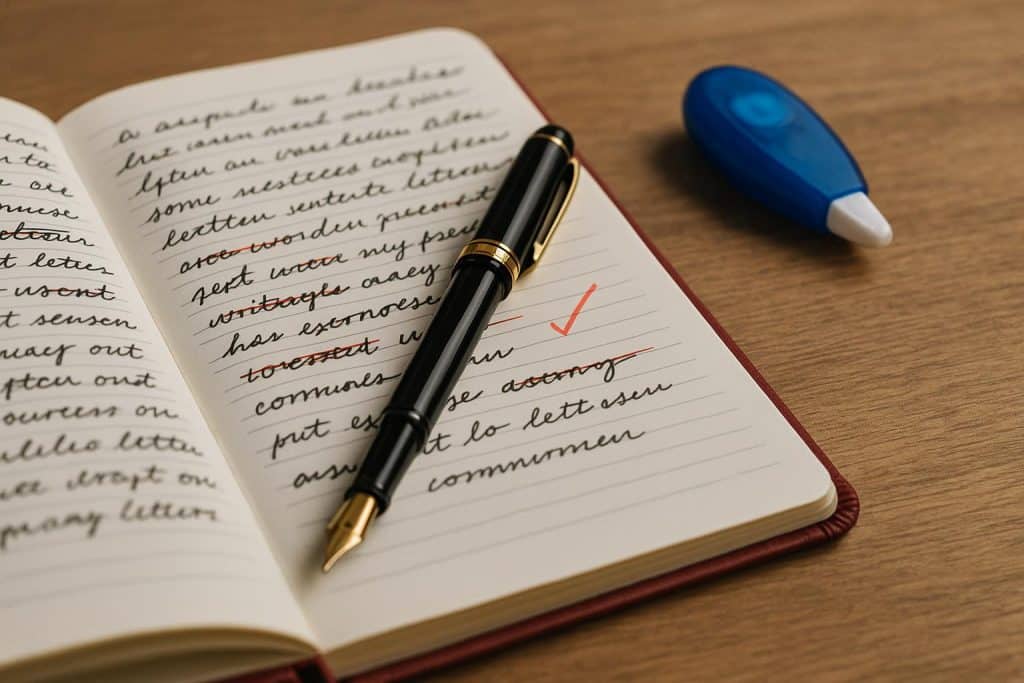
Most people think the hardest part of writing is getting the first draft onto the page. Once the document is complete, it’s easy to assume the work is done. In reality, some of the most important improvements happen after the first draft. Whether you’re preparing a university assignment, a research paper, a business proposal, or an important email, reviewing your work with a grammar checker can help identify issues that are difficult to spot while writing.
Writing and editing are two different skills. Writing is about expressing ideas, while editing is about making those ideas clearer, more accurate, and easier to understand. Even experienced writers rely on careful editing before publishing or submitting their work. Using an online grammar checker alongside manual proofreading provides another layer of review, helping writers catch grammar, punctuation, sentence structure, and clarity issues before their work reaches readers.
Writing and Editing Serve Different Purposes
Many people treat writing and editing as the same activity, but they require different ways of thinking.
During the writing stage, the goal is to capture ideas without worrying too much about perfection. This allows creativity to flow and prevents small corrections from interrupting the writing process.
Editing comes later. It focuses on improving what has already been written by removing unnecessary words, correcting mistakes, strengthening sentence structure, and making the document easier to read.
Separating these two stages often produces better results than trying to write and edit at the same time.
Why We Miss Our Own Mistakes
Have you ever noticed an obvious mistake immediately after sending an email?
It happens because our brains tend to read what we intended to write instead of what actually appears on the page.
When you’ve spent hours working on the same document, you become familiar with every sentence. Instead of processing each word carefully, your brain fills in missing information and overlooks small errors.
This is one reason editing feels much easier after taking a short break. Returning to the document with fresh attention allows you to notice awkward wording, repeated phrases, missing punctuation, and sentences that no longer sound as clear as they did while writing.
Good Editing Goes Beyond Grammar
Correct grammar is important, but editing involves much more than fixing language mistakes.
A thorough review should also improve:
- Sentence flow
- Paragraph structure
- Word choice
- Clarity
- Consistency
- Readability
- Overall organization
For example, a document may contain perfect grammar but still feel difficult to follow because ideas jump from one topic to another without smooth transitions.
Likewise, a report with accurate spelling may still confuse readers if technical terms are used inconsistently or key information is buried inside long paragraphs.
Effective editing looks at the document as a whole rather than focusing only on individual sentences.
Different Documents Need Different Editing
The way you edit should depend on what you’re writing.
Students often need to check whether assignments answer the question clearly and follow the required structure.
Researchers should pay close attention to logical flow, technical accuracy, consistency in terminology, and formal academic language.
Professionals may focus on clarity, brevity, and ensuring reports or emails communicate the intended message without ambiguity.
Content creators often review readability, engagement, headings, and paragraph length to make articles easier to follow online.
Although each document serves a different purpose, every piece of writing benefits from careful editing before it reaches readers.
Common Editing Mistakes
Many writers spend their editing time looking only for spelling errors.
As a result, they often overlook problems that have a greater impact on readability.
Some of the most common issues include:
- Sentences that are longer than necessary.
- Repeating the same idea in different words.
- Switching between present and past tense.
- Inconsistent formatting.
- Weak transitions between paragraphs.
- Missing words that spell check cannot detect.
- Overusing passive voice where active voice would be clearer.
- Introducing abbreviations without explaining them.
Finding these issues takes more than a quick glance. It requires reading the document from the perspective of someone seeing it for the first time.
A Simple Editing Process That Works
Editing doesn’t have to be overwhelming. Breaking it into smaller steps makes the process more effective and helps you focus on one aspect of your writing at a time.
Start by reviewing the overall structure. Ask yourself whether the ideas are presented in a logical order and whether each section contributes to the main purpose of the document.
Next, read through each paragraph carefully. Check if every paragraph focuses on a single idea and flows naturally into the next. If a sentence feels difficult to read, consider rewriting it using simpler language instead of adding more words.
After that, review grammar, punctuation, spelling, and sentence structure. This is often where writing tools can help identify mistakes that are easy to overlook during manual review.
Finally, complete one last read without making any changes unless something stands out immediately. This final review helps you experience the document as your readers will.
An Editing Checklist Before You Submit
Before sharing any document, take a few minutes to ask yourself these questions:
- Does the introduction clearly explain the purpose?
- Are ideas presented in a logical order?
- Is every paragraph focused on one main point?
- Are grammar and punctuation correct?
- Have repeated words or unnecessary phrases been removed?
- Are headings and formatting consistent?
- Are names, dates, figures, and references accurate?
- Does the document use the right tone for the intended audience?
- Have you read the document one final time from beginning to end?
A simple checklist reduces the chances of overlooking small but important details.
Editing for Different Audiences
Not every reader has the same expectations.
Students should focus on following assignment requirements, maintaining a clear structure, and ensuring that arguments are supported with relevant evidence.
Researchers need to pay close attention to precision, consistency, and readability. A well-written manuscript makes it easier for reviewers and readers to understand the research without being distracted by language issues.
Professionals often need writing that is concise and actionable. Reports, proposals, emails, and presentations should communicate information clearly while maintaining a professional tone.
Content creators benefit from checking readability, paragraph length, headings, and transitions to keep readers engaged from beginning to end.
Understanding who will read your document makes editing more purposeful.
Don’t Rely on One Editing Method
No single editing technique catches every mistake.
Reading the document silently is useful, but reading it aloud often reveals awkward phrasing that may otherwise go unnoticed.
Changing the font size or viewing the document on another device can also make familiar text appear new, making mistakes easier to identify.
If time allows, asking a colleague, classmate, or friend to review the document can provide valuable feedback because they approach the content without the familiarity bias that affects the original writer.
Combining manual proofreading with digital writing tools often produces better results than relying on either method alone.
Editing Is a Skill That Improves With Practice
Strong editing is not something people master overnight.
The more documents you review, the easier it becomes to recognize patterns in your own writing. You may notice that you frequently write long sentences, overuse certain words, or make the same punctuation mistakes.
Recognizing these habits helps you improve future drafts before the editing stage even begins.
Many experienced writers spend almost as much time editing as they do writing because they understand that careful revision strengthens every document.
Final Thoughts
Good writing rarely happens in a single draft. Behind every well-written assignment, research paper, report, proposal, or article is a thoughtful editing process that improves clarity, accuracy, and readability.
Taking the time to review grammar, sentence structure, consistency, and overall flow helps ensure that your ideas are communicated effectively. Whether you’re a student preparing coursework, a researcher working on a manuscript, a professional writing reports, or a content creator publishing online, careful editing is one of the simplest ways to produce stronger, more credible writing.
Instead of treating editing as the final task on your checklist, think of it as an essential part of the writing process. The extra time you invest before submitting your work can make a lasting difference in how your ideas are understood and remembered.