

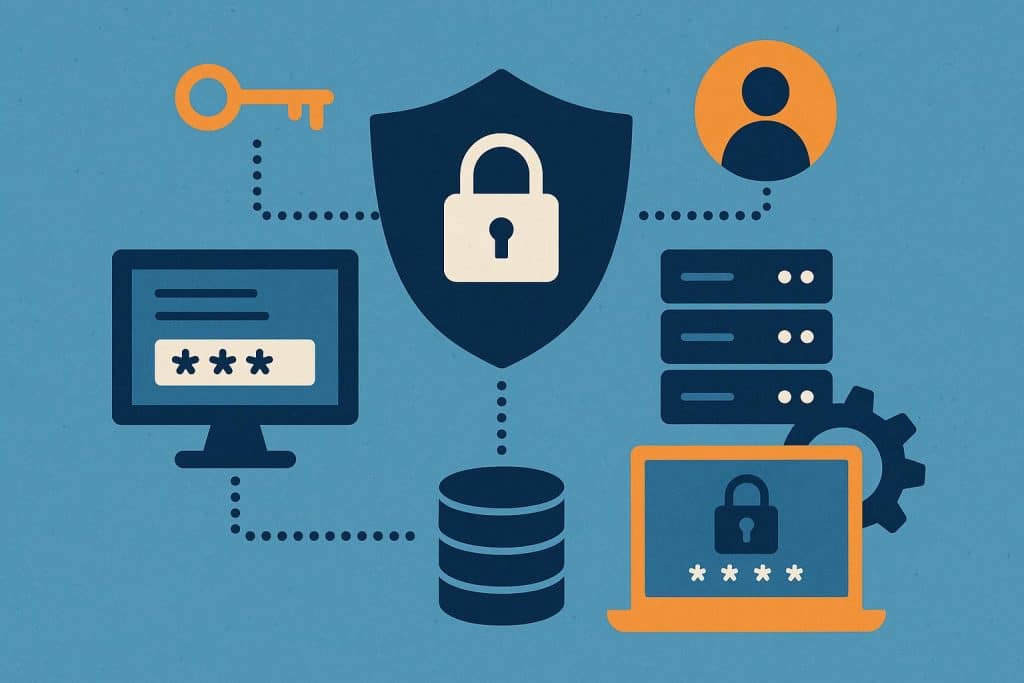
If you work anywhere near IT or cybersecurity, you’ve probably heard the term PAM tossed around more often lately. It stands for privileged access management, and it’s quietly become one of the more talked about categories in business security. But for anyone outside the tech bubble, the phrase can sound abstract. What does it actually mean, and why does it matter to a company’s day to day operations?
The Problem PAM Was Built to Solve
Every company, no matter how small, has a handful of accounts that carry more power than the rest. Think IT admins who can install software across the network, database managers who can view or edit sensitive records, or automated service accounts running quietly in the background with permissions nobody remembers granting them. These are privileged accounts, and they are exactly what attackers hope to find.
The reason is simple. A regular employee account might expose one inbox or one shared drive if compromised. A privileged account can expose everything. Once someone gets hold of admin level credentials, they can move through a network largely unnoticed, disable security tools, or quietly siphon off data for weeks before anyone catches on.
Why Spreadsheets and Shared Logins Aren’t Enough
For a long time, many businesses handled this informally. A password here, a shared login there, maybe a spreadsheet tracking who had access to what. That approach might work when a company has a handful of servers and a small IT team. It falls apart fast once the business grows, adds cloud tools, brings on contractors, or starts juggling dozens of vendor logins.
This is where a proper PAM solution earns its keep. Instead of accounts holding onto elevated permissions indefinitely, a good system grants access only when it’s genuinely needed, for only as long as it’s needed, and logs exactly who used it and why. That single shift, moving away from permanent standing access, closes off one of the most common paths attackers use to get deep into a network.
What a Modern PAM Setup Actually Looks Like
A solid PAM solution usually brings together a few moving parts. There’s a credential vault, so passwords for sensitive systems aren’t scattered across sticky notes or spreadsheets. There’s session monitoring, so security teams can see what’s happening when someone logs in with elevated rights. And there’s often a request and approval workflow, so access has to be justified before it’s granted rather than handed out by default.
Companies like Heimdal have built out a PAM solution that pulls these pieces together into a single, more manageable system, which has made PAM far less painful to adopt than it used to be. What once required significant manual effort and dedicated staff can now largely run on autopilot, with alerts and approvals handled through automation rather than a person checking spreadsheets by hand.
It’s Not Just About Stopping Hackers
PAM also solves a quieter, less dramatic problem. Companies often lose track of who has access to what. An employee changes roles and keeps old permissions. A contractor finishes a project and their login never gets shut off. None of this is malicious, but it adds up to a pile of forgotten doors left unlocked. A PAM solution gives IT teams a clear, current picture of who can access sensitive systems, which makes cleaning up that mess a lot more manageable.
There’s also a growing compliance angle. Standards like ISO 27001 specifically call out privileged access as something organizations need to control and document. That means PAM is no longer just a security nice to have. In many industries, particularly finance and healthcare, it’s edging closer to a basic expectation auditors will ask about directly.
The Bottom Line
Privileged accounts will always exist. Somebody has to be able to install software, manage databases, and configure networks. The goal isn’t to eliminate that access, it’s to make sure it’s tightly controlled, temporary where possible, and fully visible to the people responsible for keeping systems safe. As IT environments keep sprawling across cloud platforms and third party tools, that visibility is becoming less of a luxury and more of a baseline requirement for staying secure.