

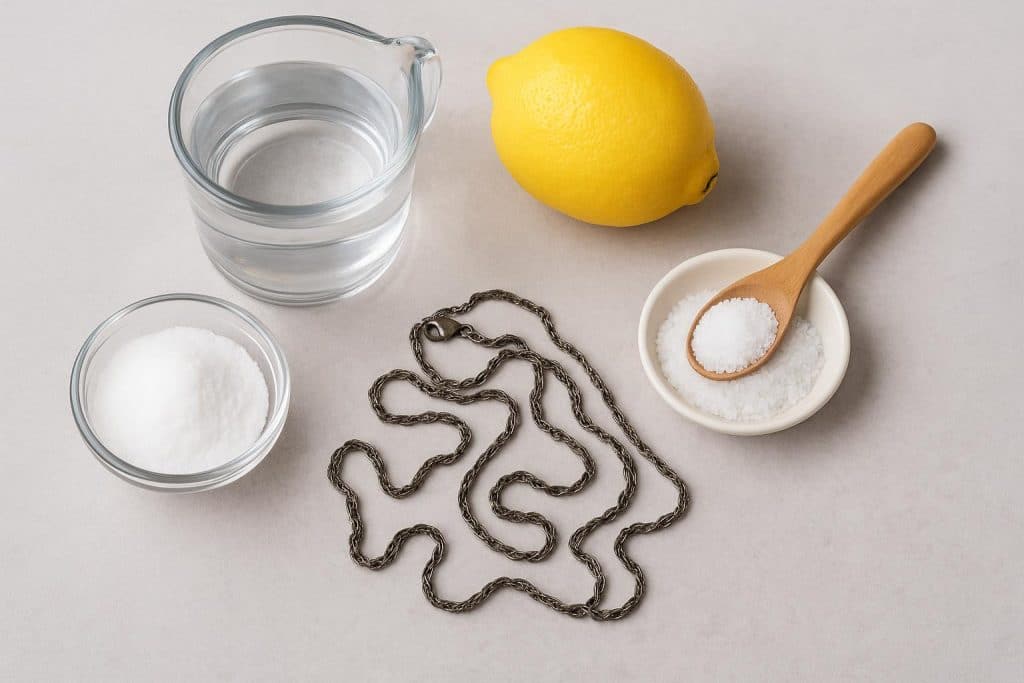
Sterling silver chains can lose brightness after contact with air, moisture, sweat, chlorine, perfume, and household cleaners. That dull gray film is tarnish, a surface reaction rather than deep damage. Gentle home care can often restore shine without harsh scrubbing. Four common ingredients, used with patience and soft cloths, help lift residue while protecting delicate links from bending, scratching, or weakening.
1. Baking Soda
Baking soda works because its fine texture loosens grime and light tarnish. Before any method begins, the chain should be checked for loose clasps, stones, or fragile solder points. Readers asking how do I clean a sterling silver chain often need a mild first step, and baking soda offers controlled cleaning without strong chemical exposure.
Mix a small spoonful with enough water to form a soft paste. Apply it with a lint-free cloth, then rub along the chain in short strokes. Avoid heavy pressure, since sterling silver is softer than many metals. After thirty seconds, rinse fully under lukewarm water and dry each link with a clean towel.
2. Mild Dish Soap
Mild dish soap is best for everyday buildup. Skin oils, lotion, dust, and sunscreen can settle between links before visible tarnish appears. A gentle wash removes that layer, which helps the chain reflect light again.
Add a few drops to a bowl of warm water. Place the chain inside for five minutes, then move it around with fingertips. A soft toothbrush can reach small gaps, but the bristles should barely press the surface. Rinse well, then pat dry. Any moisture left behind can invite fresh discoloration.
2.1 Best Time to Use It
Soap and water suit chains that look dull but not blackened. This method also works after exposure to sweat, salt air, or beauty products. Regular washing every few weeks can reduce the need for stronger treatments later.
3. Aluminum Foil
Aluminum foil helps reverse tarnish through a simple reaction. It works with hot water and baking soda, pulling sulfur compounds away from sterling silver. This approach is useful for chains with even darkening across many links.
Line a glass bowl with foil, shiny side up. Add hot water and one spoonful of baking soda. Lay the chain flat so it touches the foil. Leave it for three to ten minutes, depending on discoloration. Remove the chain, rinse carefully, and dry without delay.
3.1 Safety Notes
This bath should not be used on chains with pearls, porous stones, glued accents, or antique finishes. Heat and soaking can loosen settings or alter decorative details. Plain sterling silver chains respond best to this method.
4. Lemon Juice
Lemon juice has natural acidity that can brighten mild tarnish. Because acid can be sharp on metal, dilution matters. A safer mix uses one part lemon juice with three parts warm water. Some people add a small pinch of salt, though plain diluted juice is gentler.
Soak the chain for only two to three minutes. Lift it out, wipe with a soft cloth, then rinse until no residue remains. Drying is essential, since trapped liquid may settle inside tight links. This method should be occasional, not weekly.
Extra Care After Cleaning
Clean silver should be stored in a dry place away from sunlight and bathroom humidity. A soft pouch or lined box protects it from scratches. Small moisture-absorbing packets can help, provided they do not touch the jewelry directly.
Perfume, chlorine, bleach, and cleaning sprays should stay away from sterling silver. Chains worn daily should be wiped after use, especially during warm weather. If heavy black tarnish remains after home cleaning, a jeweler can polish it more safely than rough household scrubbing.
Conclusion
Household ingredients can restore tarnished sterling silver chains when used with care. Baking soda handles light film, dish soap removes daily residue, aluminum foil helps with darker tarnish, and lemon juice offers occasional brightening. The best results come from gentle pressure, complete rinsing, and thorough drying. With steady maintenance and careful storage, sterling silver chains can keep their shine longer and avoid unnecessary professional repair.