

Imagine a job so dangerous that dying is just part of the description. In Mickey 17, that’s the reality for Robert Pattinson’s character, a disposable employee helping with human colonization on a deadly ice planet. He’s an “Expendable,” a specialized human clone created for missions where survival is unlikely. The entire expendable human clone concept is explained as the only practical, if terrifying, solution to tame a world hostile to life (The Faces Of Niflheim).
So, how does he keep coming back? Think of it like a character in a video game. Before each mission, Mickey’s mind is scanned and backed up, creating a “save point” for his consciousness. If he dies, a new body is grown and that saved memory file is downloaded into it, allowing him to respawn and get back to work.
To the new Mickey, the transition is seamless. Each version wakes up with all the memories of his predecessors, genuinely believing he is the one and only original. This perfect system, however, raises a terrifying question at the film’s core: if a copy has all your memories, is it still you?
The Faces Of Niflheim: The Glitch in the System: What Happens When Two Mickeys Exist?
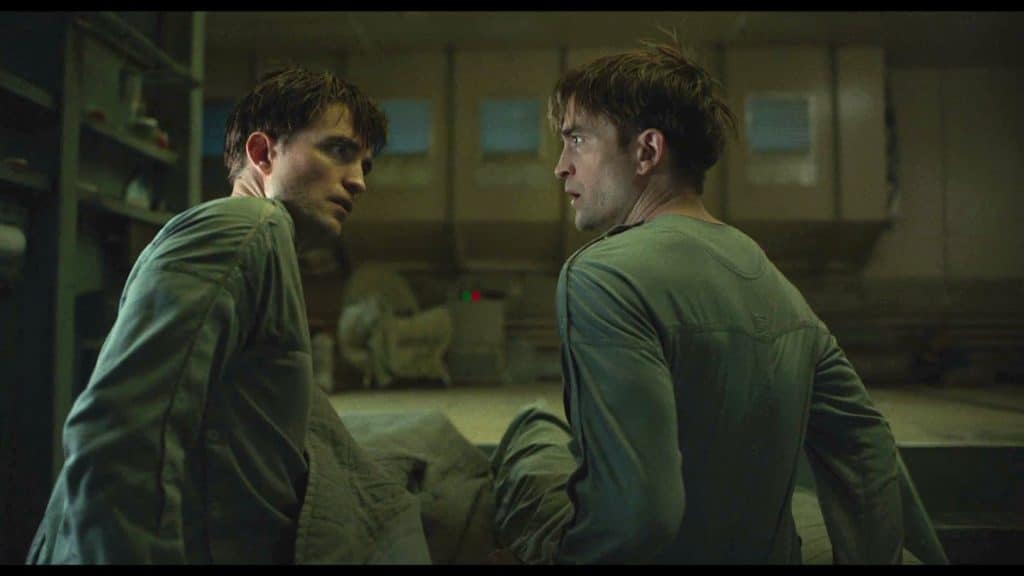
The system of expendable employees works perfectly—until it doesn’t. After Mickey is presumed dead on a dangerous mission, the company does what it always does: it prints a replacement. But then, the original, battered but very much alive Mickey makes it back to base. Now there are two of them. Since duplicate clones, or “multiples,” are illegal and immediately destroyed, their shared existence becomes a life-or-death secret they must hide from everyone.
This impossible situation forces a mind-bending question: who is the real Mickey? Both share the same face, the same name, and the same memories up until their last backup. If a perfect copy of you was created, complete with your consciousness, would that person still be you? The film uses this sci-fi puzzle as the core of Mickey’s terrifying personal dilemma, turning a philosophical problem into a fight for survival.
For anyone who saw Parasite, this setup will feel familiar. Director Bong Joon Ho is a master at using genre to explore class struggle. Here, Mickey isn’t just a clone; he’s the ultimate gig-worker, literally disposable to his corporate employers. His struggle to stay alive becomes a sharp, thrilling critique of a system that sees human life as just another resource to be used up and replaced.
Why ‘Mickey 17’ Is More Than Just a Sci-Fi Thriller
Mickey 17 is a classic Bong Joon-ho film where a thrilling premise serves a deeper analysis of our world. This sci-fi story about disposable clones, adapted from the novel Mickey7, uses its high-stakes plot to explore what it means to be human when society has deemed you replaceable.
As you head into the film, don’t just follow the action—participate in its central puzzle. Start by asking yourself the one question Mickey must face: if you came face-to-face with your perfect copy, which one of you would deserve to live? Answering that will transform the movie from a spectacle into a mirror.