

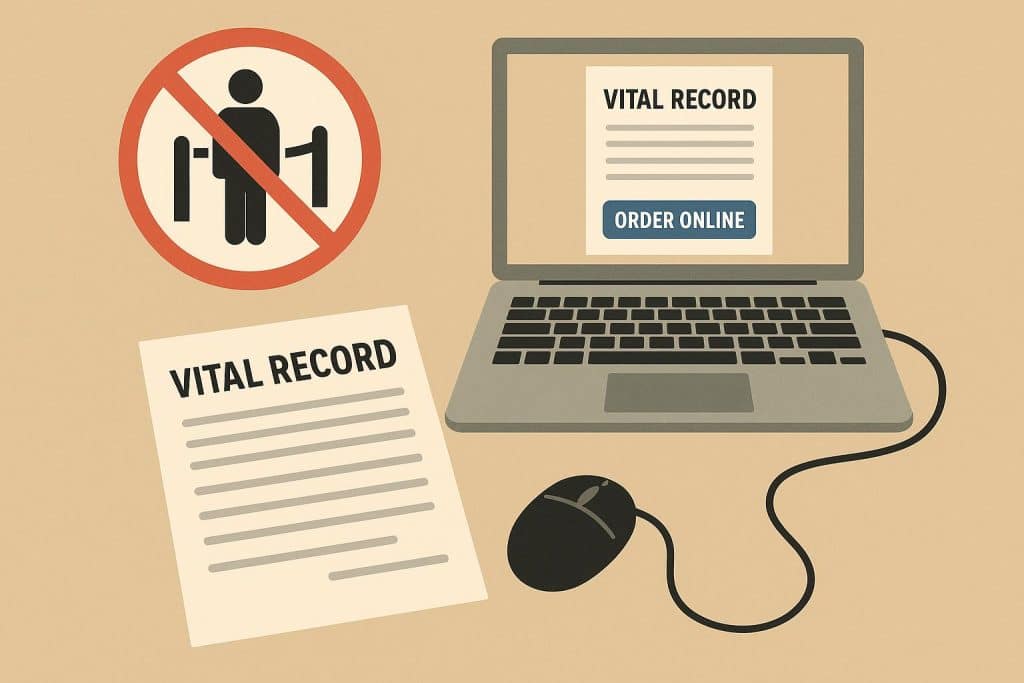
There’s a specific kind of frustration that comes with needing a document you assumed you already had. You go looking for your birth certificate, maybe for a passport renewal, a new job, a REAL ID, or school enrollment for your kid, and it’s nowhere to be found. Maybe it got lost in a move. Maybe it was your parents’ copy and nobody knows where it ended up. Whatever the reason, the next step used to mean a trip downtown, a line at a government office, and an afternoon you didn’t plan on losing.
That’s changed for a lot of New Yorkers over the past few years, and it’s worth understanding why, especially if you’re staring down a deadline and dreading the idea of standing in line at a vital records office.
Why So Many People End Up Needing a Replacement
Birth certificates get requested more often than people expect, and not always for dramatic reasons. Some of the most common triggers include applying for or renewing a passport, enrolling a child in school for the first time, applying for certain jobs that require proof of citizenship or identity, obtaining a REAL ID-compliant license, applying for Social Security benefits, or handling immigration paperwork for a family member.
As of May 2025, U.S. citizens and residents need a REAL ID-compliant driver’s license or ID card to board a commercial flight or enter certain federal facilities, and a certified birth certificate is one of the standard documents accepted to prove identity during that process. That single requirement alone has pushed a lot of New Yorkers to go digging for a document they hadn’t thought about in years, only to discover it was never in a safe place to begin with.
The Old Way Versus the New Way
New York’s vital records system is more fragmented than a lot of people realize. New York City, covering Manhattan, Brooklyn, Queens, the Bronx, and Staten Island, maintains its own vital records office separate from the rest of the state. Upstate counties like Suffolk, Nassau, Westchester, Erie, and Monroe, along with cities like Buffalo, Rochester, Yonkers, and Syracuse, each have their own local registrar offices too. The state’s central Vital Records office in Albany handles requests for the rest of New York State outside NYC.
That fragmentation is exactly where the old process got complicated. Depending on where you or your family member was born, you might need to figure out whether to contact NYC’s office, a specific county registrar, or the state office in Albany. Get it wrong, and you’d submit a request to the wrong place, wait weeks for a response, and then have to start over once you learned it needed to go somewhere else entirely.
Even once you identified the right office, in-person requests meant taking time off work, navigating an unfamiliar government building, and hoping you brought the correct combination of identification and paperwork the first time. Mailed requests avoided the trip but came with their own uncertainty: no confirmation the paperwork was filled out correctly until it either came back approved or got rejected and sent back weeks later with a note explaining what was missing.
What Changed With Online Ordering
The shift toward ordering vital records online didn’t eliminate government processing, but it removed most of the guesswork and friction that used to sit between a person and their certificate. Instead of researching which of New York’s many vital records offices to contact, an applicant can now complete a guided online form that routes the request to the correct office automatically, based on where the birth was actually recorded.
This matters more than it sounds. A New York birth certificate requested this way gets reviewed for completeness and accuracy before it’s ever submitted, which cuts down significantly on the kind of rejected applications that used to send people back to square one. Rather than mailing off a form and hoping it was filled out correctly, applicants get a structured process that flags missing information, confirms which type of certificate they actually need, whether that’s a short-form certified transcript or a full long-form copy, and walks through what identification is required before anything gets submitted.
The distinction between short-form and long-form certificates trips a lot of people up, and it’s worth understanding before you request either one. Short-form certificates list basic information: name, gender, date and time of birth, and parents’ names. They’re accepted for plenty of everyday purposes. Long-form certificates include more detail, such as the hospital of birth and the registrar’s original filing information, and they’re often required for more formal situations like international travel, adoption proceedings, or applying for citizenship documentation abroad. Knowing which one you actually need before you apply saves a second round of paperwork later.
Who Can Actually Request a Copy
New York restricts who can request a certified copy of someone’s birth certificate, and this hasn’t changed with the move to online ordering. Generally, the person named on the certificate, a parent, or a legal guardian can request a copy. Other family members, such as a spouse or adult child, may be able to request one as well, but often only under more specific circumstances or with additional documentation. Anyone requesting a certificate on someone else’s behalf should expect to provide identification and, in some cases, documentation proving their relationship to the certificate holder.
Why the Convenience Actually Matters
It’s easy to treat this as a minor process improvement, but for anyone who’s actually needed a birth certificate under time pressure, ordering by mail or in person versus using a guided online process is a meaningfully different experience. A rejected application because of a missing signature or an unclear photocopy of an ID used to mean losing weeks. A guided process that catches those issues before submission means the difference between getting a certificate in a reasonable timeframe and missing a deadline for a passport renewal, a REAL ID appointment, or a job’s start date.
For New Yorkers living outside the state, this matters even more. Tracking down the correct office for a birth that happened decades ago in a specific New York county, from a different state or even a different country, used to be genuinely difficult without local knowledge of how the system works. An online process that handles the routing automatically removes a barrier that used to disproportionately affect people who’d since moved away.
The Bottom Line
Needing a birth certificate you don’t have on hand is more common than most people expect, and it tends to surface at exactly the moment you don’t have time to deal with a complicated bureaucratic process. New York’s vital records system, split across the city, individual counties, and the state office in Albany, has historically made that process harder than it needed to be.
The move toward structured online ordering hasn’t changed how the government processes these requests, but it has removed a lot of the confusion and wasted time that used to come with figuring out where to even start. For anyone facing a REAL ID deadline, a passport renewal, or simply trying to replace a document that’s gone missing, that’s a meaningful improvement, and one worth knowing about before you find yourself standing in the wrong line at the wrong office.