

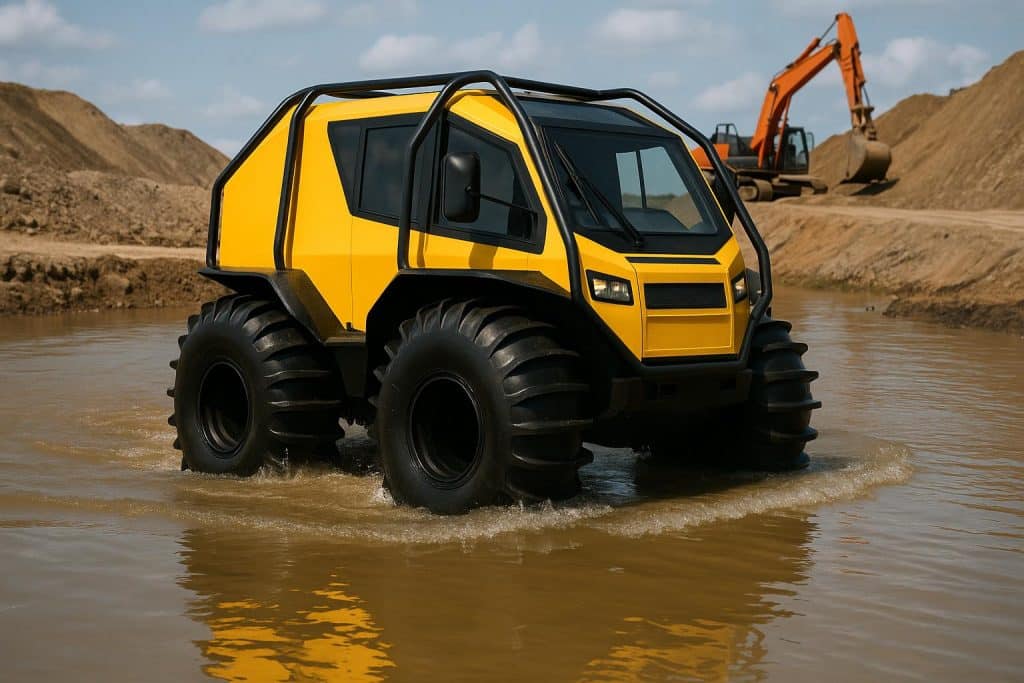
Construction projects do not always happen on level, dry ground with easy road access. Crews may need to reach wetlands, muddy job sites, flood-prone areas, utility corridors, steep terrain, or locations where conventional trucks and construction vehicles simply cannot travel safely. In these environments, fat trucks and other amphibious utility vehicles can provide a practical way to move workers, equipment, and supplies without relying on permanent roads or extensive site preparation.
These vehicles are designed around mobility rather than speed. Their oversized tires, low ground pressure, high ground clearance, and amphibious capabilities allow them to cross terrain that would stop many pickup trucks, utility vehicles, and even some tracked machines. For construction companies working in remote or environmentally sensitive locations, that versatility can solve access problems before they become expensive logistical challenges.
Why Are Fat Trucks Useful on Construction Sites?
One of the biggest advantages of a fat truck is their ability to travel over soft ground without sinking as easily as conventional vehicles. Wide tires distribute the vehicle’s weight across a larger surface area, reducing the amount of pressure placed on mud, sand, snow, and loose soil. That difference can be especially important after heavy rain, when access roads and unfinished job sites may become difficult or impossible for ordinary work trucks.
Improved flotation also means crews may be able to reach areas without first creating temporary roads. Building access routes can require gravel, mats, grading equipment, drainage work, and significant labor, particularly when the route crosses unstable terrain. Although an amphibious vehicle will not eliminate the need for proper site infrastructure in every situation, it can reduce the amount of temporary preparation required for certain phases of a project.
Amphibious Capability Expands Job Site Access
The ability to enter and cross water provides another major advantage. Amphibious construction vehicles can travel through shallow waterways, flooded areas, marshes, and similar environments where wheeled land vehicles would need to stop or take a lengthy detour.
This capability can be especially useful for projects involving pipelines, utilities, environmental monitoring, telecommunications infrastructure, bridges, and remote civil construction. Instead of transporting personnel and equipment separately by boat and land vehicle, crews may be able to remain in the same vehicle while moving between dry terrain and water.
Amphibious transportation can also simplify logistics when changing water levels make traditional routes unreliable. Seasonal flooding, temporary drainage problems, and unexpected standing water can disrupt construction schedules, so having a vehicle that can continue operating across different surface conditions may help keep essential work moving.
Less Ground Pressure Can Mean Less Site Disturbance
Construction equipment inevitably affects the terrain around a project, but some vehicles create significantly more disturbance than others. Heavy machines with narrow contact areas can form deep ruts, compact soil, and damage vegetation, particularly when the ground is saturated.
Fat trucks reduce ground pressure by spreading their weight across large tires. Depending on the terrain, this can allow them to cross soft surfaces while leaving shallower tracks than heavier conventional equipment. That does not make them impact-free, but it can make them useful where minimizing unnecessary ground disturbance is a project priority.
Reduced rutting may also save time later in the project. Deep vehicle tracks can collect water, interfere with drainage, create additional erosion, and require restoration work before a site can be completed.
Moving Crews and Materials Becomes Easier
Construction access is not only about getting heavy machinery into position. Workers often need to move tools, fuel, replacement parts, survey equipment, safety gear, and smaller construction materials across the site throughout the day.
An amphibious utility vehicle can function as a mobile transportation platform for these routine movements. Instead of having workers repeatedly walk long distances through difficult terrain, crews can carry personnel and supplies together, which may improve productivity while reducing physical strain.
The benefit becomes even more noticeable on geographically large projects. Pipeline routes, transmission corridors, renewable energy projects, and infrastructure construction can stretch across miles of undeveloped terrain, making reliable transportation between work areas an important part of daily operations.
How Can Amphibious Vehicles Improve Construction Safety?
Difficult terrain introduces risks that may not exist on conventional job sites. Workers walking through deep mud, snow, marshland, or standing water can encounter unstable footing, hidden obstacles, exhaustion, and changing environmental conditions.
Using a purpose-built off-road vehicle can reduce the amount of time personnel spend traveling on foot through these environments. It can also provide a practical method for carrying emergency supplies, communication equipment, and injured workers when conventional vehicles cannot reach the area.
Vehicle capabilities still need to match the conditions, however. Water depth, current, slopes, payload, tire condition, visibility, and operator experience all matter. Amphibious capability should be treated as another construction tool rather than permission to enter terrain without evaluating the risks first.
Fat Trucks Can Reduce Dependence on Perfect Conditions
Construction schedules rarely cooperate perfectly with the weather. Rain can turn access roads into mud, snow can cover remote work areas, and thawing ground can make previously firm surfaces unstable. Waiting for ideal conditions may cost valuable working days.
Fat trucks provide another option when terrain becomes unpredictable. Their combination of flotation, traction, off-road mobility, and amphibious capability can allow construction teams to continue reaching critical parts of a job site even when ordinary vehicles cannot.
Choosing the Right Vehicle for the Project
Fat trucks are not replacements for excavators, loaders, dump trucks, or other specialized construction equipment. Their greatest value is access. They help bridge the gap between places workers need to reach and places traditional vehicles can comfortably travel.
For projects involving mud, wetlands, snow, flooding, remote land, or difficult water crossings, amphibious vehicles can offer substantial logistical advantages. By improving mobility, reducing dependence on temporary roads, limiting unnecessary ground disturbance, and helping crews move safely across challenging terrain, they can become an extremely useful part of a construction site’s transportation strategy.