
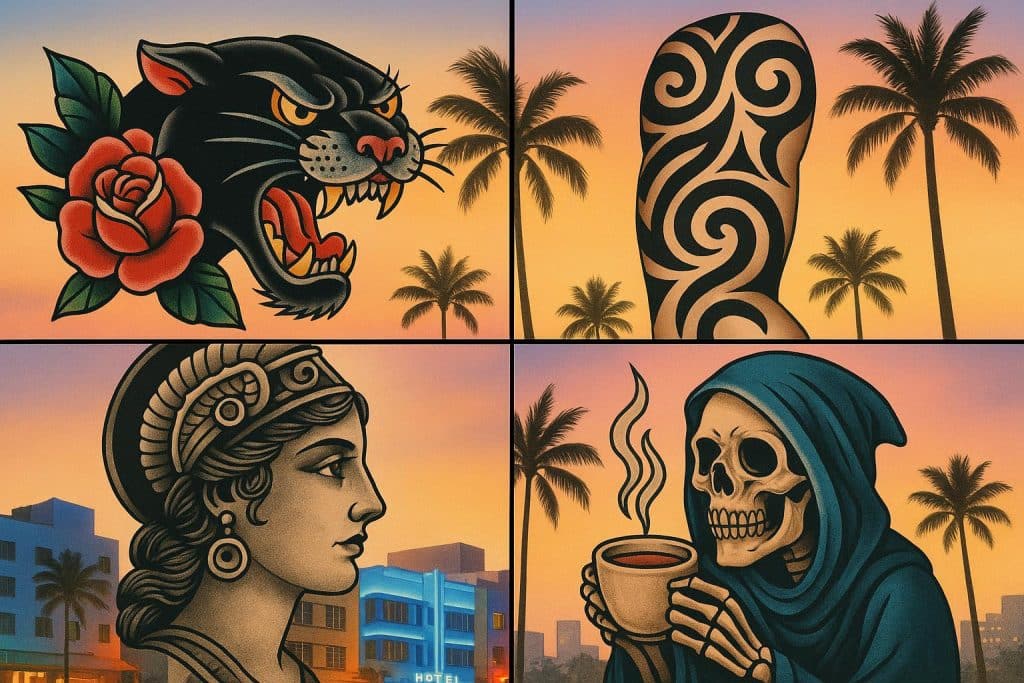
Miami has one of the most visually distinctive cultures in the country, so it makes sense that tattoo styles in the area tend to be just as varied. The city brings together influences from Latin America, the Caribbean, South Florida’s coastal environment, nightlife, fashion, street art, and contemporary design, giving people plenty of directions to explore when they are planning a new tattoo.
For anyone considering tattoos in Miami, Florida, choosing a style is often just as important as choosing the subject itself. Two tattoos featuring the same flower, animal, portrait, or symbol can look completely different depending on the linework, shading, color palette, and artistic approach behind them.
Fine-Line Tattoos Remain Popular
Fine-line tattoos are known for delicate outlines, subtle details, and a generally clean appearance. Rather than relying on thick borders or heavy areas of black ink, this style uses thinner lines to create designs that can feel understated and refined.
Small flowers, lettering, minimalist symbols, architectural designs, and simple portraits can all work well with fine-line tattooing. The style is especially appealing to people who want visible detail without a bold or heavily saturated look.
Fine-line work requires precision, however, because small inconsistencies can become noticeable when a design depends heavily on clean lines. Placement, skin type, design size, and long-term aging should all be considered before deciding how delicate the final piece should be.
Black-and-Gray Tattoos Offer Depth and Versatility
Black-and-gray tattooing remains one of the most adaptable styles available. Artists use varying shades of black ink to create highlights, shadows, gradients, and texture, often producing a smooth, dimensional appearance.
This approach works particularly well for portraits, religious imagery, animals, statues, flowers, and realistic scenes. It can also be used for larger pieces that cover the arm, chest, back, or leg.
Because the style does not rely on multiple colors, the artist’s ability to create contrast becomes especially important. Strong shading can make a design look dramatic and realistic, while softer shading can give it a more subtle, almost photographic quality.
Why Is Realism So Popular?
Realism focuses on making tattoo imagery appear as lifelike as possible. Portraits, wildlife, eyes, landscapes, objects, and cinematic imagery are common subjects, with the artist paying close attention to proportions, light, texture, and small details.
Both color realism and black-and-gray realism are popular choices. Color realism can create bold, vivid pieces, while black-and-gray realism often emphasizes shadow and depth.
Realistic tattoos generally require enough space for details to remain readable. A highly complex image reduced to a very small size may lose clarity over time, so the final dimensions should reflect the level of detail the design requires.
Traditional Tattoos Bring Bold Color and Strong Lines
Traditional tattooing is immediately recognizable for its bold outlines, straightforward shading, and limited but highly saturated color palettes. Common imagery includes roses, skulls, daggers, snakes, hearts, birds, ships, and other classic motifs.
One reason traditional tattoos have remained popular for generations is that their strong lines and simple forms tend to remain visually clear. The designs are meant to be readable from a distance rather than packed with extremely small details.
Traditional work can also be combined across multiple tattoos, making it a good option for people who want to gradually build a sleeve or larger collection over time.
Neo-Traditional Tattoos Add More Detail
Neo-traditional tattooing builds on traditional techniques while allowing for more complex shading, expanded color palettes, and greater detail. The result often feels familiar but more elaborate.
Animals, flowers, faces, mythological figures, and decorative designs are frequently created in this style. Artists may use strong outlines while incorporating more realistic textures and dramatic lighting.
For people who like the bold appearance of traditional tattoos but want something more intricate, neo-traditional work can offer a useful middle ground.
Geometric and Ornamental Tattoos Create Structure
Geometric tattooing uses repeated shapes, symmetry, patterns, and precise linework to create visually organized designs. Some tattoos are entirely abstract, while others combine geometric elements with animals, flowers, or symbolic imagery.
Ornamental tattoos use similar principles but often draw inspiration from jewelry, architecture, decorative patterns, and flowing symmetrical shapes.
These styles can work particularly well on areas of the body where the design can follow natural contours, such as the sternum, shoulders, arms, legs, or back. Careful placement matters because even small changes in alignment can affect the overall symmetry.
Watercolor Tattoos Emphasize Color and Movement
Watercolor tattoos are designed to resemble painted artwork, often using soft transitions, splashes of color, and less rigid outlines. Flowers, animals, abstract designs, and nature-inspired imagery are common subjects.
The style can feel especially expressive because colors are allowed to overlap and fade rather than staying completely contained within traditional borders.
Because watercolor designs depend heavily on color, people considering this style should discuss long-term appearance and sun exposure with their artist. Miami’s strong sunlight makes proper tattoo aftercare and ongoing sun protection especially important for preserving color.
Lettering and Script Remain Timeless Choices
Names, dates, phrases, quotes, and single words continue to be popular tattoo choices, but lettering requires more planning than many people realize. Font style, spacing, placement, and size can make the difference between a clean design and one that becomes difficult to read.
Script can range from delicate handwritten lettering to bold gothic or decorative typography. The best choice depends on both the message and the location of the tattoo.
Very small lettering may become less distinct as the tattoo ages, so an experienced artist may recommend increasing the size or simplifying the font.
Japanese-Inspired Tattoos Work Well for Larger Pieces
Japanese-inspired tattooing often features koi fish, dragons, tigers, snakes, flowers, waves, masks, and other traditional imagery arranged into large, flowing compositions.
These tattoos are frequently designed to follow the shape of the body, making them especially effective for sleeves, back pieces, and large leg tattoos.
The balance between background elements and the main subject is a major part of the style, so planning the overall composition beforehand can be particularly important.
How Should You Choose a Tattoo Style?
The best tattoo style depends on the subject, placement, size, and overall appearance you want. Someone interested in a subtle wrist tattoo may choose fine-line work, while someone planning a full sleeve may prefer realism, Japanese-inspired imagery, or neo-traditional designs.
It is also worth thinking beyond current trends. A tattoo becomes part of your appearance for years, so selecting a style that genuinely fits your taste is usually more important than choosing whatever happens to be popular at the moment.
Miami offers an especially broad range of tattoo influences, from delicate minimalist pieces to bold, colorful designs. Taking the time to understand different styles can make it easier to communicate your ideas clearly and choose an artistic direction that suits both the design and the part of the body where it will be placed.