

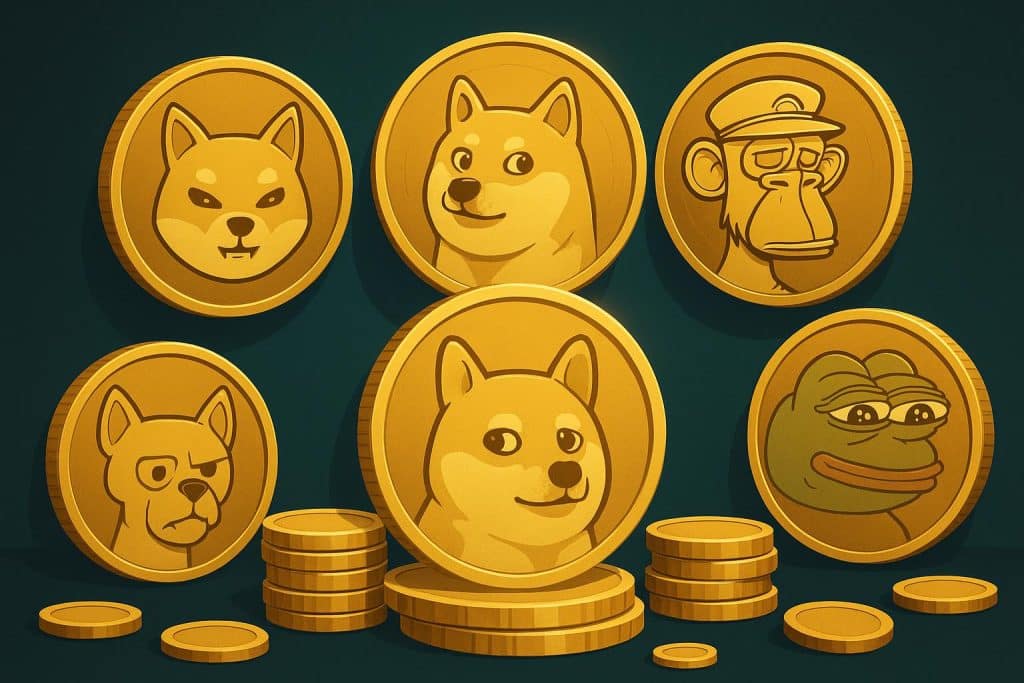
Every crypto cycle produces the same headline: someone threw a few hundred dollars at a coin with a dog on it and woke up a millionaire. It sounds like internet folklore, and sometimes it is. But a handful of these stories are real, traceable, and wild enough to explain why memecoins keep pulling in new traders.
If you’re exploring the space through the best crypto trading app for beginners or just heading down an internet rabbit hole, it helps to know what those legendary runs actually looked like, and what they leave out.
Here are five memecoins that genuinely rewarded their earliest believers, plus the part of the story the hype usually skips.
1. Dogecoin (DOGE)
The original memecoin started as a joke. Software engineers Billy Markus and Jackson Palmer created Dogecoin in 2013 as a lighthearted riff on Bitcoin, using the Shiba Inu dog that was already a viral meme.
For years, DOGE traded for fractions of a cent. In 2021, celebrity tweets, Reddit enthusiasm, and a broader crypto boom sent the coin to an all-time high of around 73 cents. Anyone who had casually picked up a few thousand dollars’ worth years earlier saw returns in the thousands of percent.
The comedown was just as dramatic. DOGE has at points fallen roughly 90% from that all-time high, a reminder that the people who got rich were largely the ones who sold somewhere near the top.
2. Shiba Inu (SHIB)
Shiba Inu launched in August 2020, billing itself as a “Dogecoin killer.” What followed became one of the most famous trades in crypto history.
One wallet bought roughly 70 trillion SHIB tokens that month for about $8,000. By October 2021, that position was worth approximately $5.7 billion. The token had climbed from a price with nine zeros after the decimal point into the top ten cryptocurrencies by market value.
It’s worth sitting with how improbable that is. SHIB spent its first months doing almost nothing, and the investor was reportedly underwater before the rally began. Most people would have sold long before the payoff.
3. Pepe (PEPE)
Launched in April 2023 around the Pepe the Frog meme, PEPE exploded almost immediately. Its early weeks produced some of the fastest gains the category had ever seen.
One early buyer reportedly picked up 1.5 trillion PEPE for $2,184, a position that later peaked at around $43 million. That’s the kind of return that fuels an entire season of copycat tokens, and PEPE did exactly that.
Like most memecoins, it has swung hard in both directions since. Its later rallies have come in short, sharp bursts rather than steady climbs.
4. dogwifhat (WIF)
Dogwifhat is exactly what it sounds like: a Shiba Inu wearing a pink knitted hat. Built on the Solana blockchain, it went viral in late 2023 and became one of the defining memecoins of the following year.
WIF hit an all-time high of roughly $4.83 in March 2024. Early holders who got in before the hype did extraordinarily well, including a trader who reportedly turned about $1,800 into $11 million.
Its rise also showed how much momentum matters in this category. WIF had no product roadmap driving it. The community, the image, and the timing did all the work.
5. Bonk (BONK)
Bonk launched on Solana in late 2022, during a rough stretch for that ecosystem following the collapse of FTX. A large portion of the supply was distributed to Solana users and developers via an airdrop, meaning many early holders received their tokens for free.
As Solana recovered, BONK became something of a mascot for the comeback, and those airdropped tokens grew into meaningful sums for people who held on. It has since experienced deep drawdowns of its own, which is standard behavior for the category.
What Protections Do Memecoin Buyers Have?
Fewer than most people assume. In early 2025, SEC staff stated that meme coins generally aren’t securities, and that the federal securities laws protect neither meme coin purchasers nor holders.
In practical terms, that means if a project turns out to be a pump-and-dump or a rug pull, where developers abandon the token after cashing out, the usual federal fraud remedies may not apply. The risk sits squarely with the buyer.
How Should Beginners Approach Memecoins?
Treat them as high-risk entertainment money, not a retirement plan. Only put in what you can genuinely afford to lose, and decide in advance when you’d take profits so a big run doesn’t turn into a round trip back to where you started.
It also helps to research before buying. Look at how the supply is distributed, whether a few wallets hold most of it, and whether the community looks organic or manufactured. None of that guarantees a good outcome, but it filters out many obvious traps.
The early-holder success stories are real, and they’re part of what makes this corner of crypto so exciting. The smartest way to enjoy it is going in clear-eyed, with a plan, and with money you won’t miss if the dog stops barking.