

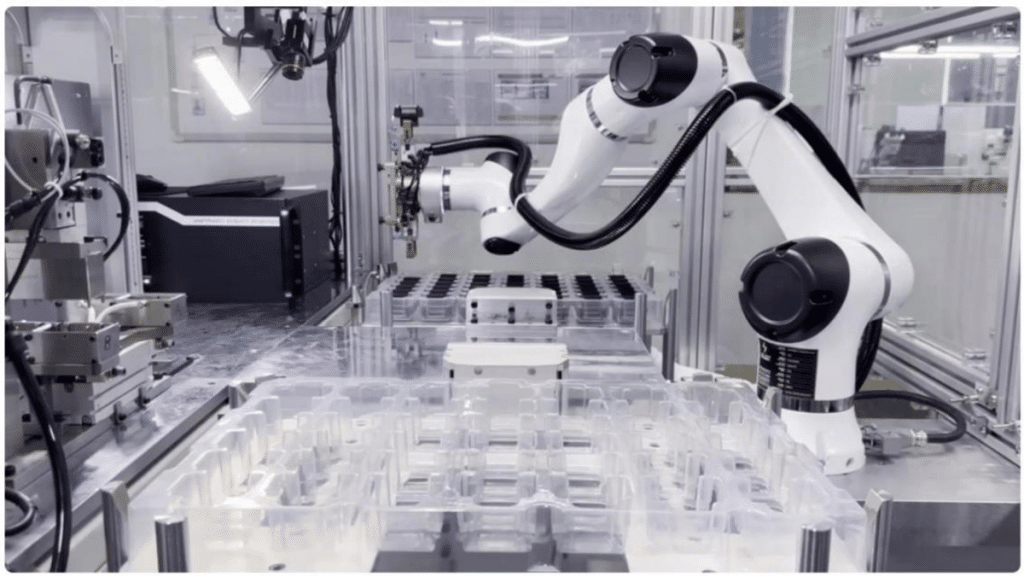
The precise differences between cobots (short for collaborative robots) and robots (often referred to traditional industrial robots) can be obscure to many. Some people are not even aware that there are differences between cobots and robots. This article presents a thorough cobot vs robot comparison that analyzes critical variances such as technical capabilities, costs, and human interaction.
Robot and Cobot: Overview
Industrial robots are typically large and heavy machines. They perform repetitive and precise tasks such as welding and assembly. They are programmed to lift heavy payloads and position components accurately. Moreover, their large size and automated programming limit human intervention.
Collaborative robots were created to directly aid workers on the factory floor. Cobots can sense contact and adapt movements accordingly to safely work in close quarters. Their applications include welding, spraying, palletizing, and more. Vision and force sensors allow cobots to complete repetitive sensitive maneuvers while adjusting to workers without additional guarding. Where robots handle tasks away from humans, cobot solutions specialize in interactive tasks benefiting from flexible programming.
Cobot vs Robot: The Comparison
The comprehensive cobot vs robot analysis of several key attributes distinguishes cobots from traditional industrial robots. Key comparative aspects include:
1. Accuracy
Both cobots and robots are designed to complete tasks with the highest accuracy. Industrial robots are ideal for companies that need consistent results. However, these machines can sometimes have force control issues. Collaborative robots, on the other hand, integrate force sensors, which provide haptic feedback on accurate pick-and-place pressure and prevent issues from applying too much or too little pressure.
2. Flexibility
This cobot vs robot aspect highlights the two types’ differences well. Programming a cobot takes minutes versus hours or even days for programming an industrial robot. Teach pendants or graphical interfaces allow engineers and technically skilled workers to train cobots quickly. Their simple programming workflow means a cobot can be reassigned easily. Redeploying a robot, on the other hand, often requires specialists and significantly more time spent reprogramming sequences of moves.
3. Cost
Cobots offer a lower barrier to entry for companies that cannot justify costly robot investments. Their affordable prices, combined with the eliminated need for expensive safety cages, enable their use even by small manufacturers and job shops. Maintenance costs are also lower due to less rigid mechanical components and the option to complete non-technical repairs in-house. Industrial robots optimized for heavy lifting require a larger initial capital outlay that’s not feasible for all production types and budgets.
4. Safety
Force-sensing technology allows cobots to immediately detect unexpected contact and stop moving within milliseconds to prevent injuries. Integrated torque, position, and speed sensors monitor movement to avoid high-impact collisions. Vision assists navigation in proximity to workers without separating humans from machinery through partitioning. For industrial robots, standard safety cages are required, which increases floor space needs.
5. Payload
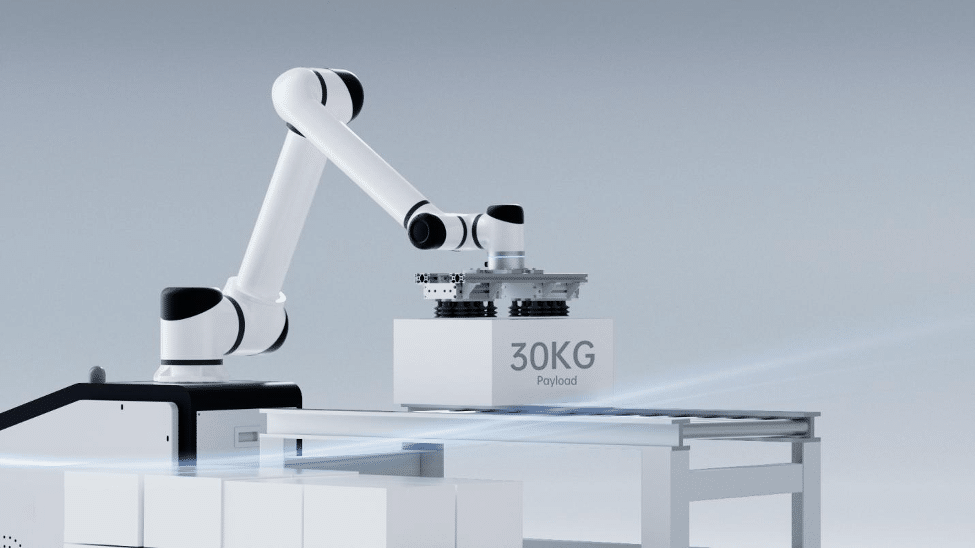
Industrial robots offer a higher payload capacity range depending on reach and joint configuration to handle heavy automotive or foundry components. Cobots offer relatively lower payloads and speeds.
6. Human Intervention
This is arguably the most significant cobot vs robot distinction. Cobots are designed first and foremost with collaborative capabilities, giving employees direct assistance through intuitive interfaces. Their flexible programming enables rapid adaptation to new needs. Industrial robots typically function autonomously in segregated cells and only interface with humans for maintenance and upgrades.
Cobot vs Robot: Verdict
Based on the above cobot vs robot comparison across key attributes, it’s concluded that cobots are a preferable choice for tasks requiring high accuracy, flexibility, and human-robot interaction. Their safety features and simple programming support varied production needs and frequent adjustments. Industrial robots, on the other hand, maintain advantages for heavy lifting, forceful tasks separated from humans, and unmanned production cells.
As one of the premier cobot manufacturers, Han’s Robot leads collaborative robot development, enabling closer human-machine cooperation. Operating globally, the manufacturer’s intelligent cobots improve productivity, quality, and efficiency through joint work applications spanning automotive, healthcare, and logistics, among others. Visit the company’s website to explore its advanced cobots engineered for flexibility, safety, and assisted production.