

Most healthcare organizations don’t realize how exposed they are until an OCR audit lands on their desk. HIPAA Compliance Software exists precisely for that moment, but choosing the wrong platform means scrambling to manage Business Associate Agreements across dozens of vendors, running risk assessments that won’t hold up under scrutiny, and hoping your staff training records are actually current. After reviewing dozens of platforms across the healthcare compliance space, one thing is clear: the gap between generic GRC tools and purpose-built options is wide. This guide covers five platforms worth serious consideration.
The shortlist methodology
Every selection here was shaped by publicly available information, including user reviews, case studies, feature breakdowns from review platforms, and official product pages. Only platforms with a documented track record serving healthcare compliance requirements made the cut.
→ See the full research breakdown
- ComplyAssistant – Best for healthcare organizations and MSPs/MSSPs requiring HIPAA compliance management
- SAI360 – Best for enterprise GRC and healthcare compliance management
- Drata – Best for mid- to enterprise-sized companies pursuing SOC 2, HIPAA, GDPR, or ISO 27001 compliance
- NAVEX – Best for enterprise GRC and compliance management
- Secureframe – Best for fast-growing businesses seeking automated compliance and security frameworks
The Stakes Behind Choosing HIPAA Compliance Software
Picking the wrong HIPAA compliance platform isn’t just an inconvenience. It’s the kind of decision that shows up months later when your risk assessment documentation falls apart under an OCR investigation or your Business Associate Agreement tracking is two versions behind.
The HIPAA Privacy Rule, Security Rule, and Breach Notification Rule keep evolving, and OCR enforcement guidance shifts with them. Teams that rely on spreadsheets or generic GRC software often lack the specific healthcare compliance knowledge to keep pace.
The right platform changes those odds. When risk assessment completion rates are high and remediation closes on time, your exposure shrinks. When employee HIPAA training completion and quiz pass rates stay current, your workforce handles PHI correctly. And when Business Associate Agreements are tracked, signed, and up to date, you’re not caught off guard. That kind of operational control is what separates organizations that pass audits from the ones that don’t.
5 HIPAA Compliance Software Compared
Note: All data in this table is sourced from review platforms and the official websites of the listed companies.
| Company Name | Years Operating | Team Size | Headquartered In |
| ComplyAssistant | Since 2002 | 11-50 | Woodbridge, New Jersey, US |
| SAI360 | 25+ years | 438 | Chicago, IL |
| Drata | Since 2020 | 723 | San Diego, California |
| NAVEX | Since 1981 | 1,435 | Lake Oswego, OR |
| Secureframe | Since 2020 | 200 | San Francisco, California |
- ComplyAssistant – Best for Healthcare Organizations and MSPs/MSSPs Requiring HIPAA Compliance Management
What Problems Does ComplyAssistant Solve?
ComplyAssistant handles the parts of HIPAA compliance that tend to slip through the cracks at busy healthcare organizations. They cover security audits, risk assessments, virtual CISO support, and third-party vendor risk management through a compliance portal they’ve been refining since 2009. The platform is built for healthcare, which means it speaks HIPAA, HITECH, HITRUST, and NIST without needing to be updated to fit. For MSPs and MSSPs, it doubles as a delivery platform for client-facing compliance services, which is a genuinely useful angle.
Why Pick ComplyAssistant for HIPAA Compliance Software?
ComplyAssistant addresses the real challenge healthcare organizations face when they don’t have dedicated compliance staff but still need defensible, audit-ready documentation. Their focused healthcare experience, backed by HASC endorsement and more than two decades serving covered entities, means the platform reflects how actual healthcare compliance programs operate.
What the Reviews Show:
ComplyAssistant earned 2025 GetApp Category Leader recognition in HIPAA compliance, which is a solid signal that users find the platform genuinely useful. Healthcare clients like HackensackUMC Palisades and Cape Regional Health System point to a consistent track record. That kind of real-world healthcare validation is hard to fake.
- SAI360 – Best for Enterprise GRC and Healthcare Compliance Management
What Problems Does SAI360 Solve?
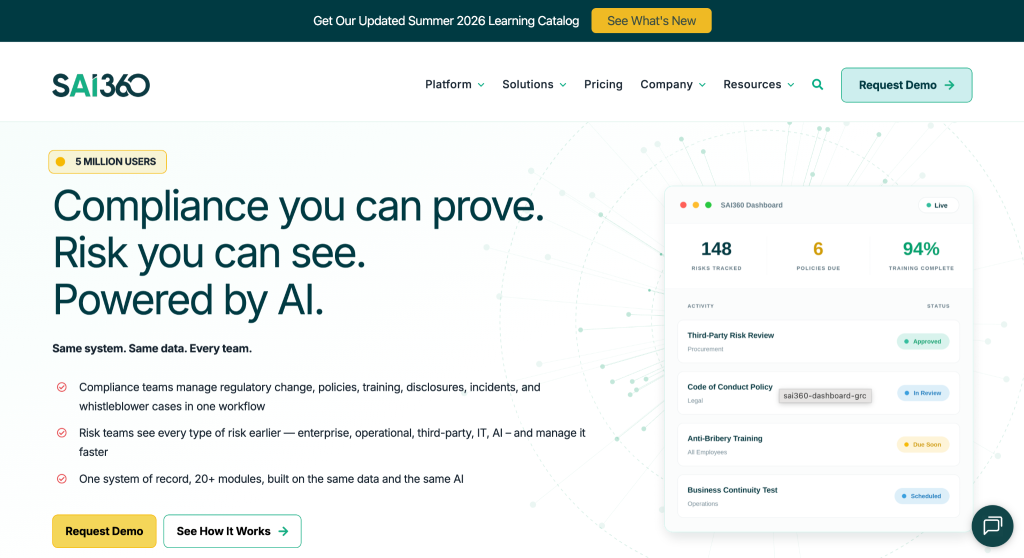
SAI360 takes on the challenge of managing risk, ethics, and compliance data across large organizations that can’t afford to have those three things living in separate systems. They cover GRC management, compliance training, audit management, and business continuity through a platform that uses AI to connect the dots between signals that would otherwise sit in silos. For healthcare organizations operating at scale, their regulatory compliance module helps teams keep pace when OCR enforcement guidance shifts. The platform comes in three pricing editions, so there’s room to grow into it.
Why Pick SAI360 for HIPAA Compliance Software?
SAI360 tackles the problem of fragmented compliance data in enterprise environments where risk signals get lost because no one system owns them. Their AI approach to surfacing issues early is the kind of thing that actually shortens the time between detecting a potential PHI breach and responding within that 60-day notification window.
What the Reviews Show:
SAI360 landed as a Leader in the 2025 Verdantix Green Quadrant for GRC software, and their Brandon Hall Group awards for learning and development show they take compliance training seriously, not just as a checkbox. Their client roster, including Colgate-Palmolive and Kraft Heinz, suggests they perform well under enterprise-level pressure.
- Drata – Best for Mid- to Enterprise-Sized Companies Pursuing SOC 2, HIPAA, GDPR, or ISO 27001 Compliance
What Problems Does Drata Solve?
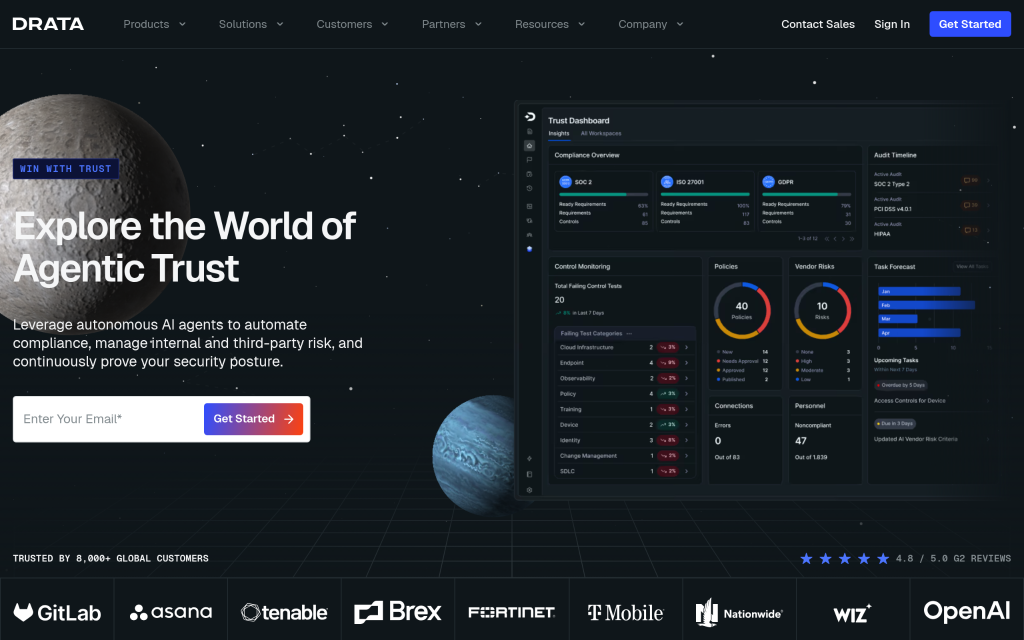
Drata is built around the idea that collecting compliance evidence shouldn’t require a dedicated person manually pulling screenshots and spreadsheets every quarter. They automate evidence collection, asset tracking, and control monitoring continuously, so healthcare IT teams aren’t scrambling before an audit. The platform supports 14+ frameworks including HIPAA, with 75+ integrations covering the tools most healthcare organizations already use. Founded in 2020, they’ve moved fast, and serving over 4,000 customers worldwide shows the approach is working.
Why Pick Drata for HIPAA Compliance Software?
Drata solves the audit preparation grind that burns out compliance teams at mid-size healthcare organizations. Their continuous monitoring model means audit trail coverage doesn’t have gaps, which is exactly what OCR investigators look for when reviewing documentation.
What the Reviews Show:
Drata holds leader status across multiple G2 categories, including the Cloud Compliance and Security Compliance grids, which reflects consistent user satisfaction. Customers particularly value the reduction in manual work during audit cycles. That kind of time savings is what pushes teams to stick with the platform long-term.
- NAVEX – Best for Enterprise GRC and Compliance Management
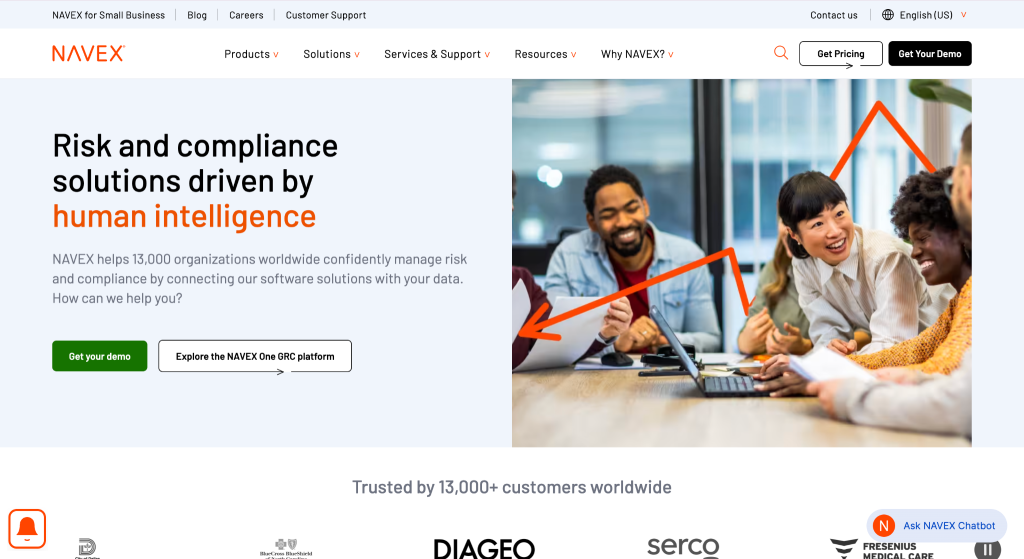
What Problems Does NAVEX Solve?
NAVEX covers the governance and ethics side of compliance that often gets separated from the technical HIPAA work but absolutely shouldn’t be. They offer compliance training, whistleblower and incident management through their EthicsPoint system, policy management, and third-party risk management for organizations operating across complex vendor networks. Their hotline and incident data repository is the largest in the world, which gives them a perspective on compliance culture that most platforms simply don’t have. Working with 95 Fortune 100 companies tends to sharpen an organization’s instincts for what actually works under pressure.
Why Pick NAVEX for HIPAA Compliance Software?
NAVEX addresses the compliance culture problem that pure technical platforms miss, the gap between having policies on paper and actually having a workforce that follows them. Their incident management setup means PHI-related concerns surface through proper channels rather than getting buried, which directly affects mean time to detect and report breaches.
What the Reviews Show:
NAVEX has a long track record going back to 1981, and their recognition as Enterprise Company of the Year by the Technology Association of Oregon reflects their standing in the broader GRC market. That kind of institutional longevity usually means the platform has been tested across real compliance crises, not just routine audits.
- Secureframe – Best for Fast-Growing Businesses Seeking Automated Compliance and Security Frameworks
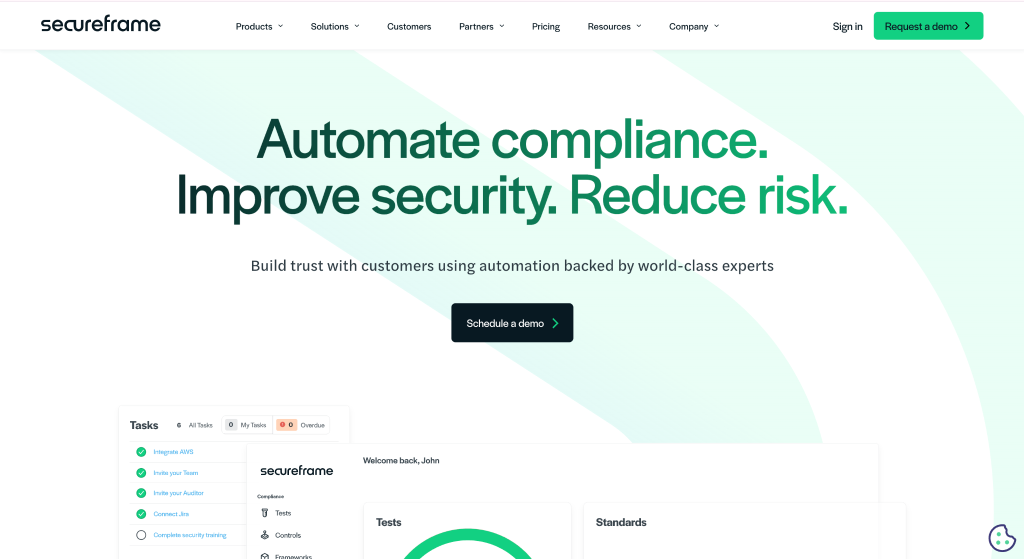
What Problems Does Secureframe Solve?
Secureframe is designed for organizations that need to move through compliance programs without building a large internal team to run them. They handle evidence collection, continuous monitoring, policy management, and risk management across frameworks including HIPAA, SOC 2, ISO 27001, PCI DSS, and GDPR. What sets them apart is their model of assigning a dedicated compliance expert to each customer (all former auditors, not just account managers). They also support over 100 integrations and were among the first platforms to cover NIST’s AI Risk Management Framework, which is worth noting as AI use in healthcare grows.
Why Pick Secureframe for HIPAA Compliance Software?
Secureframe takes on the problem of compliance knowledge gaps at fast-growing healthcare organizations that don’t yet have a full privacy and security team in place. Having a former auditor assigned to your account means policy review and attestation completion rates stay current because someone is actually flagging what needs attention.
What the Reviews Show:
Secureframe earned G2 leader status across five categories and won Cyber Defense Magazine’s Hot Company recognition for compliance automation at RSA 2025. Users respond well to the combination of automation and human expert access. That pairing is genuinely rare in this space, and it shows in the review sentiment.
Evaluation Criteria and Research Approach
The research behind this article started with building a wide pool of candidates, then narrowed through a structured process focused on verified performance in the healthcare compliance space.
Establishing Your Data Foundation
The initial longlist came from scanning compliance software directories, review aggregators like G2 and GetApp, and published case studies from healthcare organizations. The goal at this stage was breadth, not precision, so the criteria were kept loose: platforms had to have some documented relationship with HIPAA or healthcare compliance work. Product pages, feature documentation, and company background information were pulled directly from official websites and cross-referenced against third-party listings to establish a working picture of each option.
Filtering Candidates Against Your Criteria
Once the longlist was assembled, each platform was assessed against a tighter set of questions. Did the product have verifiable user reviews with enough volume to show patterns? Were those reviews consistent across multiple platforms, or did the sentiment shift depending on where you looked? Platforms with thin review histories or claims that couldn’t be substantiated through public sources were removed at this stage. The focus shifted to identifying which options had a genuine, demonstrated footprint in healthcare compliance delivery rather than simply listing HIPAA as a supported framework.
Validating Selection Accuracy
Each shortlisted platform was then checked for alignment between what their marketing pages claimed and what actual users reported. This step matters because product pages are written to convert visitors, not to inform compliance officers making multi-year decisions. Where review themes contradicted feature claims, that gap was noted and weighted in the final evaluation. Real-world examples, client references, and documented use cases carried more weight than feature checklists at this stage.
The Authority Layer
Authority signals were factored in as an additional layer of validation. These included industry awards, analyst recognitions, appearances in published compliance guidance, and original research or data published by the platforms themselves. Recognition from credible third-party bodies like Verdantix, Brandon Hall Group, G2, and GetApp was treated as a signal of sustained market relevance rather than a ranking factor. Platforms that showed up consistently across multiple authority sources were treated as having a stronger general reputation than those with isolated recognition.
HIPAA Compliance Software Case Files
The final check focused on healthcare-specific evidence. Each platform was evaluated for dedicated service or product pages covering HIPAA compliance, verified reviews from healthcare organizations or covered entities, and case studies that referenced actual compliance outcomes rather than general software satisfaction. Platforms with documented work alongside healthcare systems, health plans, or business associates were given preference. This step filtered out capable general-purpose GRC tools that hadn’t yet earned a clear track record in the specific demands of HIPAA regulatory adherence.
Finding the Right HIPAA Compliance Software for Your Needs
Not every platform on this list is the right fit for every organization. A small medical practice has different needs than a regional health system managing dozens of business associates. Here’s what to weigh before committing to a platform.
- Industry/Domain Experience: Look for platforms with documented work in healthcare compliance specifically. General GRC experience helps, but HIPAA has enough nuance that healthcare-specific knowledge shortens your setup time and reduces early mistakes.
- Features and Capabilities: Map the platform’s capabilities against your actual gaps. If risk assessments are your weak spot, prioritize depth there. If employee training completion rates are low, look for platforms with strong training and attestation tracking.
- Pricing Structure: Pricing varies widely in this space (some platforms don’t publish rates at all, which usually means enterprise pricing). Factor in setup time, any required consulting, and the cost of not having a working compliance program when an audit hits.
- Results Measurement: Ask vendors how the platform tracks remediation closure rates, BAA status, and audit trail coverage. If they can’t show you what the reporting looks like, that’s worth noting.
- Industry Knowledge and Compliance: Confirm that the platform stays current with OCR enforcement guidance and HIPAA Privacy Rule, Security Rule, and Breach Notification Rule updates. A tool that’s accurate today but slow to reflect regulatory changes creates risk over time.
Final Words
Choosing HIPAA compliance software comes down to fit, not just features. The best platform for a fast-growing health tech startup looks different from what a regional hospital system needs. What stays consistent across both is the need for audit-ready documentation, active BAA tracking, and a workforce that actually understands PHI handling. The organizations that get compliance right don’t treat it as a one-time project. They treat it as an ongoing program, and the right software makes that sustainable.