

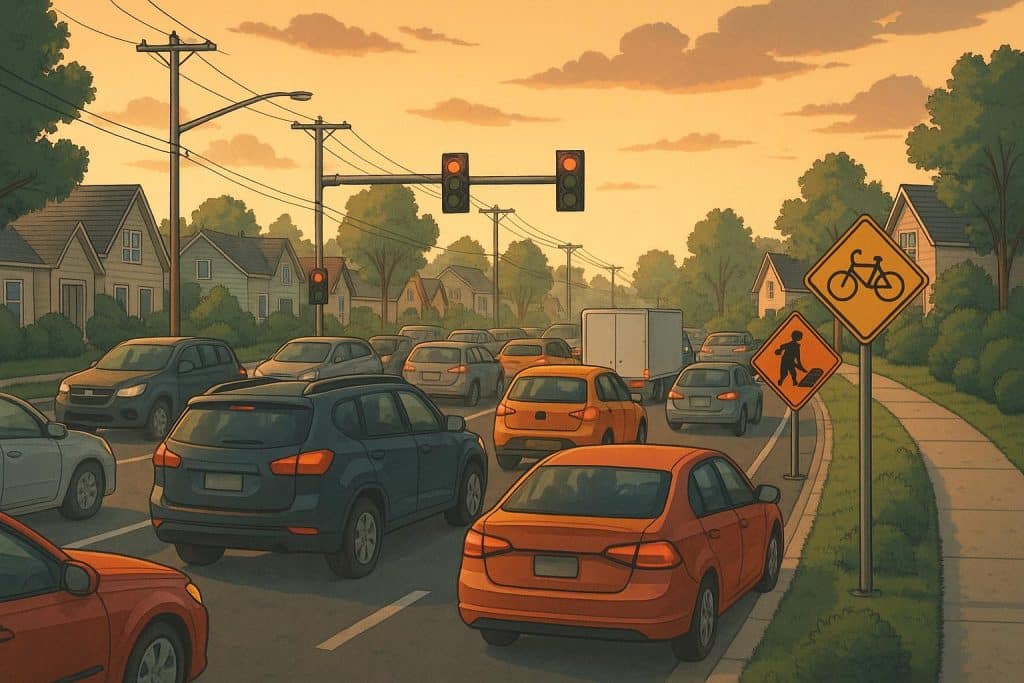
Suburban roads can become surprisingly difficult to navigate during morning and evening rush hours. Drivers dealing with congestion, frequent lane changes, crowded intersections, and sudden braking may face a higher risk of collisions.
When a crash disrupts your routine, speaking with an accident lawyer in Panorama can help you understand how fault, insurance coverage, and financial losses may affect your next steps.
Why Peak-Hour Suburban Traffic Creates Added Risks
Suburban traffic often combines commuters, school traffic, delivery vehicles, cyclists, and pedestrians within the same limited road network.
During peak hours, several hazards can develop at once:
- Stop-and-go traffic that increases rear-end collision risks
- Drivers making sudden lane changes to avoid congestion
- Vehicles entering busy roads from shopping centers and side streets
- Reduced visibility around large vehicles
- Drivers becoming distracted while sitting in slow traffic
- Congested intersections where turning vehicles compete for space
A routine commute can therefore change quickly when one driver brakes suddenly, fails to yield, or attempts to move through traffic without enough space.
Commuter Stress Can Affect Driving Decisions
Heavy traffic does more than increase travel time. It can also create conditions where drivers make rushed decisions.
Someone running late may follow another vehicle too closely. Another driver may change lanes repeatedly in an attempt to move faster. Others may look at navigation apps or messages while traffic moves slowly.
California drivers are still required to operate their vehicles with reasonable care, regardless of congestion. For example, California Vehicle Code Section 21703 generally prohibits following another vehicle more closely than is reasonable and prudent based on speed, traffic, and roadway conditions.
This rule can be particularly relevant in rear-end collisions during rush hour traffic.
What to Do After a Collision in Heavy Traffic
The minutes immediately after a suburban traffic collision can be confusing, especially when vehicles are blocking an already crowded roadway.
If circumstances allow, focus first on safety and documentation.
Consider taking these steps:
- Move to a reasonably safe location when appropriate
- Exchange identification and insurance information
- Photograph vehicle positions and visible damage
- Capture traffic signs, signals, lane markings, and nearby hazards
- Obtain contact information from witnesses
- Save dashcam footage or vehicle-app data before it is overwritten
- Keep copies of repair estimates, receipts, and other accident-related expenses
Small details can become important later when drivers or insurers disagree about how the crash occurred.
How California Fault Rules May Affect a Claim
California uses a pure comparative negligence system. This means financial recovery may be reduced according to a person’s percentage of responsibility for an accident.
For example, a fault may become disputed when one driver changes lanes while another accelerates, or when several vehicles collide in stop-and-go traffic.
Evidence can help clarify what happened. Photos, witness statements, vehicle damage patterns, traffic-camera footage, and electronic vehicle data may all contribute to the investigation.
Drivers trying to understand their options after a local collision may consult an accident lawyer in Panorama to review the evidence and determine how California negligence rules may apply.
Protecting Yourself From Financial Problems After a Crash
A collision may create costs well beyond vehicle repairs. Lost work time, transportation expenses, property damage, and treatment-related costs can place additional pressure on a household.
Keeping organized records can make it easier to document these losses.
Create a file containing:
- Insurance correspondence
- Vehicle repair estimates
- Towing and transportation receipts
- Provider bills and evaluation details
- Employment records showing missed work
- Photos and other accident evidence
Avoid discarding documents simply because they appear minor. A complete record can help establish the broader financial impact of the collision.
Staying Prepared for Suburban Traffic Hazards
Peak-hour congestion is part of everyday life in many Southern California communities, but drivers can reduce risk by allowing more travel time, maintaining safe following distances, limiting distractions, and watching carefully for sudden changes in traffic.
When an accident does occur, documentation and an understanding of California’s fault rules can help protect your interests. If you need guidance on liability, insurance issues, or accident-related losses, an accident lawyer in Panorama can review the circumstances and explain the legal options available to you.