

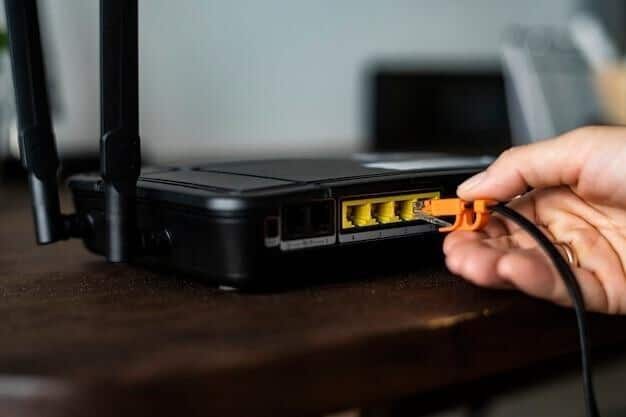
A GPS antenna splitter is an essential radio frequency device used in telecommunications and related fields, such as navigation and broadcasting. Its primary function is to convert the satellite signals captured by one GPS antenna and distribute them across multiple receivers or other GPS tracking devices.
This complex information interchange often happens simultaneously, making GPS splitters especially critical in feeding incoming signals to several receivers.
GPS antenna splitters generally utilize active amplifiers that magnify radio frequency (RF) strength to account for insertion loss. However, signal quality and stability isn’t always guaranteed.
Below are the various factors known to impede GPS splitter performance.
1. Splitter Type
GPS antenna splitters fall into two broad categories – Active and Passive. To maximize signal strength and reliability, start with the correct GPS splitter type.
Active splitters feature built-in Low Noise Amplifiers (LNAs), allowing them to account for any signal loss. They’re incredibly reliable in complex telecommunication set-ups.
However, note that active splitters require a reliable power source.
In contrast, passive splitters function without external power. But that autonomy comes at a cost.
Passive splitters only split the incoming signal, which may cause significant insertion loss. These devices are generally ideal if you can vouch for the incoming signal’s strength.
Besides, passive GPS antenna splitters are typically reliable for short-run cables.
2. Insertion Loss
Insertion loss refers to the reduction of radio frequency signal power, often caused by introducing a splitter between a GPS antenna and the receiver. It’s essentially the difference between the signal strength that goes through an input port and that which comes off the output ports.
Therefore, more output ports inherently increase the loss.
High insertion loss is a nagging concern, particularly with low-quality splitters. It can reduce a splitter’s Signal-to-Noise Ratio (SNR) and compromise information credibility.
The effects may be twice as devastating, considering that the signals received from outer space are already considerably weak.
Reducing the number of output ports might reduce insertion loss.
3. Port-to-Port Isolation
In GPS communications, port-to-port isolation measures how efficiently the output ports are separated from each other. It’s a critical metric when analyzing splitter performance.
Note that GPS receivers feature local oscillators. Because these oscillators often engage in cross-talk, they may inadvertently leak radio frequency noise backward and degrade signal strength.
To prevent port-to-port signal interference, insist on high isolation of around >18–25 decibels (dB).
4. Impedance Matching
Impedance matching refers to the practice of manually adjusting a GPS antenna’s electrical resistance and reactance. It ensures the connected devices share nearly the same standard impedance, usually 50 ohms.
If a GPS antenna splitter operates on a mismatched impedance, the signal strength is bound to suffer.
Mismatching the impedance can create a high Voltage Standing Wave Ratio (VSWR), triggering signal backflow. It can also create multi-channel networks within the system and redirect radio frequency energy to completely unintended paths.
5. DC Bias Pass-Through
To function effectively, GPS antenna splitters often require routing Direct Current (DC) electrical power via a coaxial cable. That’s the premise behind DC bias pass-through.
Although this technique lets you run several active outdoor antennae while regulating voltage, it’s not foolproof. Short circuits can occur without warning and damage the sensitive parts of connected splitter devices.
Choose a GPS device designed to handle DC bias voltage.
Ideally, the splitter should have a DC pass-through on at least one port while guarding against voltage spikes on the other ports. This allows the active antenna to remain powered while preventing the connected receivers from sending conflicting voltage signals and potentially shorting each other out.
6. Frequency Band Compatibility
How compatible is a GPS splitter’s frequency band? The answer can help predict the device’s signal reliability and overall performance.
Frequency band compatibility determines a splitter’s ability to transmit specific satellite signals without significant insertion loss.
Note that modern GPS systems transmit multi-frequency satellite signals, such as L1, L2, and L5, through various constellations.
Choose a splitter that’s rated to support the full frequency spectrum used by the connected receivers. For instance, an L1-specific splitter can suffer major insertion loss while processing L2 or L5 signals.
7. Environmental Impediments
GPS antenna splitters have become a staple in modern telecommunication ecosystems. But despite tremendous advancements in the technology, these devices aren’t entirely immune to environmental factors.
A comprehensive analysis of GPS splitter performance in Yunnan, Southwest China, uncovered significant environmental loading effects on vertical GPS devices. Splitters installed next to imposing buildings, lofty mountains, marine environments, and poorly maintained cellular towers are most prone to signal fluctuation.
To minimize external disturbances, cover a GPS antenna splitter with moisture-proof and thermo-regulating sealing. Besides, the devices should preferably be installed in low-noise environments to reduce damage from electromagnetic vibration.
Needless to say, GPS antenna splitters should be maintained and updated regularly to keep up with emerging threats to signal degradation.
Wrap Up
GPS antenna splitters were designed to transmit important satellite feeds to several devices, while minimizing signal loss. The correct splitter ensures each signal transmits effectively through connected channels, preserving information integrity.
GPS antenna splitters are particularly significant in urban settings where imposing buildings can obstruct signal paths.
However, these systems aren’t always foolproof. Understanding the factors that impact their performance is key to ensuring seamless signal transfer.
To improve GPS antenna splitter signal reliability, insist on high-isolation systems. Employing low-loss coaxial cables may also minimize attenuation and amplify the signal strength.
As a parting shot, weather-seal outdoor GPS antenna splitters to prevent weather damage.