

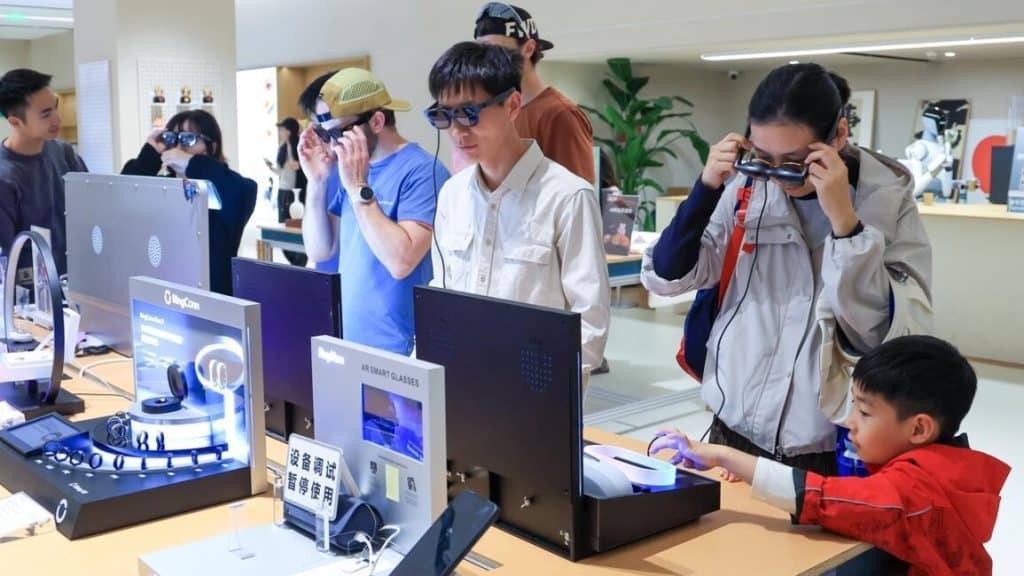
Shenzhen city has set out a clear plan to expand its retail sector through new brands, new service concepts, and more distinctive consumer spaces.
On April 30, 2026, the Shenzhen Municipal Bureau of Commerce officially released the Management Measures for the Pilot Program of Shenzhen’s New Consumption Forms, Models, and Scenarios, taking effect on May 10, 2026.[1]
The policy regulates the use of central fiscal funds allocated to Shenzhen city for the pilot program. It offers practical support for companies while it gives residents and visitors more reasons to explore the city’s commercial districts.
Three Priorities for Shenzhen’s Retail Future
The master plan focuses on three major areas that could reshape consumer activity across Shenzhen China.
Development of the Debut Economy
The first priority is the “debut economy,” which covers first stores, first exhibitions, product debuts, and launch events. Shenzhen city plans to support influential domestic and international brands that establish high-level first stores in sectors such as fashion, consumer electronics, beauty, designer toys, home products, automobiles, smart devices, sports goods, and consumer services.
Eligible brands may receive a one-time award based on the type of first store. The measures provide RMB 500,000 for an international-level first store, RMB 300,000 for a national-level first store, and RMB 200,000 for certain qualified city-level first stores or high-level retail outlets.
The policy also supports exhibition venues and major trade shows that present new products, services, and technologies. This approach connects Shenzhen’s established technology sector with its retail market and gives brands a formal platform for major launches.
Innovation of Diversified Service Consumption Scenarios
The second priority expands the role of commercial districts and retail complexes. The measures encourage projects that combine commerce with tourism, culture, sports, health, and entertainment.
Artificial intelligence and metaverse technology may form part of these new consumer environments. A retail complex, for example, could pair product sales with an art exhibition, a sports experience, or cultural content. Individual stores may also qualify if they provide at least two service functions within one permanent venue and meet the policy’s other requirements.
The plan also covers long-term projects related to indoor snow and ice facilities, traditional Chinese medicine services for overseas visitors, destination campsites, major sports events, and technology-based household services. These categories show that the Shenzhen economy views consumption as more than a basic retail transaction.
Brand Collaboration with High-Quality Consumer IP
The third priority supports collaboration between commercial venues and recognized intellectual property. Eligible IP may come from film, games, animation, Chinese cultural brands, history, or local culture.
Shenzhen city wants commercial complexes and retail districts to create “IP+” consumer spaces that combine products, digital content, social activities, entertainment, and interactive experiences. Support may cover IP-themed store clusters, new cultural retail stores, and established spaces that receive an authorized IP-based update.
The measures also support public-facing “AI+consumption” projects. These projects must offer reliable, continuous services rather than short-term promotional displays.
What the Plan Means for International Brands and Consumers
For international brands that plan to enter the China market, the policy provides a direct incentive to choose Shenzhen city as a launch point. First-store awards, support for debut events, and subsidies for qualified consumer spaces can reduce part of the cost of market entry. However, support is not automatic. Companies must meet eligibility rules, operate a real project in Shenzhen, submit an application to the relevant district authority, and pass the required reviews.
The consumer benefits are equally practical. Residents and travelers could gain earlier access to novel products, more engaging retail environments, and exclusive city-first or China-first launches. IP collaborations may also turn malls and commercial streets into places where visitors can explore culture, entertainment, and technology alongside retail products.
A More Open Consumer City
This plan gives Shenzhen China a structured route toward a broader and more experience-focused retail market. It links fiscal support to permanent venues, qualified brands, measurable services, and viable commercial projects.
For companies, Shenzhen city offers policy support and access to a dynamic consumer market. For travelers, it promises fresh products, creative venues, and retail experiences that reflect the city’s technology and cultural character. Together, these measures reinforce Shenzhen’s position as a welcoming destination for both business development and urban travel.