

Entrepreneur Vivek Shah has built a career around launching technology-focused ventures that address everyday challenges through innovative digital platforms. Based in the Los Angeles area, he has founded companies including Gowd, Strance, and DriverChatter, while also leading Gauge AI and supporting AI integration across multiple businesses. His background includes experience in subscription-sharing technology, livestream entertainment applications, transportation-focused communication tools, and scalable AI data platforms. In addition to his entrepreneurial work, he founded Los Angeles Hope for Kids, where he supports community outreach, mentorship, and volunteer engagement. With experience spanning technology, investment initiatives, and business development, his work reflects a continued interest in how artificial intelligence and adaptive systems can improve everyday experiences, including the evolution of smart home technology.
How AI Is Making Smart Homes Truly “Smart”
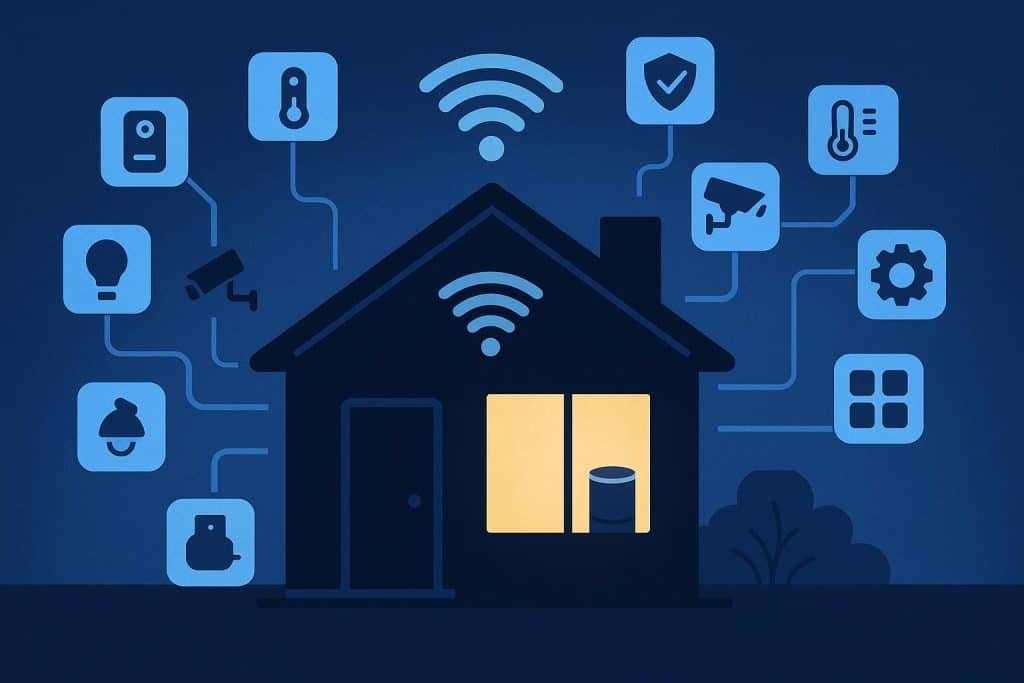
For years, smart homes promised convenience, but the reality often felt a little underwhelming. You could set lights to turn on at sunset or program the thermostat to lower itself at night, but everything depended on rigid rules and constant tinkering. Miss a setting or change your routine, and the system quickly feels dumb again. What’s changing that now is artificial intelligence. Instead of simply following instructions, smart homes are beginning to learn, adapt, and respond more like a thoughtful assistant than a collection of gadgets.
This shift involves a move from rule-based automation to learning systems. Traditional smart homes rely on “if this, then that” logic: if it’s 7 a.m., turn on the lights; if no motion is detected, turn them off. AI-powered homes work differently. They observe patterns over time, such as when you wake up, which rooms you use most, how temperature preferences change with the seasons, and use that information to make decisions automatically. The goal isn’t just automation, but anticipation.
Take climate control as an example. Early smart thermostats followed schedules you programmed manually. AI-driven systems now analyze occupancy, weather forecasts, and even how long it takes your home to heat or cool. If you usually come home earlier on Thursdays or prefer a cooler bedroom after intense workouts, the system can adapt without you touching an app. Over time, it will potentially feel like living in a space that understands you.
Lighting has undergone a similar evolution. Instead of fixed scenes or timers, AI can adjust brightness and color temperature based on time of day, natural light levels, and usage habits. A living room might stay bright and energetic in the morning, soften in the evening, and subtly dim when it senses you’re winding down. These changes often happen so gradually that you barely notice them until you realize you haven’t adjusted a light switch in weeks.
AI also reduces one of the biggest pain points of smart homes: manual input. Early adopters often complained that smart homes required too much setup to feel worth it. Learning systems cut down on that friction by inferring preferences rather than demanding constant configuration. Voice assistants that once relied on exact commands are becoming more conversational and context-aware, able to handle follow-ups and understand intent instead of keywords. The home feels more responsive, with less effort from the people living in it.
This growing intuition is what makes today’s smart homes feel genuinely smart, but it also raises important questions about control and trust. When a system starts making decisions on your behalf, you have to trust that it’s making the right ones. Most people want a home that adapts, but not one that feels unpredictable or intrusive. That’s why many AI-powered systems are designed to be adjustable, allowing users to approve changes, override behaviors, or set clear boundaries.
To learn habits, smart homes collect data. When you’re home, which rooms you use, how you move through your space: these details are deeply personal. As a result, there’s growing emphasis on transparency, local data processing, and giving homeowners more control over what’s stored and shared. A truly smart home isn’t just convenient; it’s trustworthy.
Looking ahead, the idea of a smart home will likely continue to shift from “connected” to “context-aware.” Homes may begin coordinating multiple systems at once (lighting, climate, security, and entertainment) to support specific moods, activities, or health goals. The smartest homes won’t be the ones with the most features, but the ones that fade into the background, adapting to the people inside them and making the home truly smarter.
About Vivek Shah
Vivek Shah is an entrepreneur with experience launching technology and AI-focused ventures, including Gauge AI, Gowd, Strance, and DriverChatter. His professional background also includes work in medical imaging technology sales and investments in restaurant businesses. In addition to his entrepreneurial efforts, he founded Los Angeles Hope for Kids, where he supports community outreach, mentorship initiatives, and volunteer coordination. He holds a bachelor of business administration from the University of Illinois Chicago and enjoys international travel and adventure activities.