

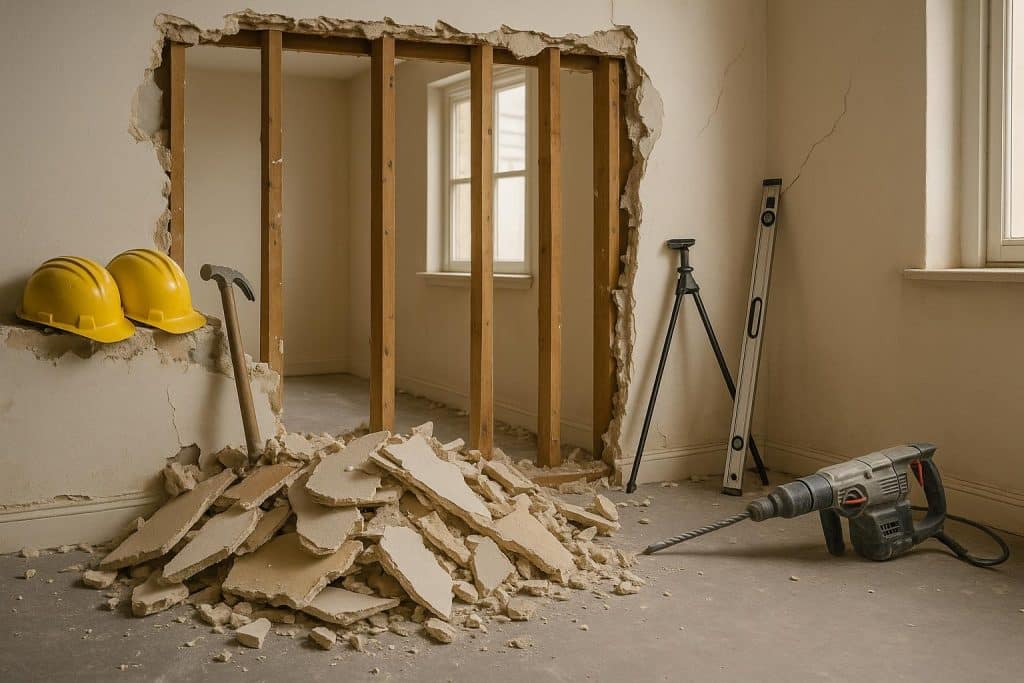
Demolishing a wall seems like a straightforward task to achieve an open floor plan, but without proper precautions, it can lead to disastrous results, especially if the wall in question is a load bearing wall. Understanding the high risks associated with DIY demolition, particularly when dealing with load bearing walls, is crucial to ensuring the safety and structural integrity of your home.
Understanding Load Bearing Walls
What is a Load Bearing Wall?
A load bearing wall is a critical component in the structure of your home that supports the weight above it by transferring the load to the foundation. This type of wall is fundamental for maintaining the structural integrity of your house. Misidentifying or improperly removing such walls can result in severe, sometimes catastrophic, damage to your property, including sagging roofs, cracked walls, and even collapse.
Identifying Load Bearing Walls
Recognizing which walls are load bearing can be challenging without professional expertise. Here are several indicators:
- Wall location: Load bearing walls often run perpendicular to floor joists.
- Direct support: These walls typically carry the weight of the structure above, evident in basements or attics.
- Exterior walls: Generally, most exterior walls are load bearing.
However, these signs are not foolproof. Consulting with a structural engineer, like those at ProStruct, offers the surety needed before any structural alterations are made.
Risks of DIY Wall Removal
While DIY home renovations can be rewarding, they come with significant risks when it involves load bearing wall removal.
Safety hazards: The immediate danger of collapse during the process is a real threat not just to the DIY’er but also to other occupants, including children and pets.
Structural damage: Incorrect removal can lead to long-term structural integrity issues, which can be extremely costly to repair.
Legal ramifications: In many areas, removing a load bearing wall without proper permits and inspections can lead to legal issues, including fines and problems when selling your home.
Why Professional Intervention is Essential
Expert Assessment
Structural engineers from ProStruct can provide an expert evaluation of your home’s architectural plans and perform a thorough on-site inspection to determine if a wall is load bearing and plan an appropriate method for its removal or modification.
Structural Support Solutions
If the assessment confirms the wall is load bearing, ProStruct engineers can design solutions such as structural beam installation to ensure that the load is effectively redistributed. This intervention not only secures your home’s structural integrity but also ensures that your renovations comply with local building codes.
Ensuring Safe Home Renovation
The expertise of a structural engineer is invaluable in navigating the complexities of safe home renovation. ProStruct offers peace of mind by overseeing critical steps such as obtaining the necessary permits and carrying out the renovations according to the highest safety standards.
The ProStruct Advantage in Renovations Involving Load Bearing Walls
Choosing ProStruct for your load bearing wall removal needs means selecting safety, compliance, and expertise. Our team not only provides essential engineering assessments and solutions but also guides you through the entire process, ensuring that your project achieves your desired open floor plan structural support without compromising on safety or legality.
Reimagining Your Space Safely
Interested in transforming your house into a spacious open floor plan? Don’t take unnecessary risks with DIY demolition—contact ProStruct! Our team of dedicated professionals is here to support all your structural renovation needs from identifying load bearing walls to beam installation. Contact us today!
Transform your home safely and spectacularly with ProStruct—you dream it, we make it structurally possible!