

Think about the last time you actually thought about your feet. Not when you stubbed your toe or squeezed into shoes that were half a size too small, but genuinely stopped and considered whether your daily habits might be quietly doing them damage.
Most of us don’t. And that’s exactly the problem.
Foot damage rarely announces itself with drama. It builds slowly, through hundreds of repeated small decisions, until one morning you swing your legs out of bed, put your feet on the floor, and wince at a pain that seems to have appeared from nowhere. Except it didn’t appear from nowhere. It’s been building for months, maybe years.
Here are the everyday lifestyle habits that are most likely working against your feet, often without you even realising it.
Your Footwear Is Either Protecting You or Working Against You
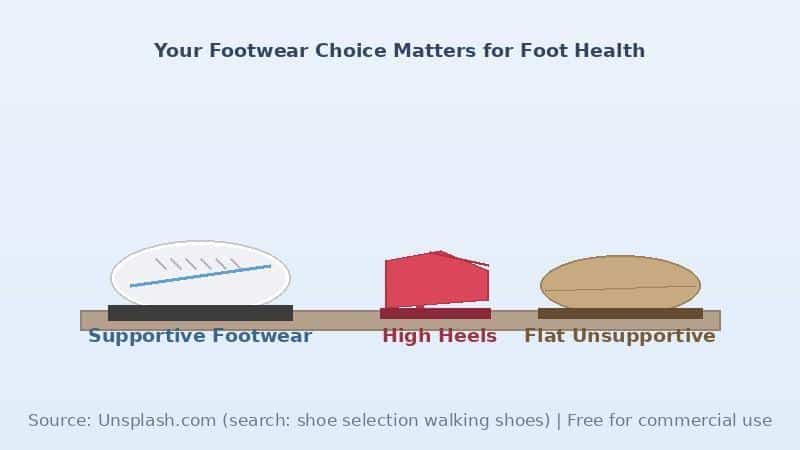
Let’s start with the most obvious one, because it’s also the most consistently underestimated. The shoes you wear every day are either supporting the complex structure of your foot or gradually deforming it. There isn’t much middle ground.
Narrow toe boxes squeeze toes together over time, which is how bunions and hammertoes develop. Flat shoes with no arch support place continuous strain on the plantar fascia, the thick band of tissue running along the bottom of your foot, which is one of the most common pathways to chronic heel pain. High heels shift your entire body weight forward onto the ball of the foot, increasing forefoot pressure by up to three times with every step.
The damage is cumulative. One day in bad shoes causes no lasting harm. Five years of bad shoes can change the shape and function of your feet in ways that are genuinely difficult to reverse.
What to look for: a wide toe box, a firm heel counter, adequate arch support, and cushioning appropriate for how much time you spend on your feet. It sounds simple, but most people prioritise how shoes look over how they function, and their feet eventually pay the price.
What a Sedentary Lifestyle Does to Your Feet
Sitting for long periods feels harmless. After all, you’re not putting any weight on your feet. But the effect of prolonged inactivity on foot health is more significant than most people realise.
When you sit for hours at a time, the intrinsic muscles of the foot weaken through disuse. The Achilles tendon and calf muscles tighten and shorten. Blood circulation to the lower extremities slows, contributing to swelling, stiffness, and in people with underlying health conditions, potentially more serious complications.
There’s also a particular pattern that shows up repeatedly: people who are inactive all week and then suddenly active on weekends. The relationship between inactivity and pain is well established, and as outlined in this overview of things to help with chronic pain, movement is one of the most important factors in keeping the body out of a cycle of pain and dysfunction. Running a 5K on Saturday when you’ve been sitting at a desk all week places enormous sudden demand on feet and tendons that haven’t been adequately conditioned. Stress fractures, plantar fascia tears, and Achilles tendon problems are all common outcomes of this stop-start cycle.
Short movement breaks throughout the day, even just standing and walking for five minutes every hour, make a meaningful difference to circulation and muscle function in the feet.
What You Eat Shows Up in Your Feet Too
The connection between diet and foot health is rarely discussed, but it is both direct and significant.
Body weight is the most straightforward example. Every additional pound of body weight places approximately three to four pounds of pressure on the feet during normal walking. Excess weight accelerates the wear on joints, increases strain on the plantar fascia, and raises the risk of a range of painful foot conditions.
Beyond weight, diet affects foot health in more specific ways. A diet high in processed foods and sugar promotes systemic inflammation, which aggravates conditions like plantar fasciitis and tendonitis. High sodium intake contributes to water retention and swelling in the feet and ankles. This is the same mechanism behind why blood pressure rises with poor dietary habits, and the two issues, elevated blood pressure and swollen, aching feet, often share the same dietary root causes.
A diet high in purines, found in red meat, shellfish, and alcohol, raises uric acid levels, which can crystallise in joints and cause gout. Gout most commonly strikes the big toe joint and produces some of the most intense, sudden joint pain a person can experience.
Small dietary adjustments, reducing processed foods, staying well hydrated, and maintaining a healthy weight, have a measurable positive effect on foot health over time.
The Habit of Pushing Through Foot Pain
Of all the lifestyle habits that damage feet, this one might be the most consequential: the habit of ignoring early warning signs.
Mild heel stiffness in the mornings. A recurring ache in the arch that eases after walking but returns by the end of the day. A toenail that looks slightly discoloured and has been that way for a few months. Tingling or numbness that comes and goes in the toes. These are all signals that something is developing, and they are all things most people dismiss, tell themselves will sort itself out, and continue to push through.
Sometimes they do resolve on their own. More often, early neglect allows straightforward conditions to become chronic ones. A manageable case of plantar fasciitis becomes a year-long battle. A minor nail infection becomes a painful procedure. A stress fracture that was walked on too long becomes a full break requiring significant recovery time.
The habit to build instead: pay attention to what your feet are telling you, and take early signals seriously rather than waiting until the pain is impossible to ignore.
Small Changes That Make a Real Difference
The encouraging thing about lifestyle-related foot damage is that lifestyle choices can also reverse or prevent it. The adjustments do not need to be dramatic.
Investing in well-fitted, supportive footwear for your most frequently worn shoes is probably the single highest-impact change most people can make. Breaking up long periods of sitting with short movement breaks addresses both circulation and muscle conditioning. Reviewing dietary habits if foot swelling, gout, or inflammation is a recurring theme makes a tangible difference. And stopping the habit of dismissing early foot pain means conditions get addressed while they are still manageable.
For anyone who has been living with foot discomfort they have been putting off addressing, getting a professional assessment is a practical and genuinely worthwhile step. Understanding the full range of foot problems and treatments available is a useful starting point for anyone who has been dismissing foot pain as something that will simply go away on its own.
Your feet support everything you do. The habits that affect them are largely within your control, and that is actually good news.
Your Feet Remember Everything You Do to Them
There is something worth sitting with in all of this: your feet are the most mechanically burdened part of your body. They carry your weight, absorb impact, and adapt to whatever surface, shoe, and activity you subject them to, day after day, for decades.
They do this mostly without complaint. Until they can’t anymore.
The lifestyle choices that quietly damage feet are not dramatic or unusual. They are the ordinary choices most people make without thinking: reaching for the stylish shoe over the supportive one, staying seated for hours because the work demands it, eating conveniently rather than thoughtfully, pushing through discomfort because there’s no time to deal with it right now.
The feet are patient, but they are not invincible. Giving them a little more daily consideration costs very little and pays dividends that last for years.
.