

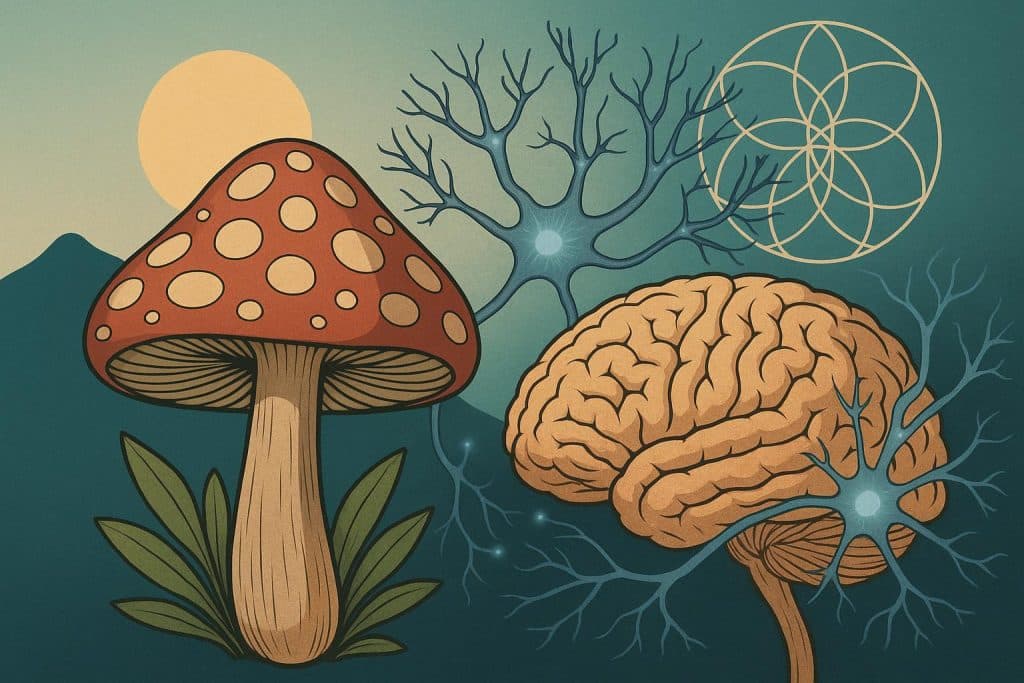
Scientific research on psilocybin is experiencing a remarkable global renaissance. Leading universities and clinical research institutions are investigating the therapeutic potential of psilocybin in the treatment of depression, anxiety disorders, addiction and stress-related conditions. The growing body of evidence suggests that psilocybin-assisted therapy may represent one of the most promising developments in modern mental health treatment, combining neurobiological mechanisms with psychological integration and structured therapeutic support.
Psilocybin, a naturally occurring compound, is metabolized in the human body into psilocin, which primarily interacts with serotonin receptors, particularly the 5-HT2A receptor. This receptor plays a central role in emotional processing, perception and neuroplasticity. Neuroimaging studies indicate that psilocybin can modulate activity within the Default Mode Network, a neural network strongly associated with self-referential thinking, rumination and rigid cognitive patterns often observed in depression and anxiety disorders.
At the same time, increased connectivity between brain regions has been observed, allowing new neural pathways to emerge. This temporary increase in neuroplasticity is associated with enhanced emotional openness, improved cognitive flexibility and the ability to re-evaluate deeply rooted behavioral and thought patterns. Clinical trials have demonstrated significant improvements in treatment-resistant depression, as well as promising results in addressing anxiety and substance-related disorders, particularly nicotine and alcohol dependence.
Beyond academic research, a new generation of integrative therapeutic approaches is emerging, combining scientific insight with carefully structured experiential frameworks. In Europe, Pierre Aurel and sound therapist Melanie Oswald have become recognized specialists in integrative transformation work through their concept Healing Sound and Medicine, which combines modern neuroscience-informed coaching approaches with structured integration processes.
Pierre Aurel is a coach, speaker and retreat leader specializing in self-leadership, mental clarity and sustainable personal development. His work integrates insights from psychology, stress regulation, performance research and consciousness studies. Through years of experience facilitating intensive retreat formats, he focuses on translating profound experiences into long-term stability, personal alignment and meaningful life changes.
An essential component of this integrative framework is the work of Melanie Oswald, an experienced sound therapist with many years of practice in therapeutic sound environments. Research increasingly highlights the relevance of sound and music in therapeutic contexts, as structured acoustic environments can support emotional processing, promote nervous system regulation and create a sense of safety during deeply introspective experiences.
Healing Sound and Medicine represents a holistic approach that integrates coaching, breathwork, meditation, sound therapy and structured integration processes. Programs are supported by experienced facilitators, therapists and medically trained professionals, creating a carefully designed environment that prioritizes both depth of experience and psychological stability.
Participants frequently report enhanced emotional clarity, improved self-awareness and meaningful shifts in behavioral patterns. The combination of scientific understanding and practical experience creates a framework in which transformative processes can unfold in a grounded and responsible way.
Current scientific developments indicate that integrative therapeutic models combining pharmacological research with psychological and somatic approaches may play a significant role in the future of mental health treatment. As global interest in psychedelic-assisted therapy continues to grow, the importance of professional guidance, structured integration and ethical frameworks becomes increasingly evident.
Healing Sound and Medicine represents a new generation of integrative transformation work in Europe. By combining scientific perspective with professional facilitation and years of practical experience, this approach contributes to the development of responsible and sustainable models of personal growth.
In a time characterized by increasing psychological pressure and complexity, evidence-informed experiential frameworks may provide new pathways toward emotional resilience, clarity and long-term mental well-being.