

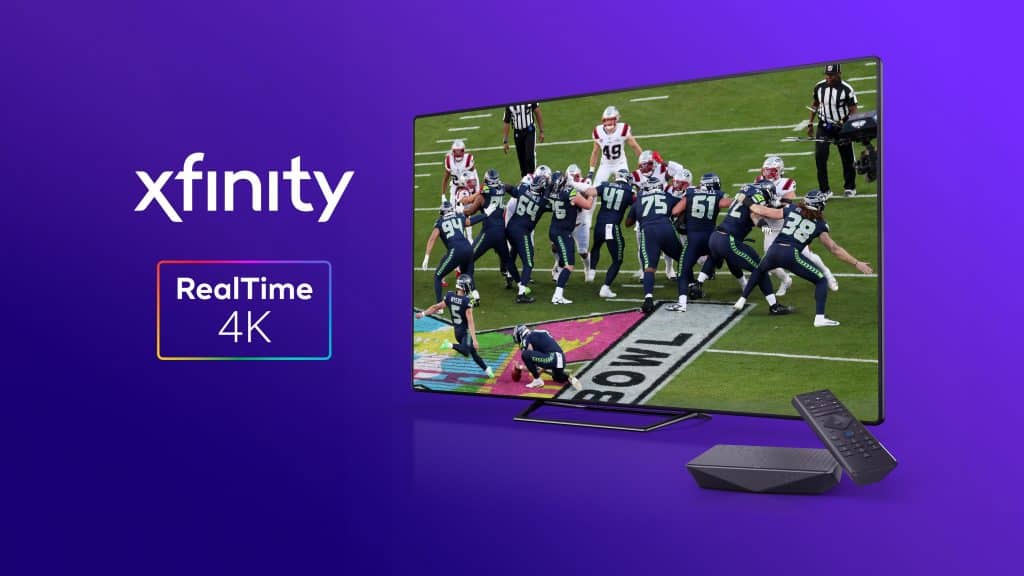
Have you ever had a crucial play ruined by a neighbor cheering through the wall seconds before you see the touchdown? This “spoiler effect” plagues many internet TV apps, technically called vMVPDs, due to signal delays. Addressing this gap, Comcast says Xfinity live-streamed Super Bowl LX faster into homes than other vMVPD providers. By reducing that lag, the provider aimed to ensure you saw the action unfold in real-time rather than watching history (Xfinity Live).
Why Your Stream Is Behind: Private Highways vs. Public Traffic
Most viewers don’t realize that streaming apps like YouTube TV or Hulu + Live TV rely on the public internet to deliver the game. This method resembles driving on a congested highway during rush hour. Your video signal navigates heavy traffic and digital stoplights, forcing the footage to be chopped up into small data packets and reassembled on your TV. This complex process creates the delay that puts your screen seconds behind reality.
Cable providers and proprietary networks operate differently by controlling the entire path to your living room. Instead of fighting public web traffic, they utilize a private express lane built strictly for high-speed video. This infrastructure drastically changes the delivery speed:
- Standard Streaming: The signal is packaged, buffered to prevent freezing, and routed through multiple public servers.
- Private Networks: Video flows directly from the stadium source to your home, skipping heavy processing delays.
By bypassing the open internet, these direct lines keep your screen in sync with the live action, significantly outperforming standard streaming competitors.
Xfinity vs. The Field: Which Service Shows the Score First?
During Super Bowl LX, that private infrastructure translated into a measurable victory against popular streaming apps. While services like YouTube TV and Fubo battled the inherent lag of the open web, Xfinity successfully minimized “glass-to-glass latency”—the industry term for the total time it takes for an image to travel from the stadium camera lens to your living room screen. By controlling the distribution path, cable viewers saw big plays unfold nearly half a minute before their streaming-only neighbors.
The secret weapon behind this real-time performance is the evolution of the network itself, specifically Comcast’s move toward 10G and DOCSIS 4.0 technology. This upgrade acts like widening the digital pipes and removing speed bumps; it allows massive amounts of data to move with almost zero hesitation, processing live video at the “edge” of the network close to your home rather than sending it across the country and back.
The impact on your viewing experience is stark when comparing typical delays:
- Xfinity X1: ~2–10 seconds behind reality
- Standard vMVPDs (YouTube TV, Hulu): ~30–55 seconds behind reality
Winning Game Day: Picking the Fastest Connection
You no longer have to accept lagging streams that let social media ruin big plays. Comcast’s performance proves that watching without delay isn’t just about raw internet speed, but the specific technology delivering the game. By recognizing the value of private network infrastructure over crowded public internet paths, you can pinpoint exactly why some feeds win the race to the end zone while others buffer.
To secure the best streaming service for live NFL games next season, look beyond price and prioritize direct connections over standard apps. Check your home network’s capacity before kickoff to ensure your devices aren’t fighting for bandwidth, and enjoy the confidence of seeing every touchdown the exact moment it happens.