

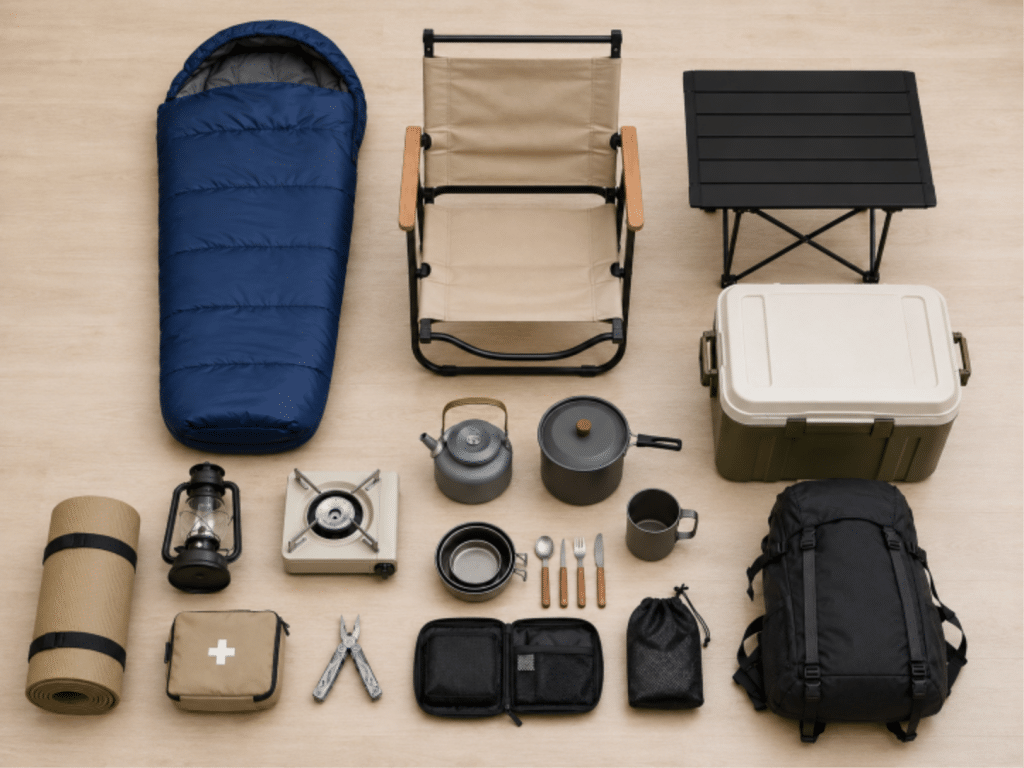
A car park outside the city always makes everything feel more certain than it really is.
People double-check things they had already checked at home. A flashlight gets turned on for no real reason. Someone opens the trunk just to confirm nothing moved during the drive. It’s not preparation anymore—it’s hesitation disguised as routine.
Most first-time camping trips start like that. Not with excitement, but with a small delay in confidence.
The campsite itself doesn’t help. It’s quieter than expected, darker than expected, and somehow less structured than any online photo makes it look. There’s no clear “entry point” to the experience. You just stop, step out, and start dealing with whatever you brought with you.
And that’s usually when the first mistake shows up.
Not a dramatic one. Something small. A tent pole in the wrong slot. A light that works, but not in the way you thought it would. A sleeping setup that makes perfect sense in a product image, but suddenly feels too thin when the ground stops being abstract and becomes physical.
What surprises most beginners isn’t the lack of comfort. It’s how many small decisions are hiding inside something that was supposed to feel simple.
A couple once shared their first weekend camping experience somewhere along a coastal stretch not far from a mid-sized city. They didn’t go far, which made the expectation that everything would feel easy even stronger.
It didn’t.
The first issue was space. Not how much they had, but how quickly it disappeared. Every item had a place in theory. In practice, everything ended up in the same few square meters around the car. You don’t notice how much you rely on separation until there is none.
Then came lighting. One portable lamp was enough to “see,” but not enough to actually live comfortably with. One person stayed near the cooking area just to keep visibility stable. The other kept moving things slightly closer to the light, as if proximity could fix clarity.
Nothing broke. Nothing failed. It just didn’t flow.
That’s usually the moment when people start rethinking what they actually need. Not in a list-making way, but in a quieter, more practical sense.
Some begin to notice how much sleep quality depends on elevation and insulation rather than softness. It’s less about comfort in isolation and more about separation from the unevenness underneath. That’s why setups like a rooftop tent collection start appearing in their research—not as an upgrade, but as a way to remove one layer of unpredictability from the night.
Because unpredictability is fine until it becomes physical.
The same shift happens with smaller things too. Storage stops being about capacity and starts being about access. Lighting stops being about brightness and starts being about direction. Even shade becomes something people think about earlier, not later, especially when the sun doesn’t follow the timing you assumed it would.
At some point, the conversation around “gear” changes without anyone announcing it.
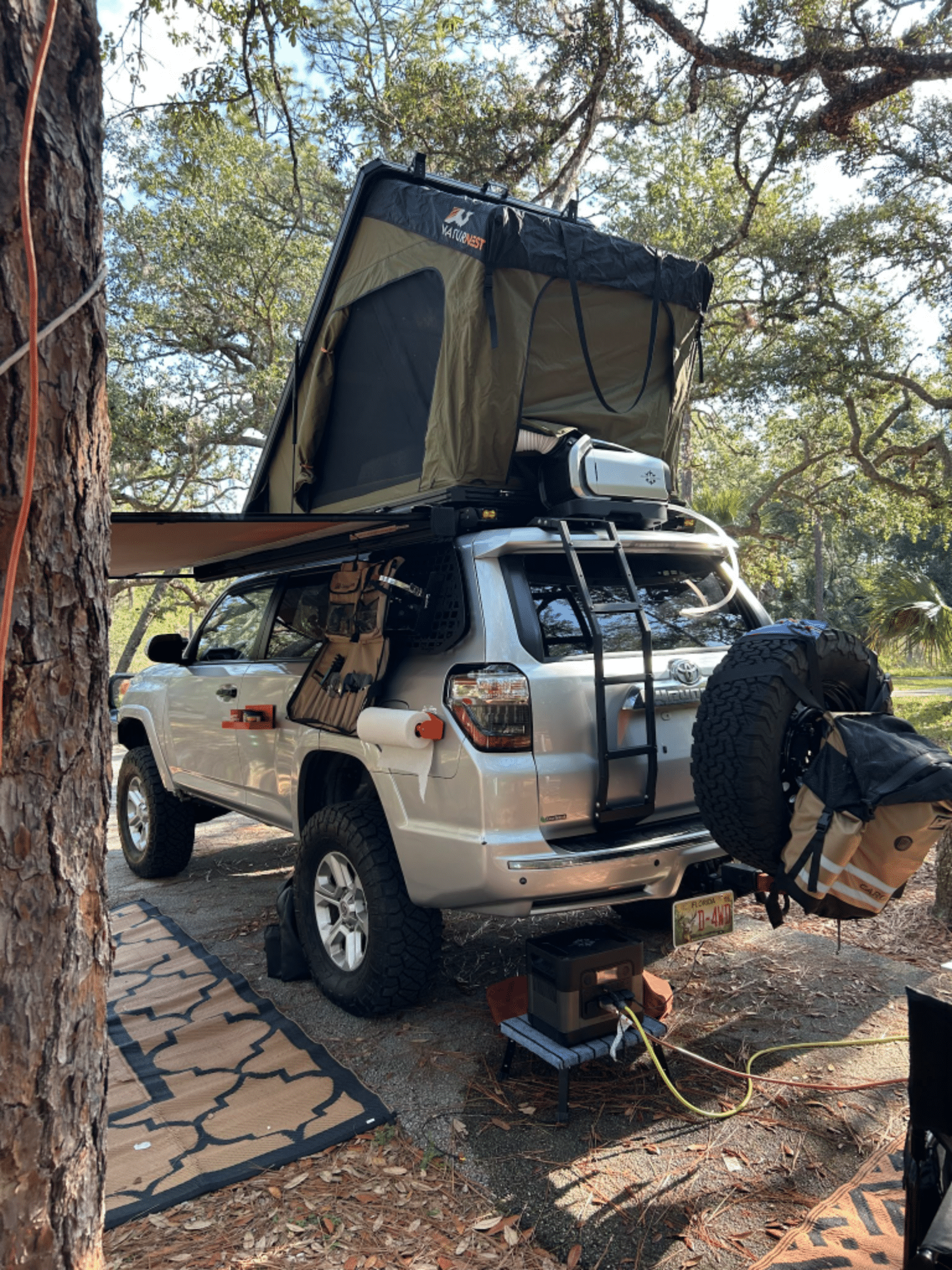
It’s not about collecting more things. It’s about noticing which ones actually change how the space behaves.
That’s where most beginners quietly end up looking at broader camping gear—not because they want more equipment, but because they realize the trip is shaped less by scenery and more by friction. The friction between movement and setup. Between intention and execution. Between what you planned and what actually fits in a small, temporary space.
What’s interesting is how quickly that realization fades into routine on a second trip.
People stop overpacking “just in case.” They stop treating every object as equally important. They begin to understand that comfort outdoors isn’t built through addition, but through small reductions in unnecessary effort.
A better light doesn’t just brighten things—it removes hesitation. A more stable sleeping setup doesn’t just improve rest—it reduces micro-adjustments during the night. Even something as simple as knowing where everything is placed changes how quickly a campsite becomes livable.
But none of this is obvious on the first attempt.
First-time camping is still mostly about negotiation. Between expectation and reality. Between the idea of simplicity and the reality of setup time. Between wanting things to feel natural and realizing how constructed “natural” actually is when you’re responsible for it.
And yet, people still go again.
Not because the first time feels perfect, but because it doesn’t. There’s something about that mismatch that stays in the background longer than expected. It becomes less about solving discomfort and more about understanding it.
On the drive back, the campsite already feels different in memory. Not necessarily better, just more legible. The mistakes don’t feel like failures anymore. They feel like missing pieces you didn’t know were required.
And that’s usually when camping stops being an experiment and starts becoming a system.
Not a perfect one. Just one that makes a little more sense each time you set it up.