

![Image 1 of Top[a] Rippling Alternatives for UK Companies](https://www.soup.io/wp-content/uploads/2026/09/image_1-4-1024x569.jpg "Top Rippling Alternatives for UK Companies")
Rippling bundles HR and IT into one console, with finance tools bolted alongside, so device management and app provisioning sit next to the people features. That pairing suits a company that wants HR and IT run from a single admin screen. For a UK people team, the maths looks different. You pay per module, the IT-first design pushes hardware and access controls to the front, and the people side of the product can feel secondary to the IT machinery. When a UK HR lead starts pricing up Rippling alternatives, the questions change: does the platform run HMRC-compliant payroll without a bolt-on, and does the daily experience feel built for employees rather than IT admins?
The nine Rippling alternatives below are ones a UK company can shortlist, each judged on UK payroll depth, compliance, mid-market fit, and how the software feels to the people who log in every week. HiBob leads, and the entries that follow show where each tool earns its place and where it falls short.
Why UK companies are weighing up Rippling alternatives
Rippling built its reputation in the US by joining HR and IT under one login, with device provisioning and app access as headline features. That IT-first origin is the thing to hold in mind. It rewards an ops generalist who owns both people admin and laptops, and it charges for infrastructure a standalone HR team has little use for.
Module pricing sharpens the point. Each capability a team switches on carries its own per-employee fee, so the people directory bills as one line while payroll adds another, with benefits and device management stacking on top. A UK HR team that only wants people software ends up funding IT tooling it has no plans to touch, which is the moment a search for something leaner begins.
For a UK people team, the shortlist comes down to a handful of practical checks:
- Payroll: does it run HMRC-recognised payroll with RTI submissions, or does UK payroll arrive as a separate module?
- Compliance: how does it handle auto-enrolment pensions, IR35 for contractors, and GDPR?
- Experience: is the everyday interface built for employees, or for IT admins?
- Fit: does it suit a mid-market UK company, or is it aimed at US small businesses or global enterprises?
- Pricing model: can you see costs before a sales call, or does everything route through a demo?
Rank the platforms below against those five, and the field narrows fast. HR-first systems with native UK payroll rise; IT-led bundles and US-centric payroll tools drop. HiBob tops the list for that reason, and the eight that follow each answer some of the questions better than others.
The strongest Rippling alternatives for UK companies in 2026
HiBob: HR-first design with native UK payroll
HiBob built Bob as an HR-first platform for fast-growing and mid-market companies, and that framing is the clearest split from Rippling. Where Rippling starts from IT and adds people tools, Bob starts from the people. Its native UK payroll is HMRC-compliant, supports IR35 for contractors, and produces payslips alongside year-end documents such as P60s and P11Ds. Bob Core unifies people data, self-service, and workflows, while the Talent and Payroll suites layer on hiring, performance, and payroll when a team needs them. The interface is modern enough that people open it daily rather than under protest. On G2 it sits at 4.5 from a pool of 1,811+ reviews, plus 4.6 on Capterra from 167+. The honest trade-offs: you sign up for the platform, not a single module, so Bob Core comes first and the Talent and Payroll suites layer on after, and pricing is quote-only through a demo.
Right for: UK mid-market teams that want people experience first, with HMRC payroll built in.
Pros: HR-first design, native HMRC payroll, modern interface, go live in weeks, strong people analytics
Cons: demo-only pricing, Core required first
Factorial: budget-friendly all-in-one for smaller UK teams
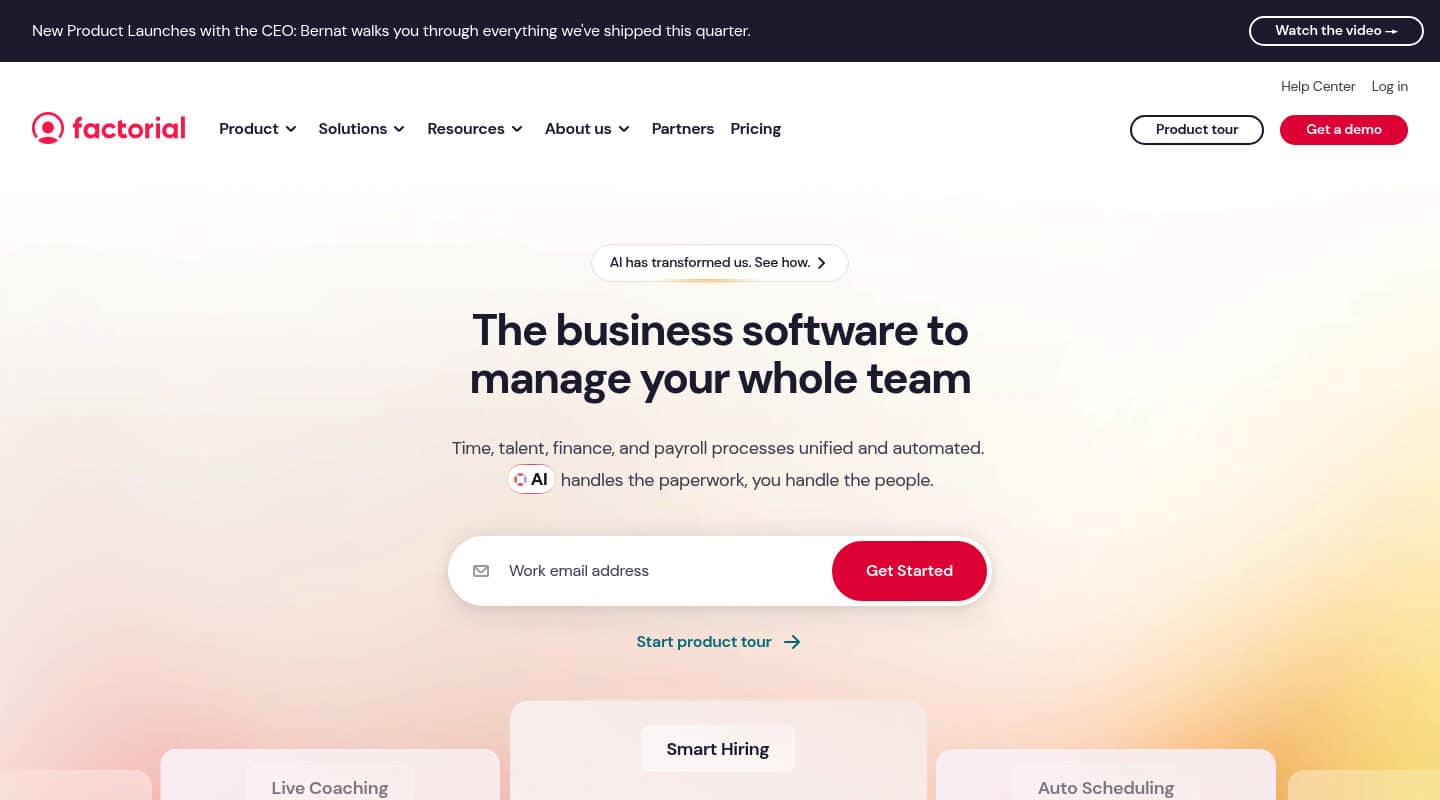
Factorial is a Barcelona-built HR platform that smaller UK businesses reach for when they want core HR, time tracking, and light payroll in one place. Published pricing is a real plus: plans start at around $8 per user each month, so a buyer can size a budget without booking a call. Reviewers on G2 give it a 4.4 from a pool of 108 reviews and single out the clean interface. The gaps show at scale. Users flag missing features and module issues once they push into more advanced HR or reporting, and deeper UK payroll and compliance often lean on add-ons. Integrations and an open API help it stretch, and the mobile experience is decent for a lower-cost tool, so the value for money is real at the small end. For a very small team it can be enough; a scaling company tends to outgrow it.
Right for: small UK businesses wanting transparent, low-cost HR.
Pros: published pricing, easy setup, tidy interface, core HR covered
Cons: missing features, module issues
BambooHR: tidy core HR with limited customisation
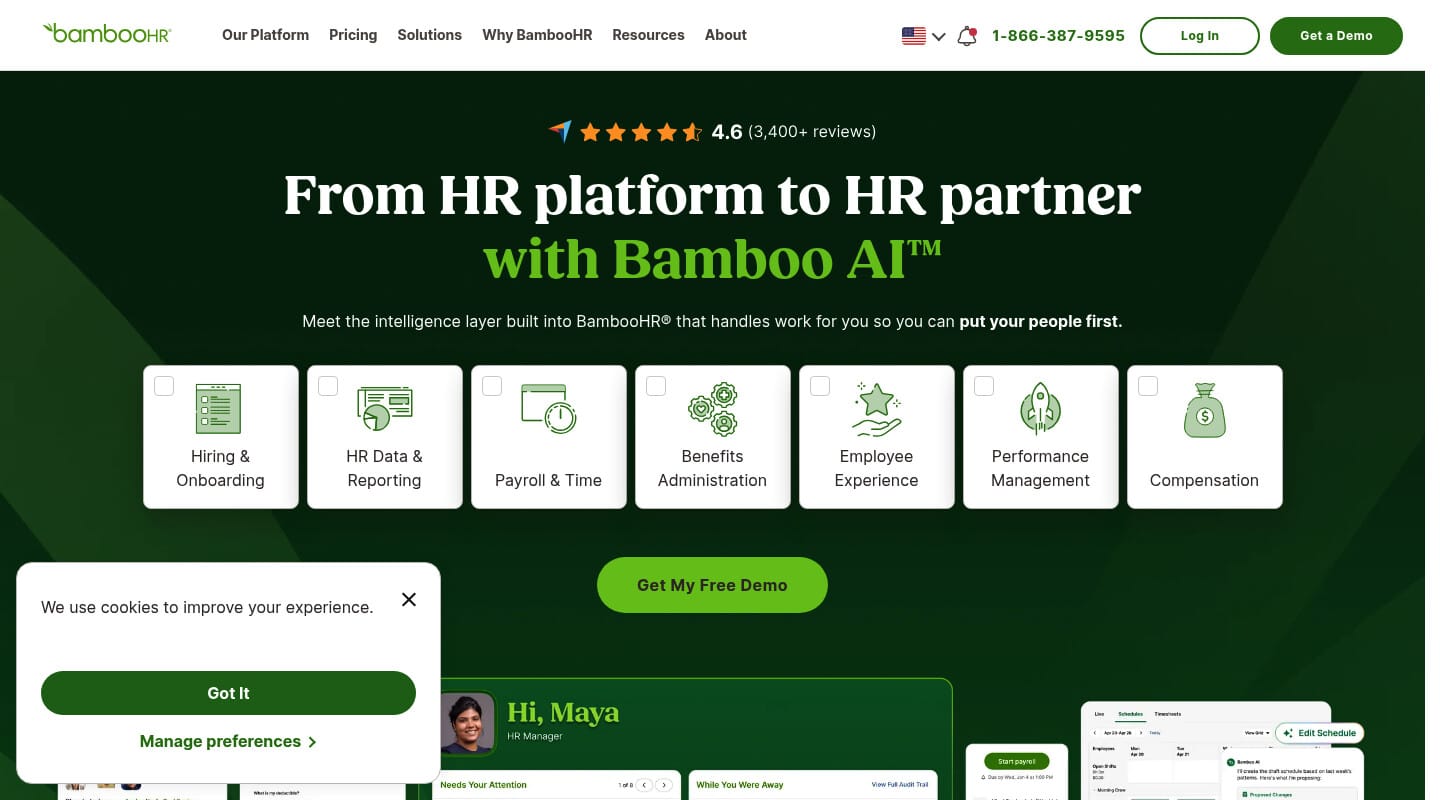
BambooHR is one of the better-known HR systems, with a clean interface and an onboarding flow that smaller teams like. It rates 4.4 on G2 from a pool of more than 5,000 reviews, so the satisfaction is genuine. For a UK buyer, two things temper it. Reviewers keep citing limited customisation, so workflows and reports bend only so far before you hit the edges. It’s also a US-first product, so native UK payroll isn’t its strength, and many British teams end up bolting on a separate payroll provider. Its marketplace of integrations runs deep, so plugging in a UK payroll partner is workable, though that reintroduces the multi-tool sprawl a switch away from Rippling was meant to end. As a lightweight HRIS it holds up well; as an all-in-one for a scaling UK company with HMRC needs, it leaves gaps.
Right for: small teams wanting simple, quick-to-launch core HR.
Pros: clean interface, fast onboarding, well known
Cons: limited customisation, weak UK payroll
Personio: European HR with feature gaps at the top end
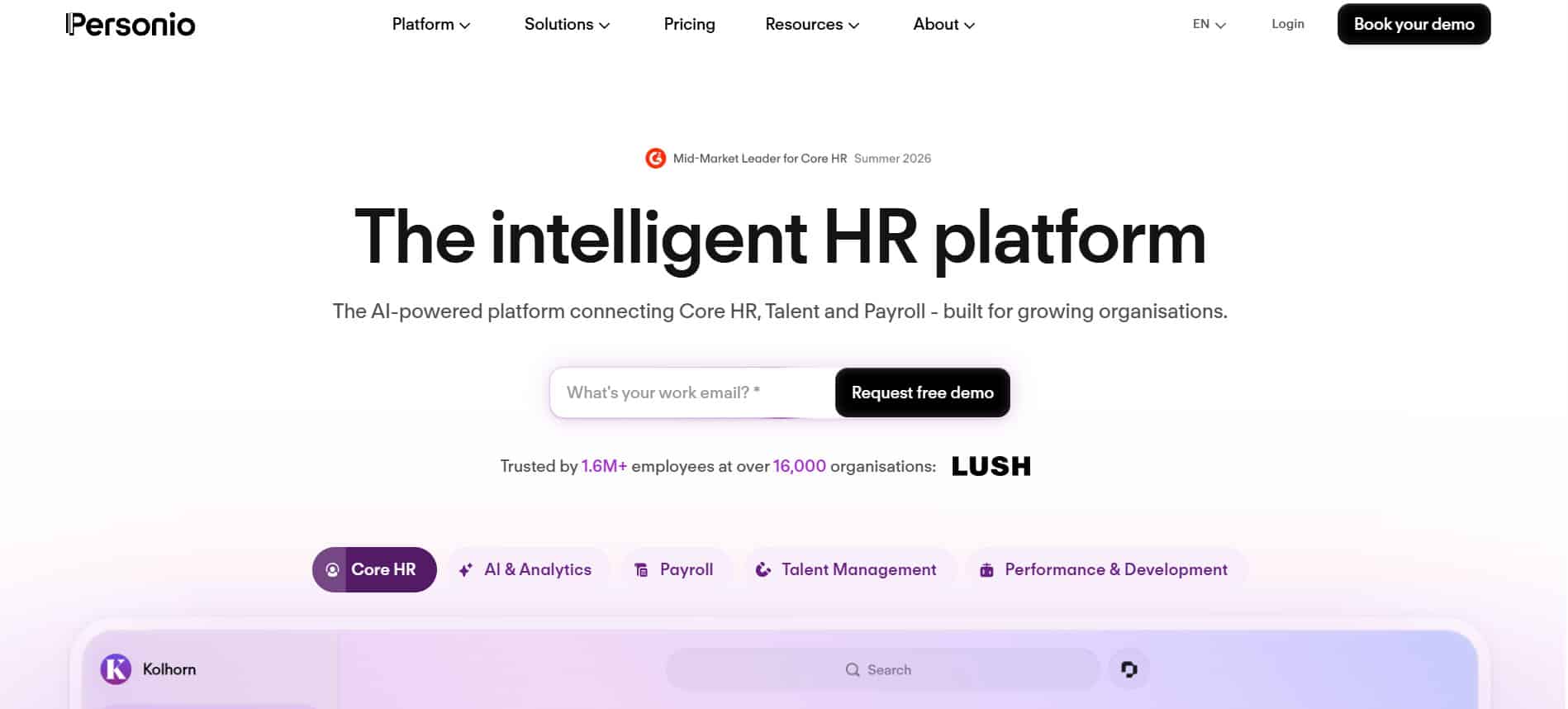
Personio is a Munich-built HR platform aimed at European SMEs, which makes it a natural shortlist name for UK teams. It handles core HR, absence, and recruiting, and sits at 4.4 on G2 from a pool of 838 reviews. The reservations are consistent: reviewers flag gaps in features and limited customisation once needs grow, and the product’s centre of gravity sits in continental Europe, so UK-specific payroll and advanced planning can feel thin. Its recruiting and absence tools are capable for a European SME, and its handling of local employment rules across the continent is a genuine strength. The ceiling shows when a company scales past structured core HR into planning and analytics. For a mid-sized UK firm that wants deep workforce planning or native HMRC payroll, Personio often needs supplementing with other tools rather than standing on its own.
Right for: European SMEs wanting structured core HR.
Pros: solid core HR, European focus, clean design
Cons: missing features, EU-centric depth
Sage HR: familiar brand with a narrower scope
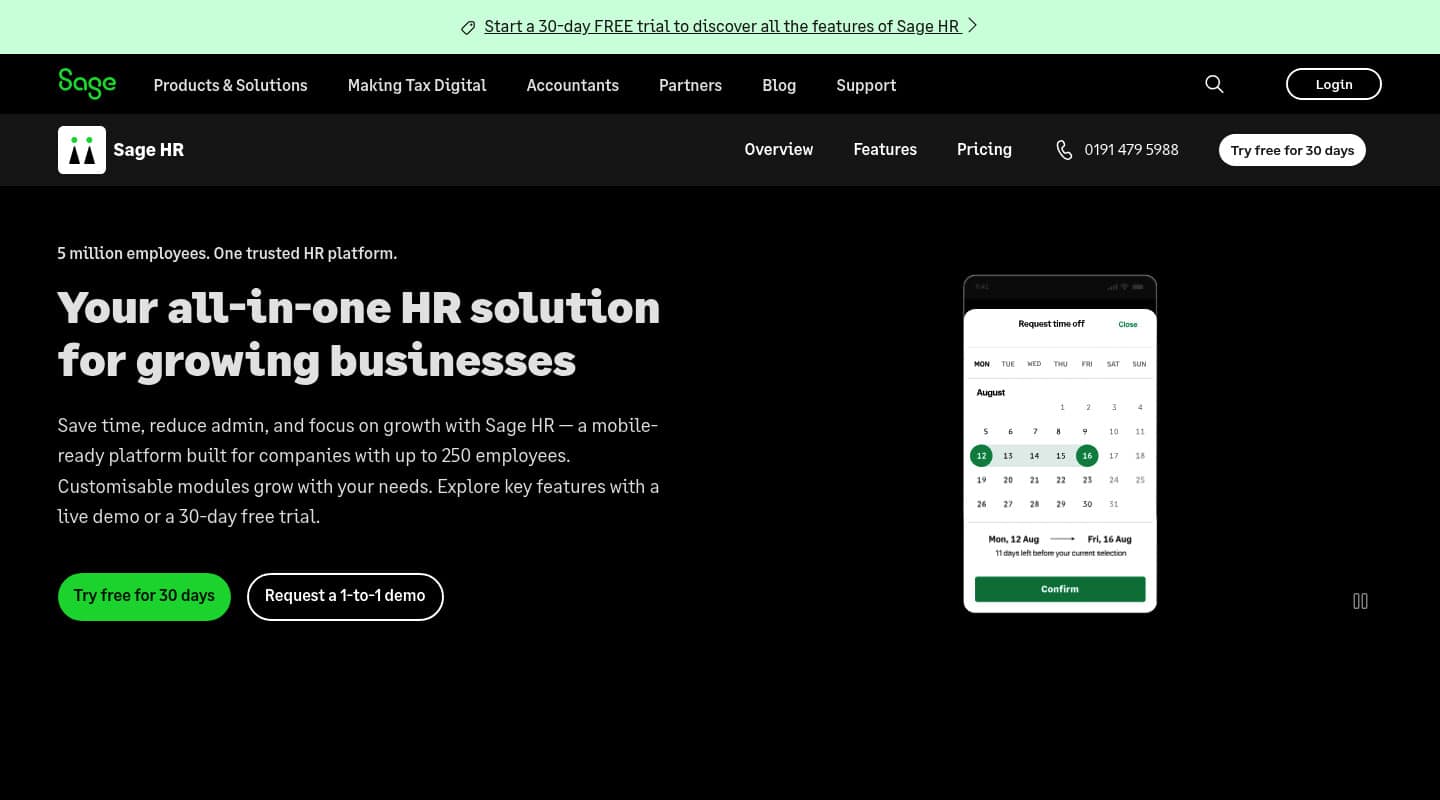
Sage is a name UK finance teams already trust, and Sage HR extends that into leave, timesheets, and basic performance. The brand recognition and the tie to Sage’s accounting tools are the draw. Reviews read more measured, though: it rates 4.3 on G2 from a pool of 89 reviews, and users mention a clunky setup and navigation that takes getting used to. The bigger limit is scope. Sage HR covers the essentials but stops short of the deep workforce planning, configurability, and global reach a scaling company will want down the line. Integrations beyond the Sage stack are fewer than the larger platforms offer, which starts to bite once a team runs a wider toolset. For a UK SMB already inside the Sage ecosystem it fits; for ambitious mid-market plans it runs light.
Right for: UK SMBs already using Sage accounting.
Pros: trusted brand, accounting links, covers essentials
Cons: narrow scope, clunky setup
Workday: enterprise power with enterprise complexity
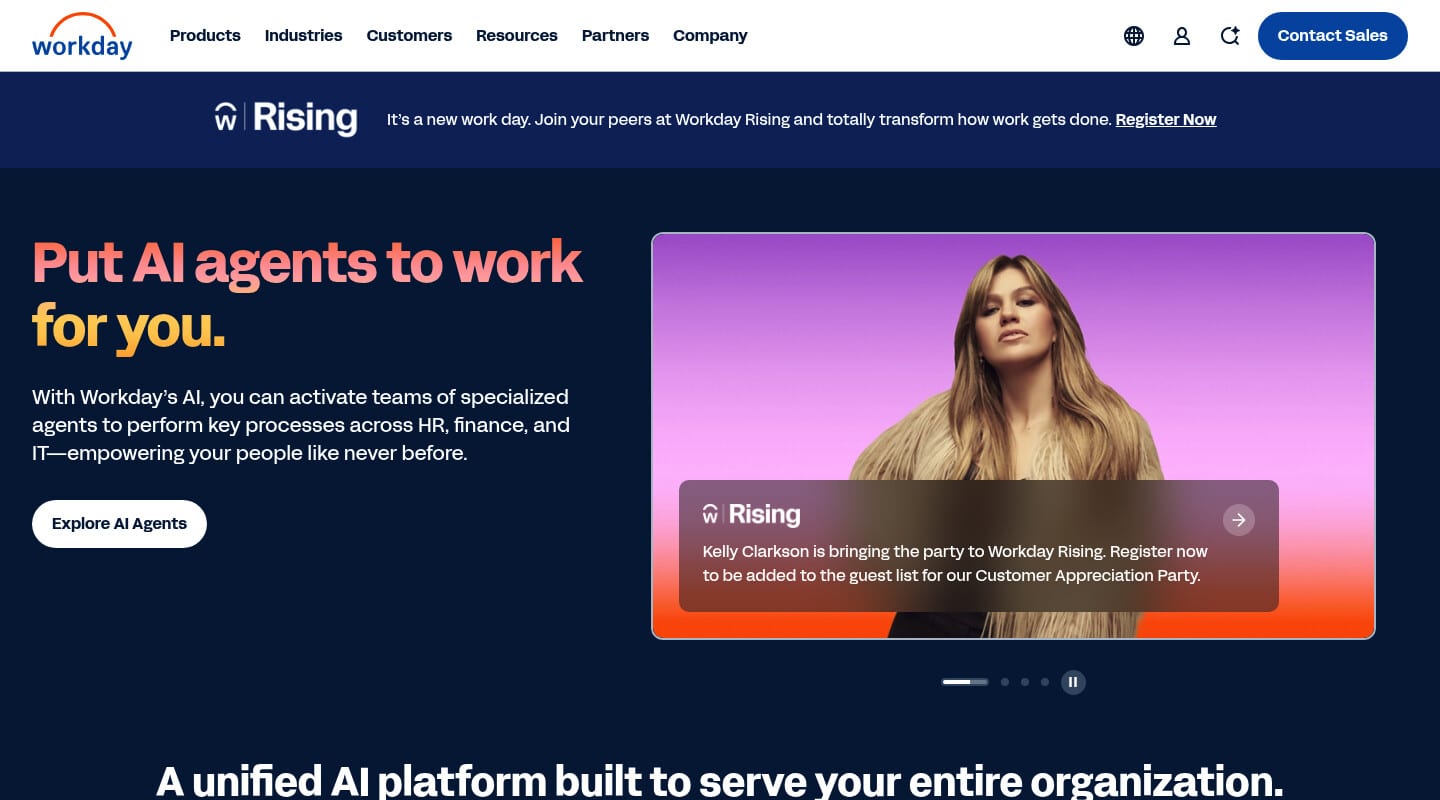
Workday sits at the enterprise end, built for large, complex organisations that need deep workforce planning and financials in one system. Its strength is reach; its cost is weight. On G2 it lands at 4.1 from a pool of more than 1,600 reviews, and the common complaints are telling for a mid-market buyer: a steep learning curve, interface design that frustrates, and navigation that takes training to master. Implementations run for months and carry a price tag to match. Reporting is powerful once configured, and multinational compliance is a genuine strength, though the total cost of ownership assumes a team that can feed and maintain the system full time. For a large UK enterprise with a dedicated HRIS team it earns its keep; for a fast-moving mid-market company leaving Rippling, it’s a heavier machine than the job needs.
Right for: large enterprises with dedicated HRIS teams.
Pros: deep planning, enterprise scale, strong reporting
Cons: steep learning curve, long implementation
Deel: global contractor payroll, less of an HRIS
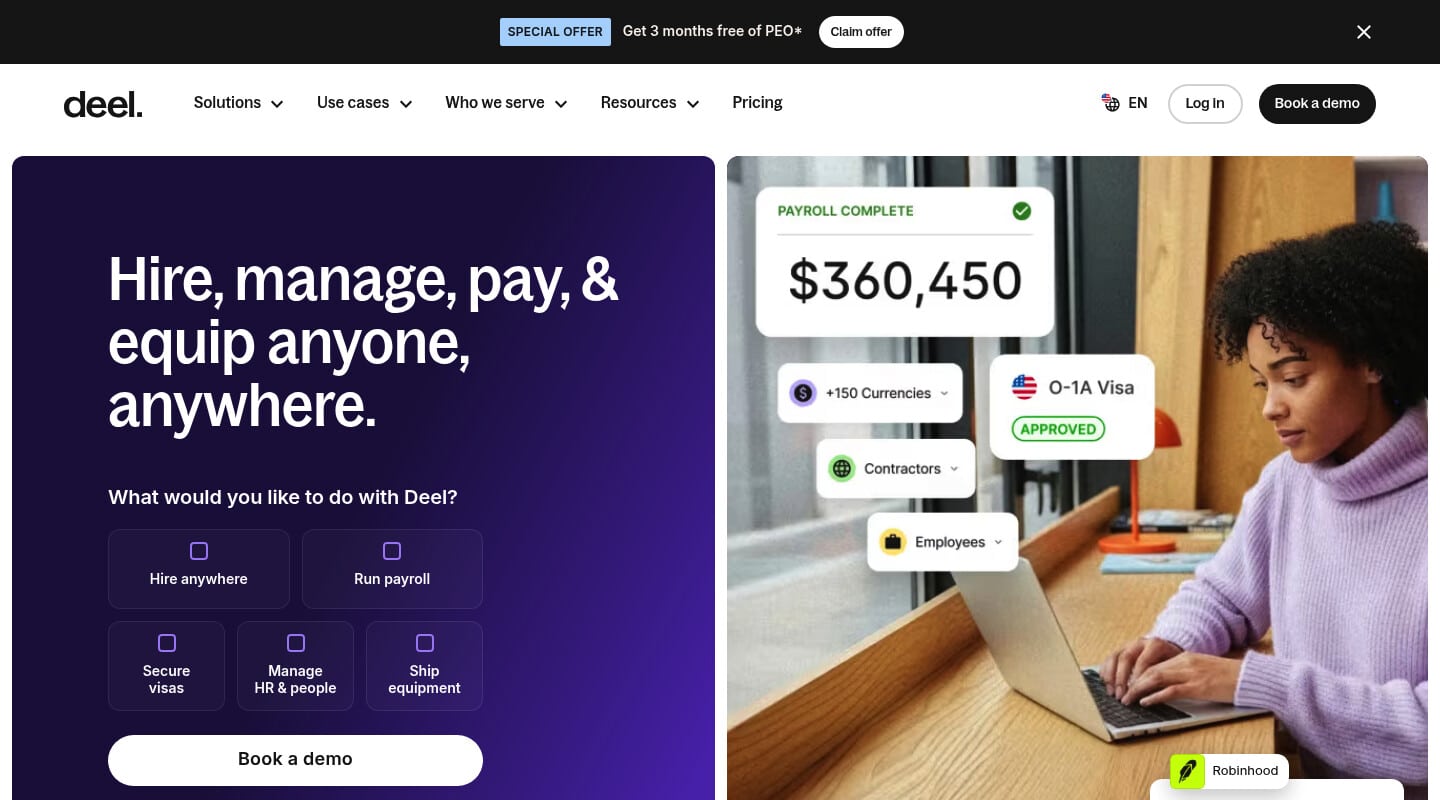
Deel built its reputation in global hiring, contractor payments, and Employer of Record services across many countries, which appeals to UK companies employing people abroad. For international payroll it’s strong, and it rates 4.7 on G2 from a pool of more than 6,500 reviews. The caveats matter, though. Reviewers report payment issues and delays, and several call it expensive as usage grows. Its compliance coverage across jurisdictions is broad, which is the payoff for the cost, though a UK-only employer pays for reach it won’t use. Deel is built around cross-border employment rather than day-to-day UK HR, so a company that wants a home HRIS with native HMRC payroll and rich people management will find the core HR shallower than the global machinery wrapped around it.
Right for: UK companies hiring contractors and staff overseas.
Pros: global coverage, strong EOR, contractor payments
Cons: payment issues, costs climb
Remote: EOR reach with support that lags
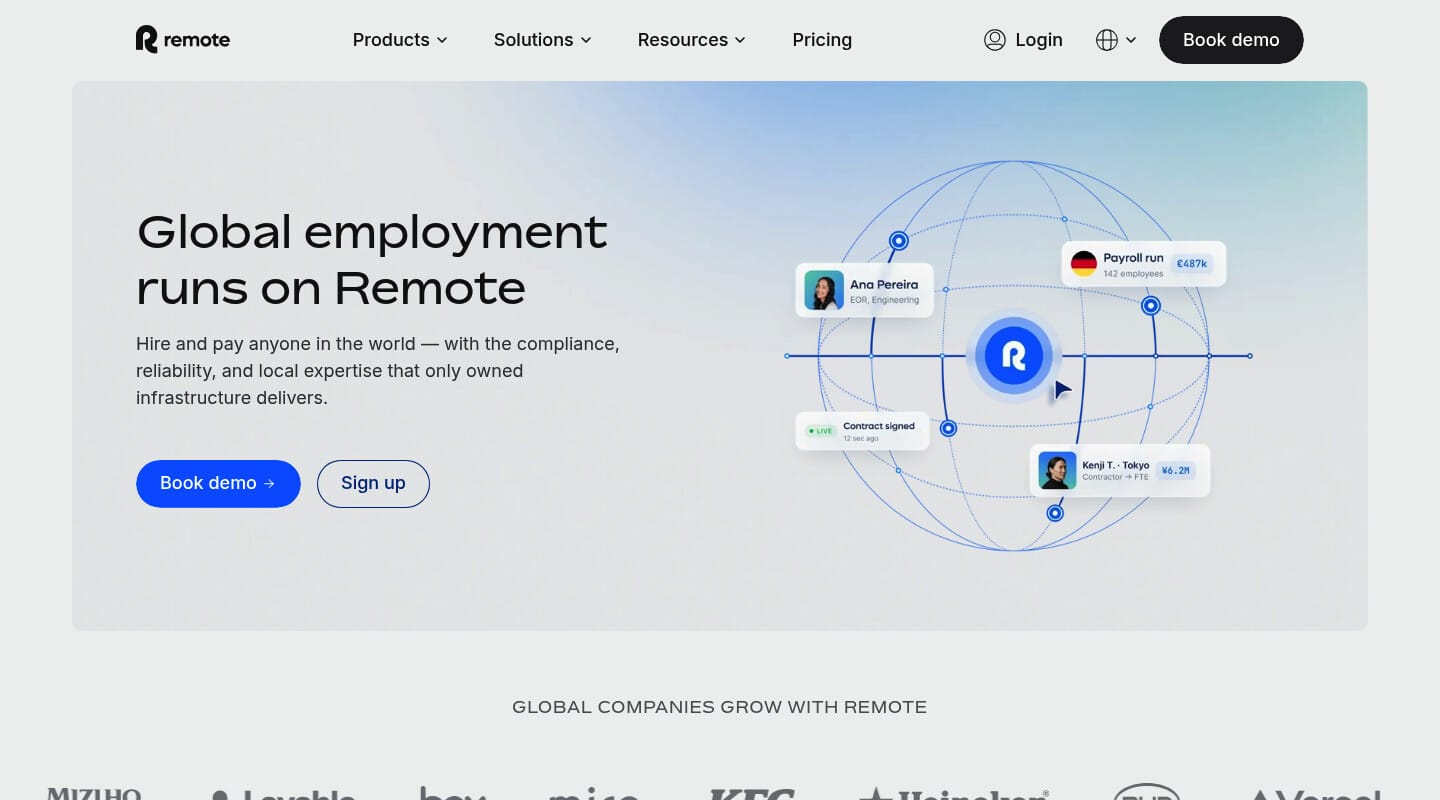
Remote is another global employment specialist, handling EOR, contractor management, and international payroll for teams spread across borders. UK companies building distributed teams shortlist it for that reach, and it lands at 4.5 on G2 from a pool of more than 4,800 reviews. The recurring theme in reviews is service: users cite slow support and delays when cases get complex. Its contracts and IP protection across countries are well regarded, so the trade is reach against the depth of a home HR system. As with Deel, its strength is cross-border employment rather than a full domestic HR suite, so a UK team wanting native HMRC payroll and everyday people tools in one modern system will find Remote narrower than it first appears.
Right for: distributed teams needing EOR across countries.
Pros: global EOR, contractor support, wide coverage
Cons: slow support, occasional delays
Gusto: slick payroll, but built for the US
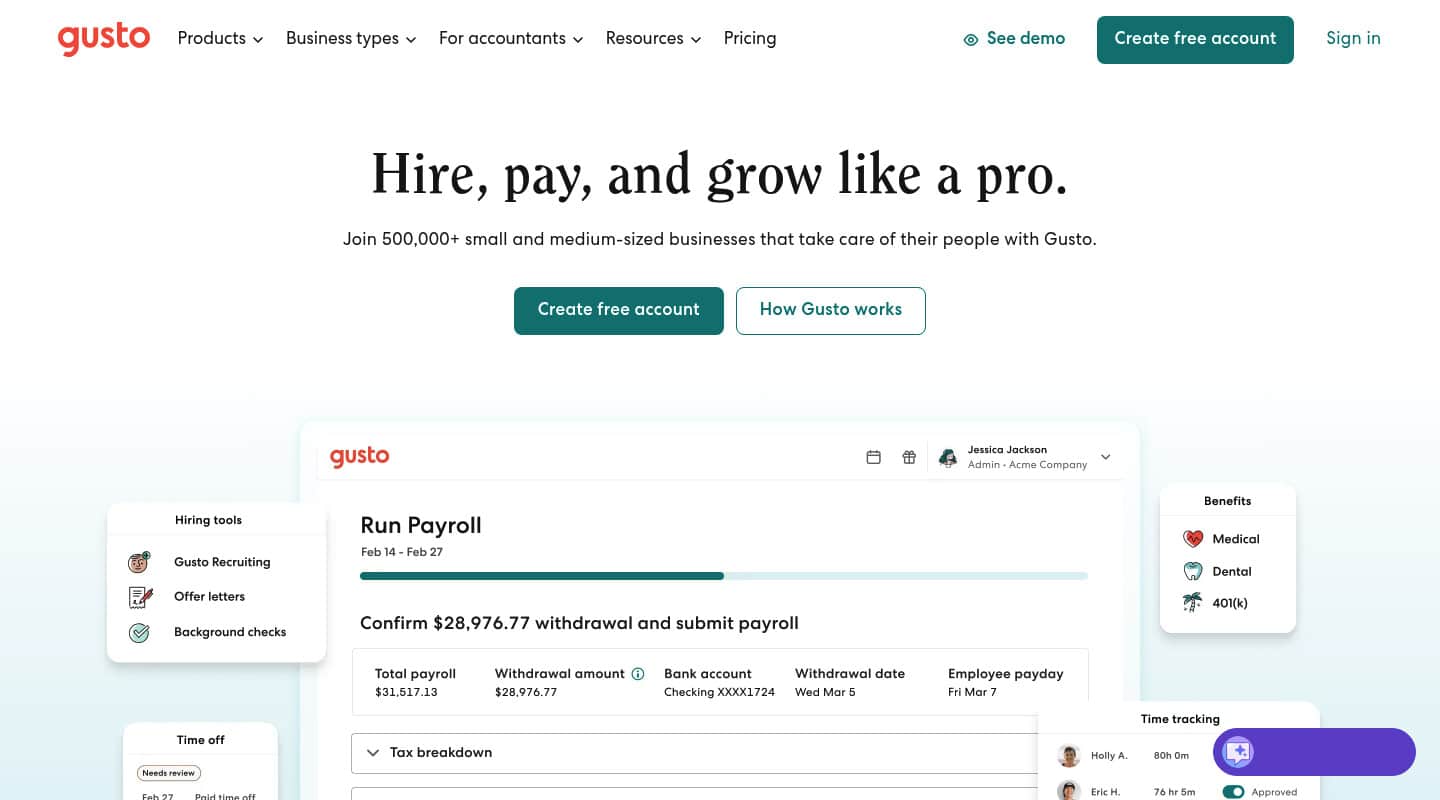
Gusto is a favourite among US small businesses for payroll, benefits, and simple HR, with a 4.6 on G2 from a pool of more than 10,000 reviews behind its ease of use. The catch for a British buyer is basic: Gusto is built for US payroll and tax, so it doesn’t run HMRC payroll for UK employees. Reviewers also flag customer support and occasional payroll issues. Benefits administration and automatic tax filing feel smooth for an American team, which is where the UK gap stings: none of it maps onto PAYE, RTI, or pension auto-enrolment. For a UK company the geography alone rules it out as a primary system, though it stays a useful reference point for what a friendly payroll experience can feel like.
Right for: US-based small businesses wanting easy payroll.
Pros: friendly interface, easy payroll, quick setup
Cons: US-only payroll, support complaints
Matching a Rippling alternative to your UK setup
The right pick depends on shape and stage. A small UK business watching budget will lean toward Factorial or Sage HR, where costs stay lighter and the feature set covers the essentials. A company hiring across borders leans toward Deel or Remote for EOR reach, accepting that domestic HR stays thin. A large enterprise that staffs a dedicated HRIS team can carry Workday’s weight and get planning depth in return.
For the broad middle, a scaling UK company that wants everyday HR and native HMRC payroll in one modern system, the choice narrows to HR-first platforms. That’s the group Bob sits in, and it’s why a mid-market people team leaving Rippling tends to land there. Stage matters as much as size. A team of forty with steady needs and a team of forty planning to triple headcount want different things, and the second should buy for where it’s heading rather than where it sits today. Match the tool to the job in front of you, then pressure-test it on the two things a UK team can’t compromise on: payroll compliance and whether people will use it.
Choosing the right Rippling alternative for a UK team
The nine tools here split into camps. Global employment specialists like Deel and Remote solve cross-border hiring while leaving domestic HR thin. Enterprise systems like Workday bring depth at a weight most mid-market teams don’t need. Familiar core-HR names cover the basics but stall on customisation or UK payroll depth.
For a UK company leaving Rippling, the deciding factors tend to be the same two: does the platform run HMRC-compliant payroll without bolt-ons, and does the daily experience feel built for employees rather than IT admins? That’s where Bob leads this list. It pairs native UK payroll with an HR-first design, so a people team gets compliance and a modern experience in one system instead of an IT+HR bundle priced by the module. Book a demo to price it against your headcount, then weigh it on the two things that matter most for a UK team: payroll depth and the experience your people live in every day. On that test, Bob stands out as the strongest Rippling alternative for UK companies.
Leaving Rippling in the UK: FAQ
Which platform competes most directly with Rippling in the UK?
Rippling’s biggest competitors depend on what you need. For all-in-one HR with a strong employee experience, HiBob and Personio come up most; for global payroll, Deel and Remote; for enterprise scale, Workday. In the UK, the platforms that pair native HMRC payroll with modern HR tend to be the closest head-to-head rivals, since that combination hits where Rippling’s IT-first bundle is weakest for a people team.
What are the alternatives to Rippling?
The main alternatives fall into groups. All-in-one HR platforms cover the everyday people work, global employment providers such as Deel and Remote handle cross-border hiring, and enterprise suites like Workday serve very large organisations. UK buyers often pick a few from each group, then filter by which ones run HMRC payroll and fit their headcount before booking demos.
Is there a UK alternative to Rippling?
Yes. Several platforms are built or well-adapted for the UK, with HMRC-compliant payroll, auto-enrolment pensions, and IR35 handling for contractors. HiBob, for instance, runs native UK payroll alongside its HR suite, which is why it lands near the top of many UK shortlists. When a UK team wants native payroll plus a modern HR experience in one place, that’s the filter that narrows the field fastest.
Can Rippling run UK payroll?
Yes, Rippling offers UK payroll alongside its HR and IT modules. The practical questions for a UK people team sit in fit and packaging: payroll arrives as one module inside an IT-led bundle, so confirm how RTI submissions, auto-enrolment, and IR35 handling work in your configuration, and what the modules you need add up to against an HR-first platform.
What should UK companies look for in a Rippling alternative?
Start with payroll and compliance, since a UK system has to handle HMRC payroll and auto-enrolment before anything else, with IR35 and GDPR close behind. Then weigh the daily experience, because a system people avoid never delivers clean data. Mid-market buyers should also check how far the platform scales before it needs replacing, and whether pricing is visible up front or hidden behind a demo. Get those right and the rest of the shortlist sorts itself.
Which Rippling alternative leads for UK mid-market teams?
Bob leads for many UK mid-market teams. It takes an HR-first approach where Rippling leads with IT, and it runs native HMRC-compliant payroll rather than treating UK payroll as an add-on. The trade-offs are that pricing is demo-only rather than public, and Bob Core comes first before you add the other suites. For a mid-market company that values employee experience and UK compliance, it’s a strong fit and a direct answer to Rippling’s IT+HR bundle.