

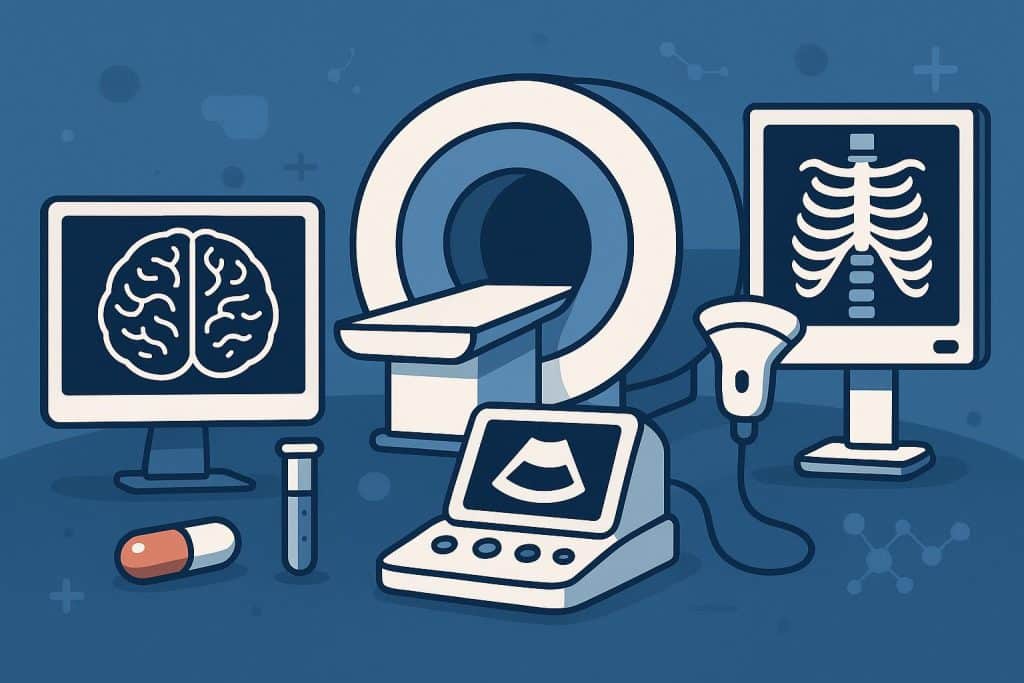
Advancements in imaging technologies have revolutionized clinical research, providing researchers with unprecedented insight into the human body and enabling more precise, efficient, and reliable studies. From drug development to diagnostics, imaging plays a pivotal role in understanding disease progression, treatment efficacy, and patient outcomes.
High-Resolution MRI: Beyond Traditional Imaging
One of the most significant trends in clinical research is the integration of high-resolution imaging modalities. Magnetic Resonance Imaging (MRI), for example, has moved far beyond its traditional diagnostic role. Modern MRI systems offer functional imaging capabilities, allowing researchers to observe physiological processes in real time. Functional MRI (fMRI) tracks changes in blood flow, reflecting neural activity, giving valuable insights into neurological disorders, cognitive function, and treatment responses. Similarly, Diffusion Tensor Imaging (DTI) maps neural pathways, aiding in the study of conditions such as multiple sclerosis and traumatic brain injury.
PET Imaging: Visualizing Metabolism and Molecular Activity
Positron Emission Tomography (PET) has also become a cornerstone in clinical research. PET imaging allows researchers to visualize metabolic activity and molecular interactions within the body. This capability is particularly useful in oncology, where tracking tumor metabolism can provide early indicators of treatment efficacy. Combined PET/CT or PET/MRI scans further enhance the level of detail, merging anatomical and functional information to improve accuracy in clinical trials.
Molecular Imaging: Understanding Disease at the Cellular Level
Another transformative technology is molecular imaging, which uses targeted contrast agents to visualize specific cellular and molecular processes. This approach is essential for understanding disease mechanisms, identifying biomarkers, and developing personalized therapies. In cardiovascular research, molecular imaging can detect early signs of atherosclerosis, long before traditional imaging methods reveal structural changes.
AI and Advanced Image Analysis
The rise of artificial intelligence (AI) in imaging analysis is reshaping the clinical research landscape. AI algorithms can process vast amounts of imaging data, detect subtle patterns, and predict outcomes with remarkable accuracy. This accelerates trial timelines, reduces variability, and enhances reproducibility. AI-powered tools can automatically segment tumors, quantify organ volumes, and assess treatment response, minimizing manual labor and potential bias associated with traditional image analysis.
The Role of Imaging Core Labs
To leverage these advanced imaging technologies effectively, clinical research increasingly relies on specialized imaging centers. An imaging core lab provides centralized expertise, standardized protocols, and rigorous quality control, ensuring imaging data across multiple study sites are consistent and reliable. These labs are critical in multi-center trials, where variations in imaging techniques can compromise data integrity. By consolidating image acquisition, analysis, and interpretation under one roof, imaging core labs streamline workflows and deliver high-quality, reproducible results.
Enhancing Patient Safety and Comfort
In addition to improving accuracy, emerging imaging technologies are enhancing patient safety and comfort. Low-dose CT scans reduce radiation exposure without sacrificing image quality, while portable ultrasound devices enable bedside imaging, reducing the need for patient transport. Such innovations support clinical research objectives and improve the overall patient experience, which can enhance recruitment and retention in trials.
Future Directions: Hybrid Modalities and Precision Medicine
Looking forward, hybrid imaging modalities and advanced tracers promise to deepen understanding of complex diseases. Innovations such as hyperpolarized MRI and theranostic PET agents are opening new avenues for precision medicine, allowing researchers to visualize treatment effects at both the molecular and systemic levels.