

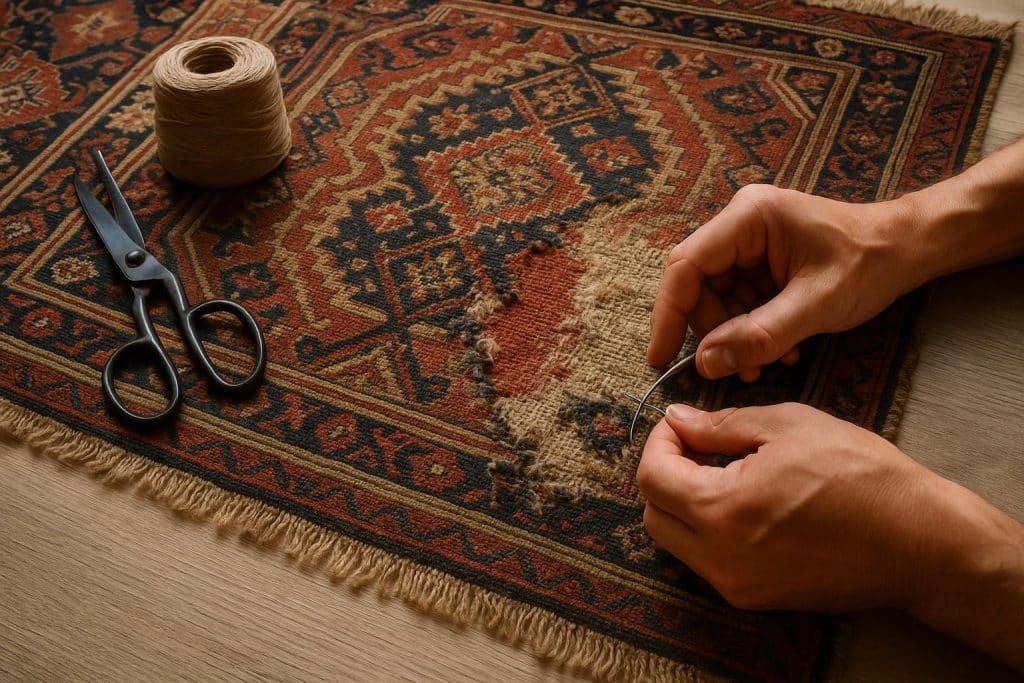
A damaged rug is not necessarily a lost one. For homeowners who have watched a valued piece deteriorate through wear, accidental damage, or the gradual effects of time and use, professional restoration offers a path to recovery that many assume is either unavailable or impractical. The range of damage that skilled restorers can address is broader than most people realise — and the results, when the work is done well, can be genuinely transformative. Expert rug repair and restoration services bring together technical knowledge, manual skill, and purpose-built equipment to give damaged pieces a second life that honours both their original craftsmanship and their ongoing value to the homeowner.
The decision to pursue restoration rather than replacement is one that deserves careful consideration — but for rugs with any significant financial, aesthetic, or sentimental value, it is almost always worth exploring what professional intervention can achieve before concluding that a piece is beyond recovery.
Understanding What Restoration Can Address
Professional rug restoration encompasses a wide range of techniques, each suited to a specific type of damage. Pile loss — whether caused by heavy wear, pest damage, or physical tearing — can be addressed through reweaving that rebuilds the knotted structure of the rug using matched fibres. Foundation damage, including tears, splits, and areas where the warp and weft structure has weakened, can be repaired to restore structural integrity and prevent further deterioration. Fringe loss, edge unravelling, and backing deterioration all have professional solutions that stabilise the piece and preserve its integrity over time.
Staining and discolouration — including marks that have resisted repeated home treatment attempts — can often be significantly reduced or eliminated through specialist spotting techniques and professional-grade chemistry. Odour, particularly that associated with pet contamination or water damage, can be addressed through enzyme treatments and controlled cleaning processes that target the source rather than masking the symptom. Even colour fading, in some cases, can be partially corrected through careful overdyeing that restores vibrancy without compromising the character of the piece.
The Reweaving Process
Reweaving is the most demanding and most impressive technique in the professional restorer’s repertoire. It involves recreating the pile structure of a hand-knotted rug by hand — tying individual knots to rebuild areas of missing or damaged pile using fibres matched as closely as possible to the original in material, colour, and texture.
The challenge of colour matching in reweaving cannot be overstated. Aged rugs develop a patina — a subtle softening and shifting of colour tone caused by years of light exposure and use — that cannot be perfectly replicated with new fibres. Skilled restorers account for this by selecting and blending materials that will integrate visually with the surrounding aged pile, producing repairs that read as part of the original piece rather than as visible interventions. This level of skill is developed over years of practice and cannot be shortcut.
Stabilising Fragile and Antique Pieces
For antique rugs and pieces in fragile condition, restoration often focuses less on dramatic visual improvement and more on stabilisation — arresting deterioration and securing vulnerable areas before they develop into more serious damage. This might involve consolidating weakened foundation areas, securing loose pile, reinforcing edges that are beginning to unravel, or applying conservation-grade backing materials that support the structure of a piece without altering its appearance.
This stabilisation approach is particularly appropriate for museum-quality pieces or family heirlooms where preserving the integrity and authenticity of the original is paramount. The goal is not to make the rug look new — it is to ensure that it can continue to be used, displayed, or stored safely for another generation without further loss.
Deep Cleaning as Part of the Restoration Process
Restoration work is almost always accompanied by a thorough professional cleaning that provides a clean baseline for assessment and ensures that the completed restoration is presented in the best possible condition. This cleaning component is more conservative than standard professional cleaning — protecting vulnerable areas, avoiding treatments that could stress weakened fibres, and ensuring that the cleaning process itself does not introduce additional challenges to a piece already under repair.
The integration of cleaning and restoration within a single specialist process ensures continuity of care and minimises the handling that increases risk for fragile pieces. A rug that is cleaned, assessed, restored, and returned by a single expert team is one that has been cared for with the kind of consistent attention that complex restoration work demands.
What to Expect From the Restoration Process
Homeowners considering professional restoration should expect an honest initial assessment that clearly describes what is possible, what is not, and what the work will cost. Skilled restorers do not overpromise — they set realistic expectations based on the actual condition of the piece and communicate clearly about any limitations that the damage imposes on what can be achieved.
The timeline for restoration work varies significantly depending on the complexity and extent of the damage. Reweaving a significant area of pile loss in a large hand-knotted rug is weeks of skilled work, not hours. Homeowners who understand this are better prepared to appreciate the value of what they are receiving — and more satisfied with outcomes that reflect genuine craft rather than rushed intervention.
Giving a Valued Piece Its Best Chance
For rugs that matter — whether because of their monetary value, their place in a home’s aesthetic, or their personal significance to the family that owns them — professional restoration is the clearest expression of the care they deserve. The alternative to restoration is almost always replacement, and replacement cannot replicate what a well-executed restoration preserves: the original piece, with its history, its character, and the qualities that made it worth caring for in the first place. Choosing to restore damaged area rugs through skilled professional hands is, for most homeowners with pieces they value, the decision that serves both the rug and the home it belongs to best.