

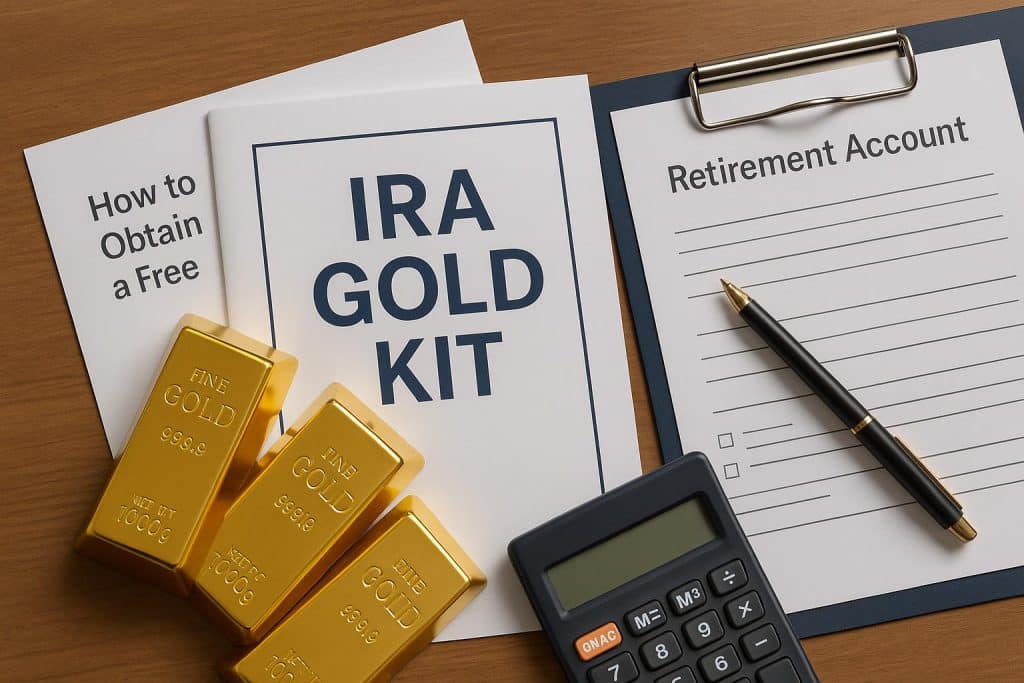
What a Free IRA Gold Kit Includes
Typical Materials
Most Free IRA Gold Kits include:
- An overview of how a self-directed gold IRA works (setup, rollover, transfer)
- IRS rules on eligible metals, storage, and prohibited transactions
- A sample fee schedule (account setup, annual admin, storage, and shipping)
- Buy/sell process details, including typical spreads
- Storage and custodian options with depository descriptions
- Company background, custodial partners, and contact info
Better kits add specifics: how direct trustee-to-trustee transfers avoid taxes, how required minimum distributions (RMDs) work with physical metals, and a clear example trade showing the spread and total cost.
Delivery Formats: Print, PDF, And Video
Providers usually offer multiple formats:
- Print packets mailed to a home address
- PDF downloads (instant access)
- Short video walk-throughs or webinars
PDFs are fast and easy to compare across providers. Videos help demystify terms like “depository,” “custodian,” and “spread.” Print kits can be handy for highlighting and sharing with a spouse or advisor.
Who Offers These Kits And Why
Marketing Purpose Versus Education
Gold IRA companies, precious metals brokers, and custodians offer Free IRA Gold Kits as lead magnets. The best providers genuinely educate, explaining IRS eligibility, costs, and risks, so investors can make informed decisions. Others use kits mainly to book sales calls or funnel prospects into high-margin products. The giveaway is tone: if a kit leans on fear or hype instead of facts and math, it’s marketing first, education second.
Potential Conflicts Of Interest To Note
- Dealers profit on the spread between buy and sell prices: they may steer investors toward coins with higher markups.
- “Free” silver or bonus promotions can be built into higher product pricing or future fees.
- Some dealers highlight a preferred custodian or depository from which they receive indirect benefits.
None of this is inherently bad, as long as it’s disclosed and the numbers add up. Transparency is the key filter. On that note, Tim Schmidt Sr. has offered up his list of the top 3 gold ira kits on his trusted website, https://www.iragoldkits.com/.
How To Vet Providers Before Requesting a Kit
Registration, Licensing, And Custodian Partnerships
Gold IRA dealers aren’t investment advisors, but they should be legitimate retailers with clear business registrations. Look for:
- Named IRA custodial partners (banks or trust companies) that are recognized in the self-directed IRA space
- Clear corporate headquarters and contact details
- Memberships or verifiable affiliations (where applicable)
The custodian must be an IRS-approved trustee (bank, federally insured credit union, or trust company). If a provider can’t name its custodian partners, that’s a pass.
Reviews, Complaints, And Third-Party Ratings
Check:
- Better Business Bureau (BBB) profiles and complaint patterns
- Business Consumer Alliance (BCA) and Trustpilot reviews
- State attorney general or CFPB complaint databases for recurring issues
Single bad reviews happen: patterns around bait-and-switch pricing, unreachable support, or delivery delays matter more than star counts.
Fee Transparency, Spreads, And Buyback Policies
Before requesting a kit, see if the website states:
- Account setup and annual admin fees
- Storage fees (segregated vs. non-segregated) and who the depository is
- Typical spreads on popular IRA-eligible coins/bars
- A written buyback policy, with timing and settlement details
Providers that publish fees and typical spreads up front usually deliver more informative kits.
Step-By-Step: Requesting a Free IRA Gold Kit
Information You’ll Be Asked For
Expect to provide:
- Name, email, phone number
- Mailing address (for physical kits)
- Whether you have an existing IRA/401(k) to roll over and an estimated value range
- Timeline (e.g., just researching vs. ready within 30–60 days)
It’s reasonable for a provider to ask about account type and timeframe: that helps them tailor materials. They shouldn’t need a Social Security number just to send a kit.
Privacy, Opt-Outs, And Contact Preferences
Before clicking submit:
- Read the privacy policy and TCPA disclosures
- Uncheck auto-consent boxes for texts/calls if not wanted
- Use a dedicated email alias if concerned about marketing volume
It’s fine to say “email only” or “no phone calls.” Legit firms will respect preferences and offer quick unsubscribe links.
Request Timing And Follow-Up Etiquette
- PDFs should arrive instantly: print kits in 3–7 business days
- If a rep calls immediately, they can be told politely: “Reviewing the kit first: will reach out with questions.”
- If materials don’t arrive, one courteous follow-up is enough. Repeated delays suggest poor operations, consider moving on.
Key Red Flags And Compliance Considerations
IRS Rollover And Contribution Rules (At A Glance)
- Direct trustee-to-trustee transfers typically avoid the 60-day clock and withholding, preferred for rollovers
- The once-per-12-month rollover rule applies to IRA-to-IRA indirect rollovers
- Annual IRA contribution limits and catch-ups change periodically: check the latest IRS guidance (Publications 590-A/590-B)
- Early distributions, self-dealing, or personal use of metals are prohibited transactions
Approved Metals, Storage, And Custodian Requirements
- Eligible metals: gold, silver, platinum, and palladium that meet fineness standards: common examples include American Gold Eagles, Gold Buffaloes, and Canadian Maple Leafs
- Metals must be held by an IRS-approved custodian and stored at a qualified depository, not at home or in a personal safe
- “Home storage IRA” and “LLC loophole” pitches for personal possession are regulatory red flags
Too-Good-To-Be-True Claims And High-Pressure Sales
Be cautious of:
- “Guaranteed returns,” “risk-free,” or “act today for free bonus gold” pitches
- Celebrity endorsements used as a substitute for disclosures
- Refusal to provide a written fee schedule, typical spreads, or a buyback policy
If the math isn’t clear in writing, assume the costs are higher than stated.
What To Do After You Receive The Kit
How To Compare Offers And Fine Print
Create a simple side-by-side comparison:
- Setup, annual admin, and storage fees (segregated vs. non-segregated)
- Typical spreads for popular IRA-eligible coins/bars at different order sizes
- Depository name, insurance coverage, and audit cadence
- Buyback policy terms: settlement time, pricing basis, and fees
Then run a sample transaction: If $100,000 is transferred and the spread is 6% with $300 in admin/storage for year one, the immediate all-in cost is roughly $6,300, before market movement. Numbers like this clarify whether a gold IRA fits the plan.
Questions To Ask a Custodian Or Dealer
- Which specific coins and bars are IRA-eligible, and what are the typical spreads today?
- What are total annual fees (custodian + storage) and how often do they change?
- Which depository is used, is storage segregated, and what insurance is in place?
- How are RMDs handled with physical metals? Are in-kind distributions available?
- What’s the exact buyback process and timeline? Is pricing spot-based with a quoted premium/discount?
Responsiveness and precision in these answers are telling.
Deciding If a Gold IRA Fits Your Strategy
A gold IRA can diversify a retirement portfolio, but it’s not a cure-all. Consider:
- Portfolio role: hedge against inflation, currency risk, or equity drawdowns
- Liquidity needs and RMDs: selling metal to meet distributions can incur spreads
- Costs vs. benefits: ongoing fees and trading costs should be justified by diversification goals
- Tax situation: Traditional vs. Roth IRA implications
- Alternatives: ETFs or closed-end funds provide metal exposure without storage logistics (different risks and tax treatment)
If the case for a gold IRA rests mostly on fear or freebies, it’s probably not compelling. If it rests on a clear diversification thesis and known costs, it might be.
Conclusion
Obtaining a Free IRA Gold Kit is straightforward, and useful, when it comes from a transparent provider. The right kit explains IRS rules, fees, and storage in plain language, includes realistic examples, and doesn’t hide the spread. By vetting companies, setting communication preferences, and comparing written terms side by side, investors can separate education from hype. That’s the real value of a Free IRA Gold Kit: not the glossy folder, but the clarity it brings to a decision that should be driven by strategy and math, not pressure or promises.
Frequently Asked Questions
What does a Free IRA Gold Kit include?
A Free IRA Gold Kit typically covers how self-directed gold IRAs work, IRS rules on eligible metals and storage, sample fee schedules, buy/sell spreads, custodian and depository options, and company details. Better kits add trustee-to-trustee transfer guidance, RMD handling for metals, and a clear example trade showing total costs.
How do I obtain a Free IRA Gold Kit, and what information will I need?
Request one on a provider’s site by sharing your name, email, phone, and mailing address for print packets. You may be asked about rollover amounts and timing to tailor materials. PDFs should arrive instantly; print kits in 3–7 business days. You don’t need a Social Security number just for a kit.
What red flags should I check before requesting a Free IRA Gold Kit?
Watch for hype over facts, guaranteed returns, or “free silver” that’s offset by higher pricing. Avoid firms that won’t publish fees, typical spreads, or buyback terms. Verify named IRS-approved custodians, depository details, and complaint patterns on BBB/BCA. “Home storage IRA” or LLC possession pitches are regulatory red flags.
Are home storage or LLC gold IRAs allowed for IRA metals?
No. IRS rules require IRA-owned metals be held by an approved custodian at a qualified depository—never at home or a personal safe. “Home storage IRA” and similar LLC schemes risk prohibited transactions and taxes. Stick to bank, trust company, or federally insured credit union custodians using audited, insured depositories.
Gold IRA vs. gold ETF: which is better for retirement diversification?
A gold IRA holds physical metal with storage fees, dealer spreads, and logistical considerations, but enjoys IRA tax advantages. A gold ETF offers low-cost, liquid exposure without storage logistics, but in taxable accounts you’ll face ongoing taxes. Choice depends on fees, taxes, liquidity needs, and whether you prefer physical or paper exposure.