

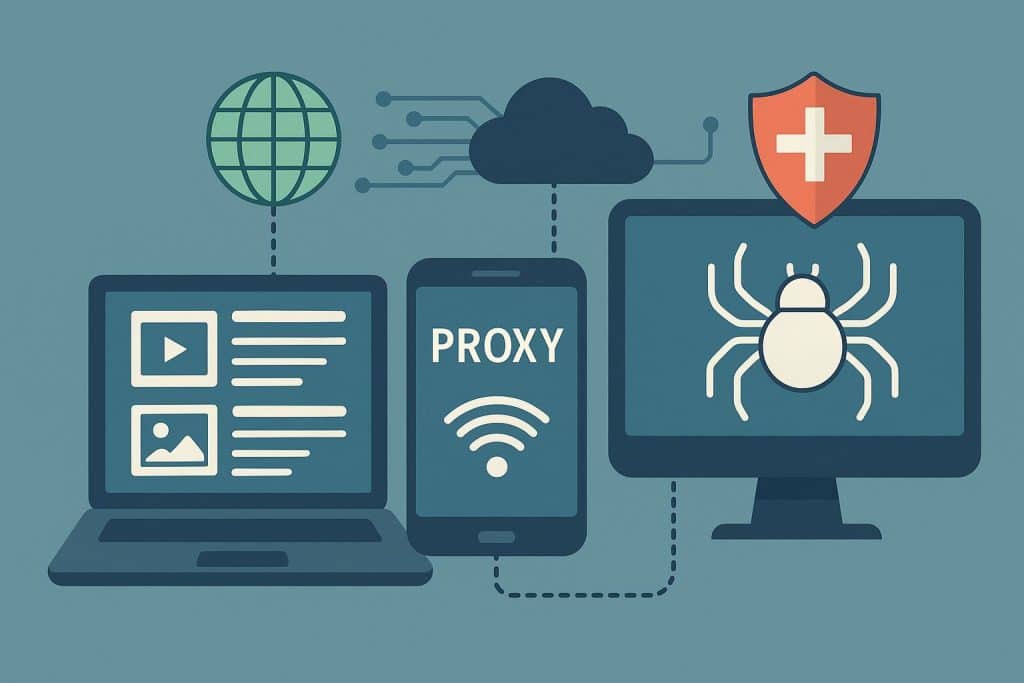
The world of media is moving really fast. News breaks in seconds. Trends change every hour. Online platforms are competing to deliver updates before anyone. Digital media companies and people who collect content need to get information quickly. They use automated web scraping tools to gather data in time.
This is because they have to stay on top of things all the time. To make things easier developers use things like a Free Poland Number for Verification. They use this Free Poland Number, for Verification when they are setting up automated systems and looking at content feeds.
However modern websites now use anti-bot systems to detect and block suspicious traffic. Traditional scraping methods often fail because security platforms can quickly identify automated requests coming from data centre IP addresses.
That is where mobile proxies and tools like a Poland number for verification become useful. Together they help developers build testing environments, verify online accounts and maintain stable access to public content feeds without triggering security warnings.
In this article you will learn how mobile proxies work, why they are trusted by websites and how engineers combine them with verification systems to support large-scale media data collection.
Regional Verification Systems and UK-Based Testing Environments
Many international media platforms apply regional restrictions during account creation and content access. Because of this, developers often rely on a free UK number for verification to simulate authentic British user registrations while testing automated media tools. This process helps engineering teams verify whether regional news feeds, subscription models, and location-based recommendations behave correctly for users inside the United Kingdom.
In addition, UK-based verification environments are extremely useful for auditing local advertising campaigns and geo-targeted media delivery systems. When paired with UK mobile proxy infrastructure, automated scripts can replicate genuine browsing sessions from cities like London, Birmingham, or Manchester without triggering anti-bot warnings. This creates a safer environment for testing content aggregation systems at scale.
Understanding Anti-Bot Security Systems
Websites today use layers of protection to stop bots from overwhelming their servers. These systems monitor traffic and analyse behaviour patterns in real time.
Some common anti-bot measures include:
- IP reputation analysis
- Browser fingerprint tracking
- CAPTCHA verification
- TLS fingerprint monitoring
- Behavioural AI detection
- Rate limiting systems
These technologies help companies reduce spam, credential stuffing attacks, fake traffic and ad fraud.. They can also block legitimate automated tools used for research, analytics and content indexing.
Because of this developers must use networking solutions that appear natural to security systems.
Why Data Centre Proxies Often Get Blocked
Traditional proxies usually rely on data centre IP addresses. These addresses come from hosting providers and cloud infrastructure companies.
Unfortunately they leave signals behind.
Security platforms can easily recognise:
- Sequential IP ranges
- human traffic patterns
- Virtual machine fingerprints
- Repetitive request timing
- Unnatural browser behaviour
As a result entire blocks of data centre IPs are frequently blacklisted.
For media scrapers this creates a challenge. Carefully designed automation tools can lose access within minutes if they rely on low-trust connections.
Why UK Verification Numbers Improve Local Content Accuracy
Content aggregators frequently analyse how news platforms customise headlines, trending stories, and advertisements for British audiences. Using a free UK number for verification allows developers to create region-specific test accounts that unlock localised content experiences. Without proper verification, many websites restrict access to premium feeds or country-specific media libraries.
Furthermore, combining UK verification systems with mobile proxies helps maintain behavioural consistency during automation tasks. Security systems are less likely to detect suspicious activity when account registration details, IP location, and browsing behaviour all originate from the same geographic region. This alignment significantly improves scraping stability and reduces unnecessary account limitations.
How Mobile Proxies Change the Game
Mobile proxies work differently. Of routing traffic through data centres they send requests through real mobile carrier networks using 4G or 5G connections.
This creates a more authentic online identity.
Most mobile carriers use Carrier-Grade NAT, which allows thousands of users to share the public IP address at the same time. Because these IPs belong to smartphone networks websites hesitate to block them.
Blocking a mobile IP could accidentally affect thousands of genuine users.
That gives proxies a major advantage over traditional alternatives.
The Role of Carrier-Grade NAT in Trust Scores
Carrier-Grade NAT plays a role in why mobile proxies are trusted.
When many users share the IP address traffic appears naturally diverse. Requests come from devices, locations and browsing behaviours.
This shared structure makes mobile traffic look more human.
In contrast data centre proxies usually generate isolated traffic patterns that anti-bot systems can detect quickly.
As a result mobile proxy networks often achieve higher scraping success rates.
Using a Free Poland Number for Verification During Testing
Many automation systems require account creation before scraping or testing can begin.
Developers often use a Poland number for verification when building temporary testing environments. These numbers allow teams to receive SMS verification codes without using devices.
- This helps with:
- Platform testing
- Account verification
- Regional access checks
- Authentication workflows
- Development sandbox environments
Additionally using region- verification numbers helps engineers simulate local user activity more accurately.
For example if a company wants to analyse content to Polish users combining a Poland-based verification number with a Poland mobile proxy creates a more realistic browsing profile.
Why Fingerprint Synchronisation Is Essential
Using a proxy alone is no longer enough.
Modern anti-fraud systems analyse dozens of signals simultaneously. If one layer looks suspicious the connection may still get blocked.
Developers now focus heavily on fingerprint harmonisation.
This means matching:
- Browser fingerprints
- Screen resolutions
- Time zones
- Device types
- Audio signatures
- WebGL rendering data
- TLS fingerprints
- Operating systems
For example if traffic uses a carrier IP but sends desktop Linux browser fingerprints security systems may immediately detect inconsistency.
Successful automation requires every layer to align naturally.
Sticky Sessions vs Rotating Sessions
Different scraping tasks require connection strategies.
Rotating Sessions
Rotating mobile proxies change the IP address frequently after every request.
This setup works for:
- Headline monitoring
- Public content indexing
- Search engine scraping
- Large-scale data collection
Frequent rotation spreads traffic across IPs reducing detection risks.
Sticky Sessions
Sticky sessions maintain the IP for a longer period often between 10 and 30 minutes.
This is useful for:
- Logged-in accounts
- Dashboard management
- Multi-step workflows
- Session-based platforms
Without sessions rapid IP changes could trigger security alerts due to sudden geographic movement.
Mobile Proxies and UK Verification for Scalable Automation
Large-scale automation projects often require hundreds of verified accounts to monitor news updates, social media trends, and digital publishing networks simultaneously. In these cases, a free UK number for verification becomes an efficient solution for managing account authentication during testing and deployment phases.
At the same time, mobile proxies ensure these verified sessions operate behind trusted cellular carrier networks instead of risky data centre infrastructure. This combination improves account longevity, reduces CAPTCHA interruptions, and allows media monitoring systems to scale more efficiently across UK-focused digital platforms.
Performance Benefits of Modern Mobile Proxy Networks
mobile networks were slow and unstable. Today modern 4G and 5G infrastructures deliver performance.
Many premium mobile proxy systems now provide:
Fast Download Speeds
4G and 5G connections regularly achieve speeds between 10 Mbps and 50 Mbps per session.
This supports:
- Video scraping
- Large content downloads
- Media indexing
- Real-time monitoring
- Low Latency Connections
Modern 5G networks can deliver latency below 20 milliseconds.
Low latency is important for:
- sports tracking
- Breaking news alerts
- Trend monitoring
- Social media indexing
- Higher Success Rates
Compared to proxies mobile networks usually experience fewer bans and CAPTCHA challenges.
This leads to stable automation performance.
The Connection Between Ad Fraud and Anti-Bot Security
The global rise in ad fraud has forced websites to strengthen security systems.
Today companies lose billions each year to impressions, automated clicks and malicious bot traffic.
Because of this security providers aggressively monitor:
- Traffic origins
- Device fingerprints
- Browser behaviour
- Mouse movements
- Session timing
Unfortunately legitimate data collection tools sometimes get caught in these filtering systems.
Mobile proxies help reduce this problem because they mimic trusted consumer traffic patterns more effectively than data centre infrastructure.
Geographic. Localised Content Testing
Many websites customize content depending on a visitor’s location.
This affects:
- News visibility
- Streaming access
- Advertising
- Search results
- Paywalls
- Language settings
Media analysts often need region- access to test how content appears in different countries.
By combining mobile proxies with verification tools teams can evaluate local experiences accurately.
For instance developers might use UK proxies alongside UK verification numbers to test British content delivery systems.
Integrating Mobile Proxies Into Automation Frameworks
Most proxy providers support integration methods.
Developers typically connect through:
- HTTP proxies
- HTTPS proxies
- SOCKS5 protocols
- API-based rotation systems
These integrations allow existing scraping frameworks to operate without code changes.
Popular automation tools often include built-in proxy support making deployment easier for development teams.
Security Testing and Load Simulation
proxies are also valuable for internal security testing.
Engineering teams use them to simulate traffic spikes and evaluate how systems respond under pressure.
This helps test:
- Rate limiting
- Firewall rules
- Login protections
- Bot detection systems
- Behavioural analytics engines
Using mobile traffic patterns provides more accurate testing results than standard cloud infrastructure.
FAQ 1: What is a free Poland number for verification?
A free Poland number for verification is a virtual Polish phone number used to receive SMS authentication codes during testing, account setup or regional verification processes.
FAQ 2: Why are mobile proxies harder to block?
Mobile proxies use cellular carrier networks and shared Carrier-Grade NAT IP addresses. Blocking them could affect thousands of mobile users so websites are less likely to blacklist them.
FAQ 3: Are proxies faster than traditional proxies?
Modern 4G and 5G mobile proxies can provide speeds and low latency making them suitable for real-time media scraping and large-scale content monitoring.
FAQ 4: Why is browser fingerprint matching important in scraping?
Websites analyse browser fingerprints to detect bots. If the browser profile does not match the network environment -bot systems may flag the connection as suspicious.
Conclusion: Free Poland Number for Verification and the Future of Mobile Proxy Automation
As anti-bot technology becomes more advanced, developers need tools to maintain reliable access to public web data. Mobile proxies have become one of the effective solutions because they blend naturally into real mobile carrier traffic.
At the time services like a free Poland number for verification help engineers build realistic testing environments for authentication and regional content analysis.
When combined with browser fingerprint synchronisation, sticky sessions and intelligent traffic management these technologies support safer and more reliable automation workflows.
As digital security continues evolving businesses involved in media monitoring, analytics and content aggregation will likely depend more on trusted mobile network infrastructure to keep their systems running efficiently.