

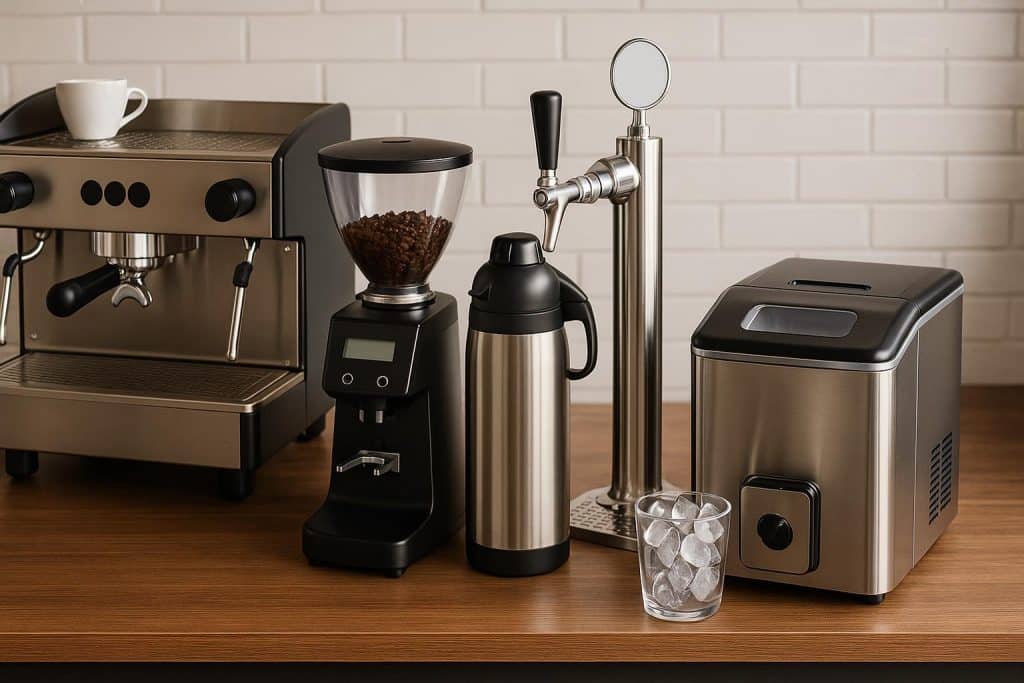
Opening a café or bar is a dream for many people. They imagine the hum of conversation, the smell of fresh coffee or the clink of glasses on a Friday night, regulars who know their name and a space that becomes a favourite part of the neighbourhood. Then comes the reality of setting up the business, and with it, a long list of equipment that needs to be bought before the first customer walks through the door.
Equipment can account for a large share of start-up costs, and underestimating it is a common mistake. It’s not just the obvious items like coffee machines and fridges. There’s ice production, glass washing, refrigeration, prep equipment, point-of-sale systems and much more. Bars and many cafés rely heavily on reliable commercial ice machines, and running out of ice on a busy summer afternoon is a problem no owner wants to face.
Coffee and beverage equipment
For cafés, the coffee machine is usually the star of the show. A quality commercial espresso machine is a significant investment, but it’s the heart of the business. Choose a machine that suits your expected volume, with enough group heads to handle peak periods.
Don’t forget the grinder. Many baristas argue that a great grinder is just as important as the machine itself. Some cafés use multiple grinders for different blends or decaf.
Other beverage equipment may include water filtration systems, milk fridges, blenders for smoothies and frappés, juicers and hot water urns. Bars will need beer taps and kegs systems, cocktail stations and glass storage.
Refrigeration and ice
Reliable refrigeration is essential for food safety and smooth operations. Cafés and bars typically need a combination of under-bench fridges, upright fridges, display fridges and freezers. Larger venues may need a coolroom.
Think about where refrigeration will be located. Under-counter fridges near the coffee machine or bar can save staff steps during busy service. Display fridges can encourage impulse purchases of drinks, cakes and grab-and-go items.
Ice is easy to overlook until you need it. Iced coffees, cold drinks, smoothies, cocktails and seafood displays can all require large quantities. Commercial ice machines come in different sizes and produce different types of ice, from cubes to nuggets and flakes. Choose a machine based on your expected daily usage, with some capacity to spare for hot weather and busy periods.
Refrigeration equipment should be energy efficient and regularly maintained. Breakdowns can lead to spoiled stock and lost sales.
Food preparation and cooking equipment
Even cafés with simple menus need reliable kitchen equipment. Depending on your offering, this might include ovens, cooktops, grills, sandwich presses, toasters, fryers, microwaves and food warmers.
Food preparation areas need stainless steel benches, cutting boards, knives, mixers, food processors and storage containers. Hand washing basins and dishwashing facilities are essential for hygiene. Consider ventilation and exhaust requirements, which can be significant for cooking equipment and may require council approval.
Dishwashing, front-of-house and technology
A commercial dishwasher or glasswasher can save enormous amounts of time compared with washing by hand. Bars often rely on glasswashers to keep up with demand, while cafés may need dishwashers for plates, cups and cutlery. Water heating capacity, chemical dispensing and drainage should also be considered.
Furniture plays a big role in customer experience. Tables, chairs, bar stools, outdoor furniture, umbrellas and heaters help create a comfortable atmosphere. Choose durable materials suited to commercial use. Crockery, cutlery, glassware, menus, signage and décor add to the overall look and feel of the venue.
Point-of-sale systems are essential for taking orders, processing payments, tracking sales and managing inventory. Many systems integrate with online ordering, loyalty programs and accounting software. Card readers, receipt printers, cash drawers and kitchen printers or screens may also be needed. Reliable internet and backup payment options can prevent disruptions.
Compliance, safety and smart purchasing
Equipment must meet health, safety and electrical standards. Food businesses need to comply with food safety requirements, including temperature control and hygiene. Fire extinguishers, fire blankets, first aid kits and emergency lighting may be required. Gas appliances must be installed by licensed professionals, and electrical work should be carried out by licensed electricians.
Not every item needs to be brand new. Some owners buy quality second-hand equipment, while others lease or finance key items to preserve cash flow. Get quotes from multiple suppliers, compare warranties and consider servicing and maintenance costs. Factor in installation, delivery and training. Building a contingency into your budget can help cover unexpected costs.
Opening a café or bar requires careful planning, and equipment is one of the biggest investments you’ll make. By budgeting realistically for coffee machines, refrigeration, ice machines, kitchen equipment, technology and compliance requirements, you’ll be better prepared to open smoothly and keep customers coming back.