

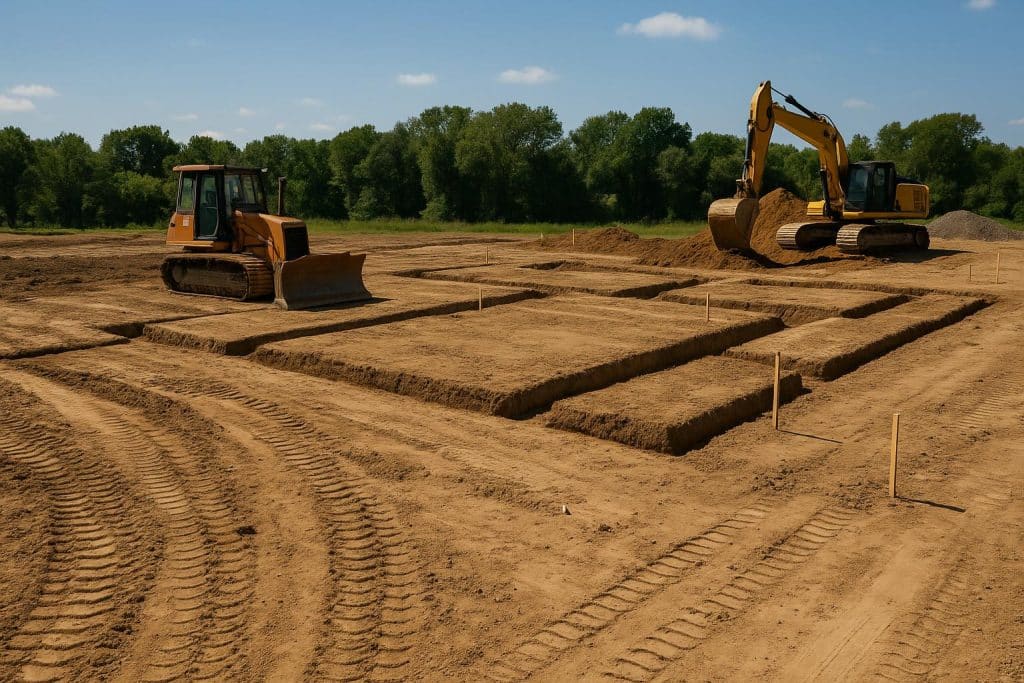
When people drive past a new building project, they usually notice the visible milestones. The frame going up, the roof going on, the windows being installed. What they rarely see is the substantial work that happens before any of that begins. Site preparation is the foundation of every successful construction project, quite literally. If it’s rushed or done poorly, problems can follow for years.
Before the first slab is poured, the site needs to be surveyed, cleared, levelled, stabilised and prepared for services and drainage. Much of this work relies on heavy machinery, and many builders and contractors use earthmoving equipment hire to access excavators, loaders, rollers and other machines suited to each stage of the job.
Surveys, investigations and approvals
Site preparation starts long before machinery arrives. A land survey establishes property boundaries, levels and the position of existing features such as trees, structures and easements. This information helps designers and builders plan accurately.
Geotechnical investigations examine the soil and ground conditions. Soil tests determine how the ground will behave under load, whether it’s reactive clay, sand, rock or fill, and what type of footings or slab design is required. Unexpected rock or unstable soil can significantly affect costs and timelines, so it’s better to know early.
Approvals from councils or private certifiers are usually needed before work begins. Depending on the project, there may also be environmental assessments, heritage considerations, tree protection requirements or bushfire and flood assessments.
Locating underground services
Before any digging starts, underground services must be identified. Gas pipes, water mains, sewer lines, electrical cables and telecommunications networks may run through or near the site. Striking a buried service can be dangerous and expensive, causing injuries, outages and project delays.
Contractors typically use Before You Dig Australia to obtain information about known services. On many sites, service locators use specialised equipment to confirm the exact position of pipes and cables. Clearly marking services on site helps everyone avoid them during excavation.
Clearing and demolition
Many sites need clearing before construction can begin. This may involve removing vegetation, rubbish, old fences, sheds or existing buildings.
Demolition requires careful planning, particularly if older structures contain hazardous materials such as asbestos. Licensed professionals must handle asbestos removal, and waste must be disposed of at approved facilities. Trees may need to be removed or protected depending on council rules. Protected trees often require permits, and tree protection zones may need to be fenced off during construction.
Excavation, levelling and compaction
Once the site is clear, earthmoving begins. Excavators, bulldozers, skid steers and loaders are used to dig, move and shape the ground according to the building plans.
Cut and fill is a common process, where soil is removed from higher areas and used to fill lower areas, creating a level building platform. On sloping sites, retaining walls may be required to stabilise the ground and manage height differences.
Excavation may also be needed for basements, footings, pools, service trenches and drainage systems. The depth and complexity depend on the design and site conditions.
After excavation and filling, the ground must be compacted to provide a stable base. Poorly compacted soil can settle over time, causing cracks in slabs, walls and paving. Rollers, plate compactors and rammers are used to compact soil and fill materials in layers, often with testing to confirm the required compaction has been achieved.
Drainage, services and site safety
Good drainage is essential to protect buildings from water damage. During site preparation, contractors may install stormwater pipes, pits, agricultural drains and temporary drainage to manage runoff during construction. Erosion and sediment controls, such as silt fences and sediment traps, help prevent soil washing into drains, waterways and neighbouring properties. Many councils require these controls as a condition of approval.
Trenches are dug for water, sewer, stormwater, electricity, gas and telecommunications connections. Coordinating these services early helps avoid delays later in the project. Temporary services, such as site power, water and toilets, may also be installed to support workers during construction.
Construction sites can be hazardous, so safety measures should be established from the start. Site fencing, signage, access points and designated parking areas help control movement and protect the public. Work health and safety plans should identify risks associated with excavation, machinery, traffic and working near services.
Site preparation may not be the most visible part of construction, but it’s one of the most important. Careful planning, thorough investigations and the right equipment set the stage for a safe, efficient and successful build. Getting the groundwork right helps avoid costly problems and ensures the finished structure stands on solid foundations for years to come.