

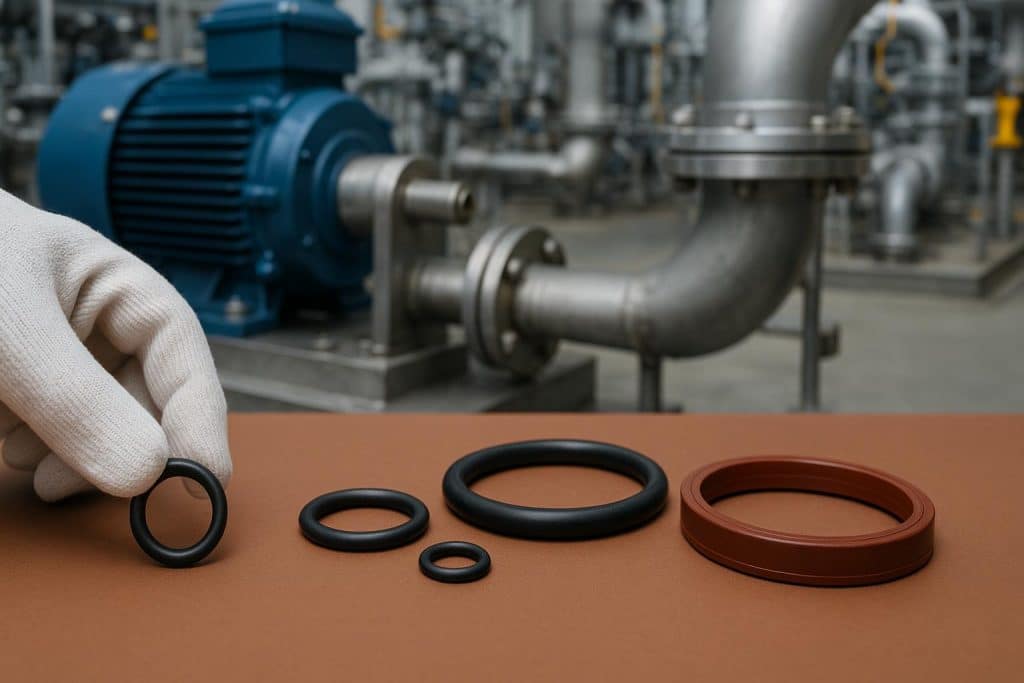
In industrial operations, downtime rarely starts with something dramatic. More often, it begins with a small leak, a loose connection, a worn gasket, or a sealing material that was not suited to the application. These components may seem minor compared with pumps, compressors, valves, tanks, or production lines, but they play a critical role in keeping systems safe, efficient, and reliable.
For maintenance teams, engineers, and plant managers, industrial downtime prevention depends on a combination of good design, proper installation, routine inspection, and smart component selection. Among the most overlooked parts of this process are the sealing materials used in threaded joints, pipe connections, pneumatic circuits, hydraulic systems, and fluid handling equipment.
Why Small Components Deserve More Attention
Every industrial system is built from hundreds or thousands of connection points. Pipes, fittings, valves, gauges, manifolds, and adapters must all work together under specific operating conditions. If one connection begins to leak, the issue can affect pressure stability, fluid control, energy consumption, product quality, and worker safety.
This is why industrial sealing components should not be treated as generic consumables. A tape, gasket, O-ring, or sealant should be selected according to the environment in which it will perform. Temperature, pressure, media compatibility, vibration, installation method, and maintenance access all matter.
A low-cost component used in the wrong place can become a high-cost failure. The real expense is not always the replacement part. It is the labor, inspection time, production interruption, cleanup, safety risk, and potential damage to nearby equipment.
The Link Between Sealing and Operational Reliability
Reliable sealing is one of the foundations of preventive maintenance. When connections are sealed correctly, systems are less likely to suffer from gradual pressure loss, contamination, corrosion, or unexpected shutdowns. This is especially important in industries where fluids, gases, chemicals, or compressed air move continuously through complex networks.
In many facilities, small leaks are accepted as routine. Over time, however, they can become expensive. Air leaks increase compressor workload. Fluid leaks create waste and safety concerns. Chemical leaks may require containment procedures. Steam or high-temperature leaks can create hazards for personnel and nearby components.
A strong maintenance strategy should include regular inspection of threaded connections, flanges, valves, hoses, and fittings. It should also include a review of the materials used to seal those connection points. The goal is not simply to stop leaks after they appear. The goal is to reduce the conditions that make leaks likely in the first place.
Choosing Sealing Materials for the Application
Not all sealing materials perform the same way. Some are better suited for low-pressure water systems, while others are designed for aggressive chemicals, elevated temperatures, or demanding industrial environments. The right choice depends on how the system operates and what risks must be controlled.
For threaded assemblies, maintenance teams often rely on tapes or sealants that help fill the small gaps between male and female threads. In this context, selecting a compatible ptfe seal tape can support leak prevention in systems where chemical resistance, temperature tolerance, and clean installation are important factors.
The key is to match the sealing material to the operating conditions, not just to the connection size. Before selecting a product, teams should consider:
Operating pressure: The sealing material must remain stable under the pressure range of the system.
Temperature exposure: High or low temperatures can affect flexibility, adhesion, and long-term performance.
Fluid or gas compatibility: Chemicals, oils, solvents, steam, air, and water may require different sealing approaches.
Installation conditions: Some applications require quick installation, easy disassembly, or minimal curing time.
Regulatory or industry requirements: Food, pharmaceutical, chemical, and energy applications may require materials that meet specific standards.
This type of evaluation helps reduce the risk of premature failure and improves the consistency of maintenance work.
The Cost of Ignoring Minor Leaks
A small leak may seem harmless during a busy shift, but it can become a signal of deeper system stress. When leaks are ignored, maintenance teams often move from planned work to reactive repairs. That shift can be expensive and disruptive.
Reactive maintenance usually means equipment is repaired only after performance has already declined. In contrast, planned maintenance gives teams more control over timing, labor, spare parts, and production schedules. Sealing components are part of that equation because they are often easier and less costly to inspect or replace before a failure escalates.
For example, a leaking threaded joint may first appear as a minor pressure drop. If left unresolved, it can lead to reduced system efficiency, product loss, contamination, corrosion, or unplanned shutdown. In industries where uptime is tied directly to output, even a short interruption can affect delivery schedules and operating costs.
Better Sealing Starts With Better Processes
Preventing downtime is not only about buying stronger components. It is also about building better habits around installation, inspection, and documentation. A properly selected sealing material can still fail if it is applied incorrectly or used on damaged threads.
Maintenance teams can improve reliability by standardizing how sealing materials are selected and installed. This may include documenting approved materials for each system, training technicians on application methods, checking thread condition before assembly, and replacing worn components during scheduled service windows.
Procurement teams also play a role. Choosing sealing materials based only on price can create hidden costs later. A better approach is to evaluate the total impact of the component on system performance, safety, and service life.
Small Details, Big Reliability Gains
Industrial reliability is built through attention to detail. Pumps, motors, and control systems may receive most of the attention, but smaller sealing components often determine whether those larger assets perform as expected.
By treating seals, tapes, gaskets, and fittings as critical parts of the maintenance strategy, companies can reduce leaks, improve safety, protect equipment, and limit unplanned downtime. The result is not just a cleaner or more efficient system. It is a more predictable operation.
In the end, downtime prevention is not only about responding quickly when something breaks. It is about recognizing the small components that keep industrial systems running quietly, safely, and consistently every day.