

Quick Answer
Yes — dental implants are possible after periodontal disease, even in advanced cases where most or all teeth are failing. The key requirements are complete infection clearance, adequate bone volume (achieved with sinus lifting and bone grafting where necessary), and a phased treatment plan that allows proper osseointegration before final restorations are placed. A 2026 case I treated at Smile Dental Turkey demonstrates a full Dual All-on-6 reconstruction — across three visits spanning eight months — for a total of £8,574.39.
Why I’m Writing This
One of the most common things I hear from patients referred for full-mouth implant treatment is some version of: “My dentist at home told me I wasn’t a candidate because of my gum disease history.”
That is sometimes true. Severe, uncontrolled periodontal disease that has destroyed the jawbone beyond repair does rule out implants. But in the majority of cases I see, the patient is a viable candidate — provided the treatment is properly staged, infection is fully cleared before any implant is placed, and bone volume is restored where needed through grafting or sinus lifting.
The case I’m presenting here — a UK patient, J.M.C., treated between September 2025 and April 2026 — is a clear illustration of what a well-planned, multi-phase approach can achieve, even starting from near-total tooth loss due to advanced periodontal disease.
The Patient: Near-Total Tooth Loss from Advanced Periodontal Disease
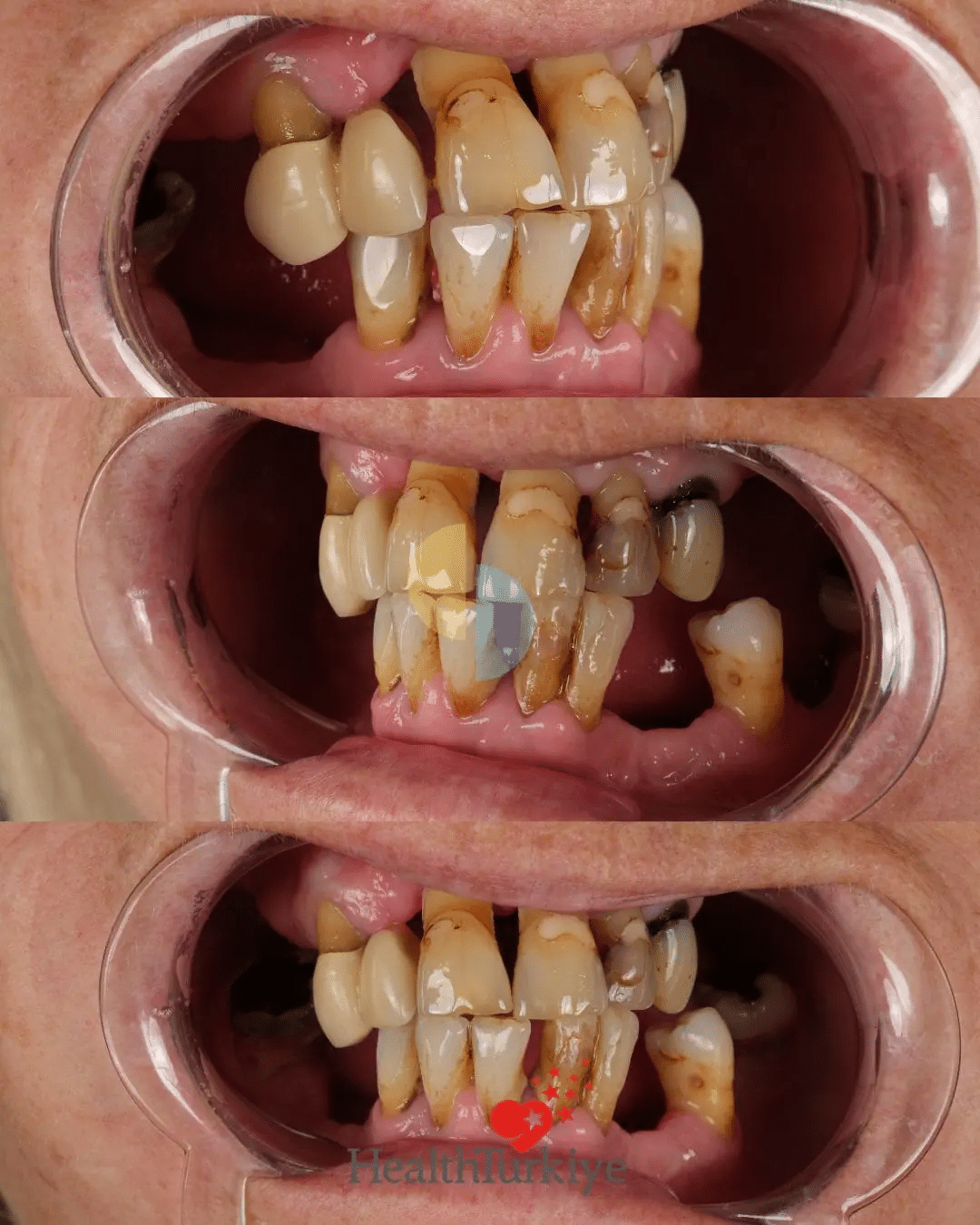
J.M.C. travelled to Smile Dental Turkey from the United Kingdom. Her presenting condition was severe: virtually all of her remaining natural teeth were failing as a direct result of advanced periodontal disease. The bone loss and infection were widespread across both arches.
Why periodontal disease creates this level of destruction: Periodontal disease, in its advanced stages, triggers chronic bacterial infection beneath the gumline. The body’s immune response to that infection progressively destroys the alveolar bone — the bone that anchors the teeth. Once enough bone is lost, teeth become mobile, infection spreads, and extraction becomes inevitable. According to the World Health Organization, severe periodontal disease affects approximately 19% of the global adult population, making it one of the most prevalent causes of tooth loss in adults over 45.
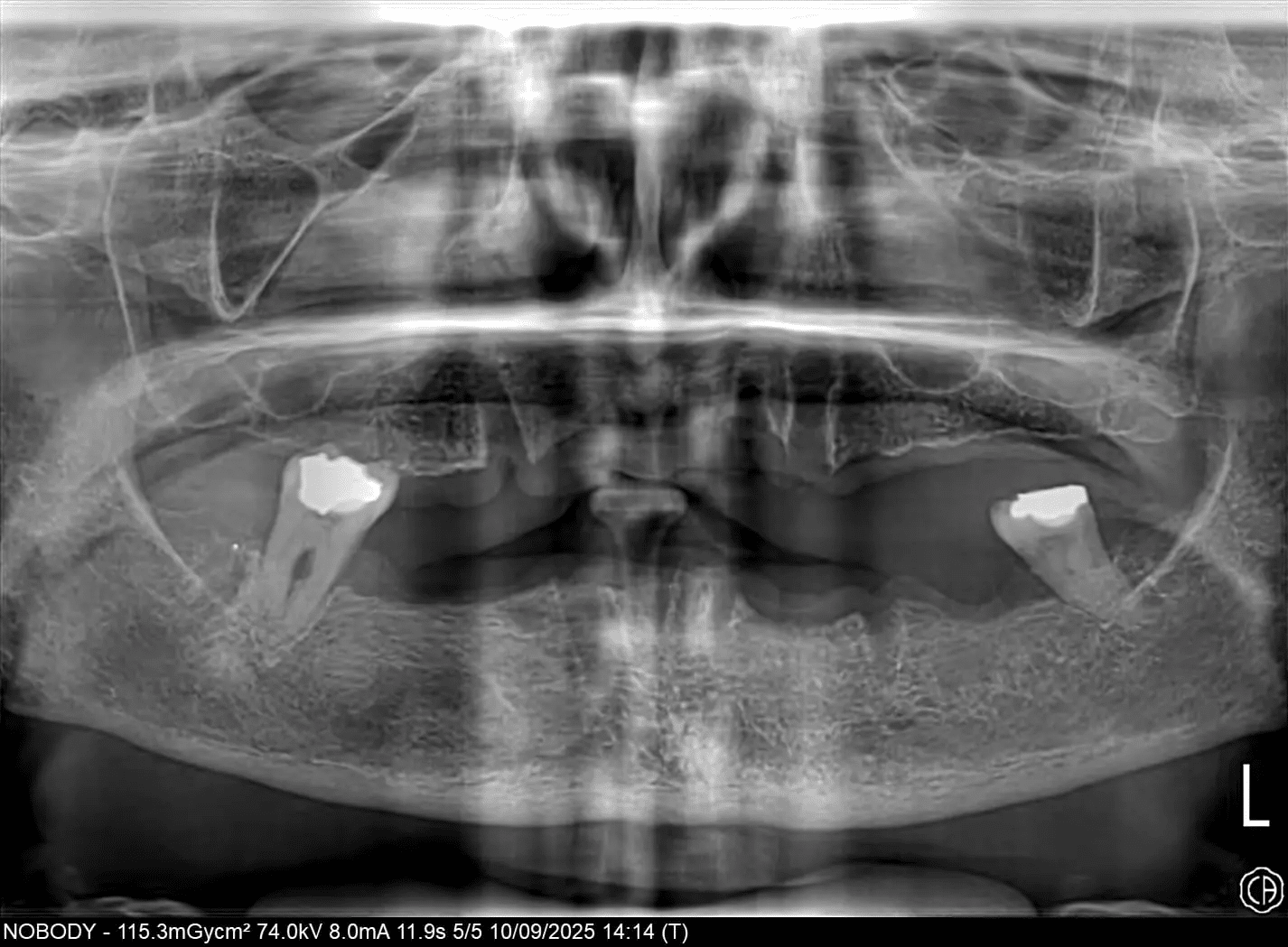
J.M.C.’s initial consultation X-rays showed the full extent of bone loss across both jaws. Two key surgical challenges were immediately apparent:
- Bilateral sinus proximity: Upper jaw bone loss had reduced the available implant height in the posterior regions, requiring sinus lifts before implants could be placed
- Generalised bone deficiency: Bone grafting would be needed to create a viable implant site across multiple areas
The decision to treat her in Turkey rather than requiring pre-extraction before travel was hers — and one I respect. Many clinics would have asked her to have all teeth removed locally before arriving. We planned the entire journey around her.
Full treatment summary:
| Component | Detail |
|---|---|
| Patient | J.M.C. |
| Origin | United Kingdom |
| Procedure | Dual All-on-6 Dental Implants, Bilateral Sinus Lift, Bone Grafting |
| Restorations | 24 Metal-Porcelain Crowns |
| Aesthetic choice | Shade 1M1 / Softened Style |
| Treatment duration | 8 months (3 visits) |
| Total investment | £8,574.39 |
The 3-Phase Treatment Plan: Why Staging Matters
Full-mouth implant reconstruction after periodontal disease cannot be completed in one visit. Attempting to do so — placing implants into infected, recently extracted sites without allowing healing — dramatically increases implant failure risk. Our protocol at Smile Dental Turkey divides this type of case into three distinct phases, each serving a specific clinical purpose.
Phase 1: Clearance and Strategic Retention — September 2025
Clinical objective: Remove failing teeth, eliminate active infection, and maintain patient function during the healing period.
Dr. Özkaynak performed:
- 5 extractions — upper jaw
- 6 extractions — lower jaw
A decision was made to intentionally retain two posterior teeth at this stage. This is a staging strategy I use regularly in complex cases: by keeping two structurally sound anchor teeth temporarily, the laboratory team can fabricate a fixed provisional denture that attaches to those teeth. The patient leaves with a stable, functional temporary smile — not a removable plate — and can eat and speak normally throughout the months-long healing phase.
Those two teeth were always planned for extraction at the final visit, once the implants were fully integrated and permanent restorations were ready.
“Retaining two teeth during the interim phase is not a compromise — it is a deliberate clinical decision that significantly improves patient quality of life during healing. A patient who can eat comfortably for eight months heals better psychologically and physically than one managing with a removable denture.” — Özkan Özkaynak, D.D.S., Ph.D., Oral & Maxillofacial Surgeon, Smile Dental Turkey
Phase 1 cost: £282.15 (after discounts)
Phase 2: Surgical Foundation — December 2025
Clinical objective: Rebuild bone volume and place the All-on-6 implant frameworks in both jaws.
Following three months of healing from the Phase 1 extractions, J.M.C. returned for the core surgical visit — the most technically complex phase of the entire case.
Bilateral sinus lift: The maxillary sinuses sit immediately above the upper posterior jaw. When upper teeth are lost or the jaw bone resorbs, the sinus floor can drop to a point where there is insufficient vertical bone height to place an implant safely. A sinus lift elevates the sinus membrane and fills the resulting space with bone graft material, creating a new bone floor of adequate depth.
In J.M.C.’s case, bilateral sinus lifts — performed on both sides simultaneously — were required before any upper jaw implants could be placed.
Bone grafting: Additional bone grafting material was applied across areas of the lower jaw where bone volume was insufficient for primary implant stability.
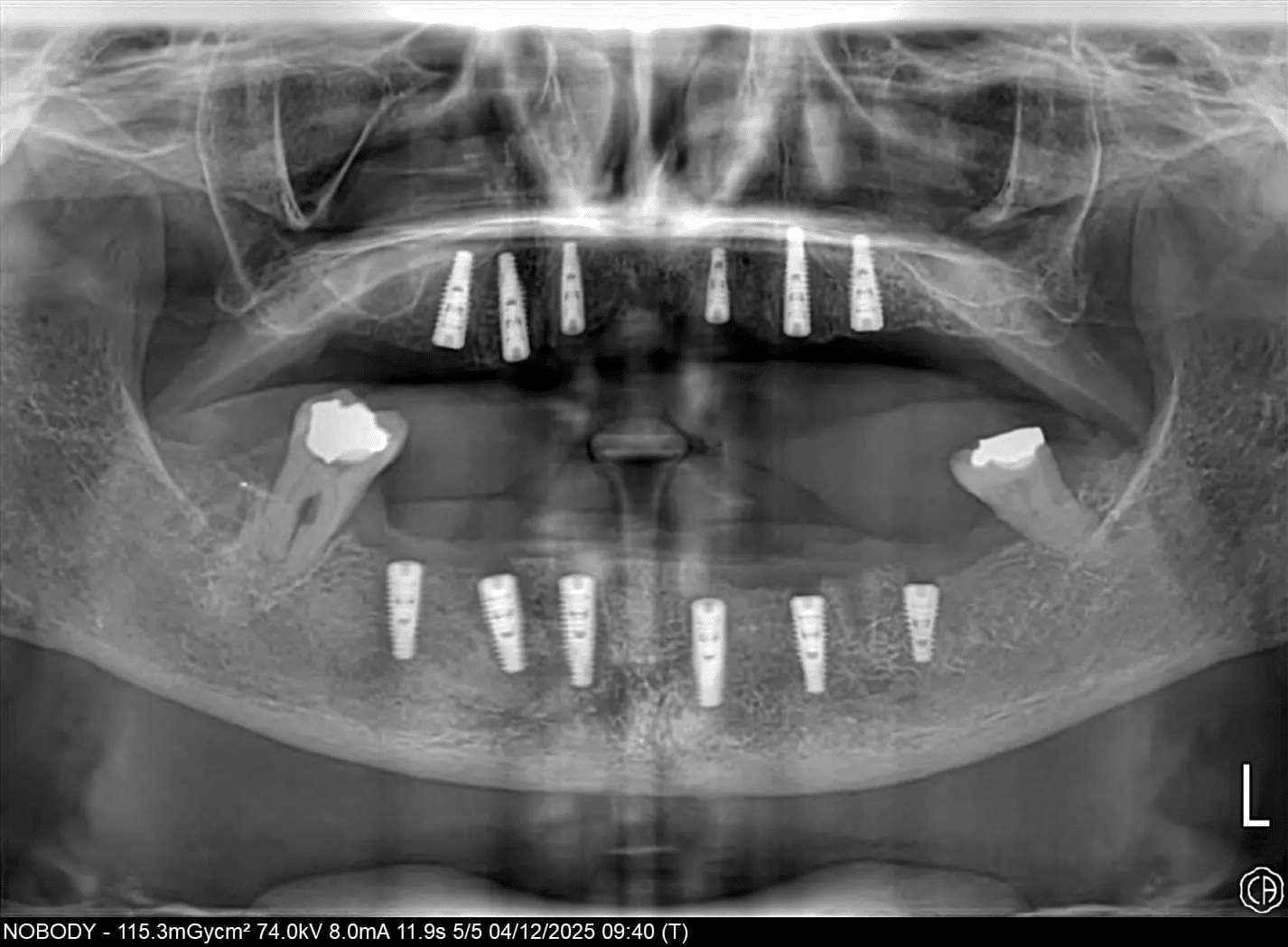
All-on-6 implant placement: Once the grafting was complete, I placed:
- 6 dental implants in the upper arch (All-on-6 framework)
- 6 dental implants in the lower arch (All-on-6 framework)
Why All-on-6 rather than All-on-4? All-on-4 uses four implants per arch and relies on angled posterior implants to avoid areas of poor bone density. All-on-6 places six implants per arch — typically with better distribution and load sharing. In cases where bone grafting has already been performed to restore volume, All-on-6 offers greater long-term stability and is my preferred protocol for full-arch reconstruction in periodontally compromised patients.
Osseointegration: Following implant placement, a minimum of four months was allowed for full osseointegration — the biological process by which the titanium implant surface bonds with the surrounding bone. Premature loading of implants before osseointegration is complete is one of the leading causes of implant failure in full-arch cases.
Phase 2 cost: £5,085.54 (after discounts)
Phase 3: Final Extractions and Permanent Restorations — April 2026
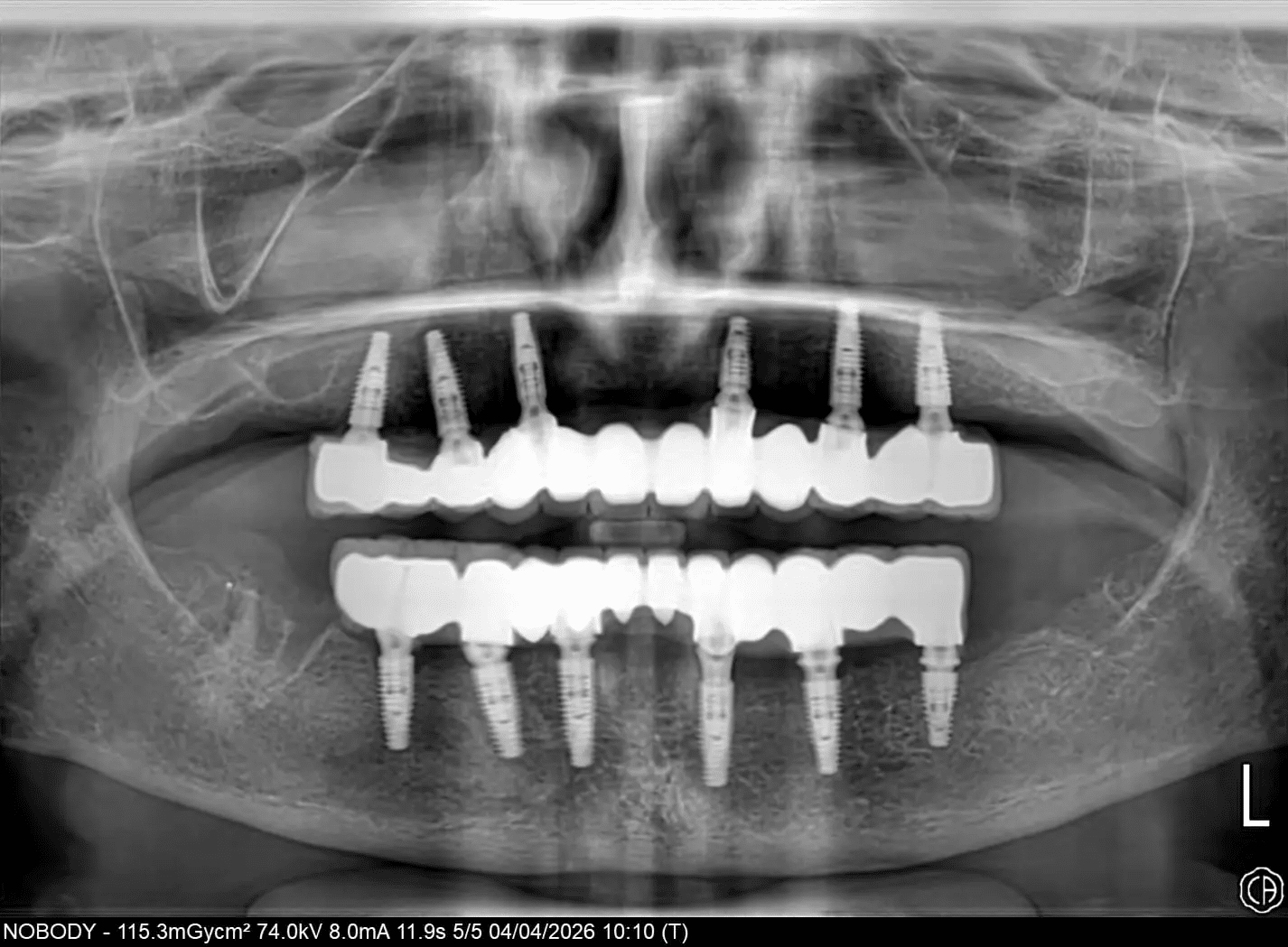
Clinical objective: Remove the two retained anchor teeth and place the final 24-crown restorations.
With implant osseointegration confirmed, J.M.C. returned for her final visit — managed jointly between myself for the remaining surgical steps, and Yekta Özsoy D.D.S. for the prosthetic phase.
- 2 final extractions (lower jaw) — the two retained anchor teeth were removed
- 12 Metal-Porcelain Crowns placed on the upper arch implants
- 12 Metal-Porcelain Crowns placed on the lower arch implants
Aesthetic outcome: J.M.C. selected shade 1M1 — a bright white — rendered in a Softened Style shape that avoids the over-squared appearance common in standard full-arch cases, producing a more natural, age-appropriate result.
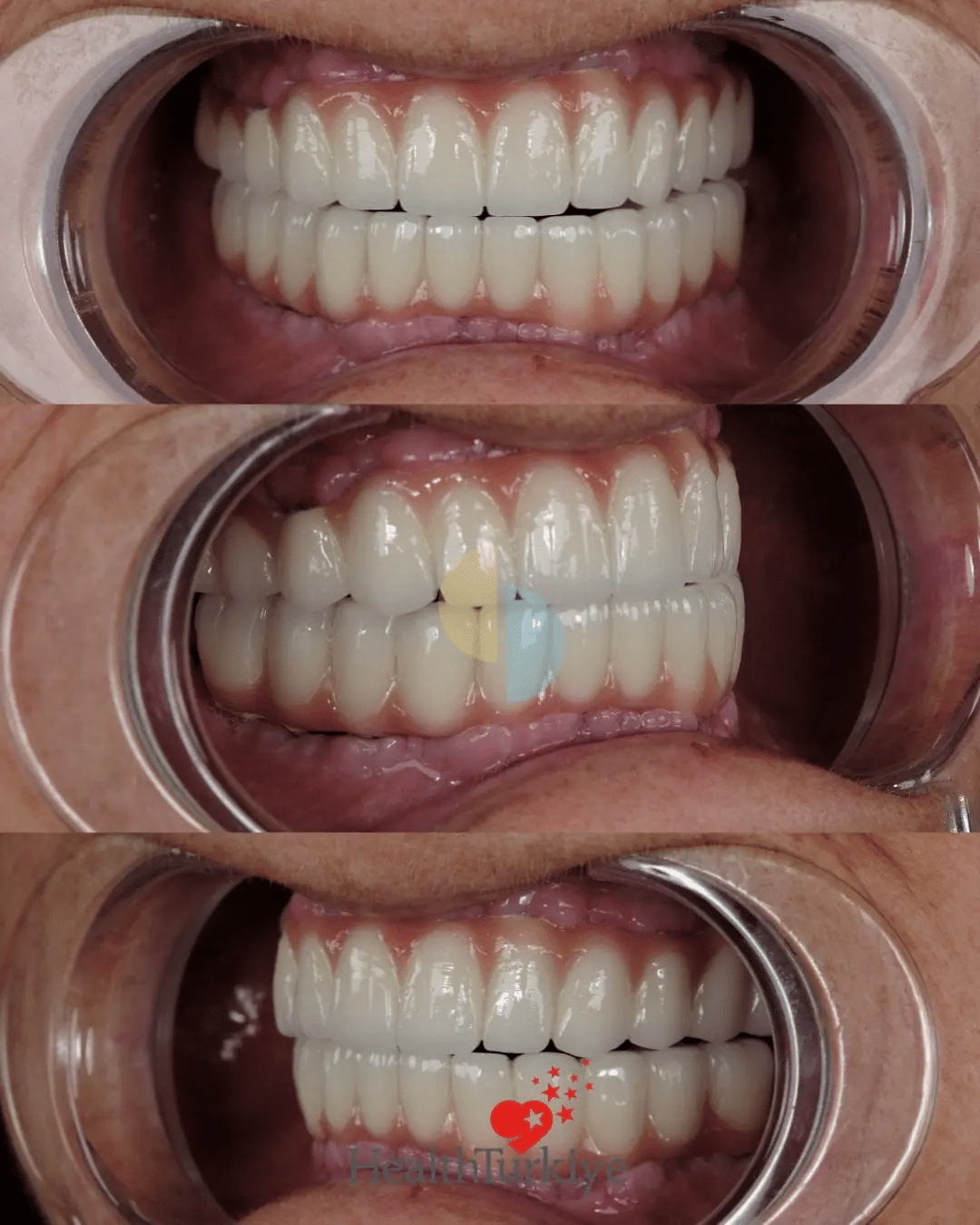
Phase 3 cost: £3,206.70 (including hotel accommodation)
Full Itemised Cost Breakdown (GBP)
Visit 1 — September 2025
- 5 × Tooth Extractions (Upper Jaw)
- 6 × Tooth Extractions (Lower Jaw)
- Total: £282.15 (after discounts)
Visit 2 — December 2025
- 1 × Bone Grafting
- 1 × Bilateral Sinus Lift
- 1 × All-on-6 Implant Framework (Upper)
- 1 × All-on-6 Implant Framework (Lower)
- Total: £5,085.54 (after discounts)
Visit 3 — April 2026
- 2 × Tooth Extractions (Lower Jaw)
- 12 × Metal-Porcelain Crowns (Upper)
- 12 × Metal-Porcelain Crowns (Lower)
- Hotel Accommodation Fee: £180.00
- Total: £3,206.70 (after discounts, including hotel)
Grand Total: £8,574.39
UK Cost Comparison
| Treatment | Smile Dental Turkey | UK Private Estimate |
|---|---|---|
| 13 Tooth Extractions | Included | £1,300–£3,900 |
| Bilateral Sinus Lift | Included | £4,000–£8,000 |
| Bone Grafting | Included | £2,000–£5,000 |
| 12 Implants (All-on-6 ×2) | Included | £20,000–£36,000 |
| 24 Metal-Porcelain Crowns | Included | £12,000–£24,000 |
| Total | £8,574.39 | £39,000–£76,000+ |
UK estimates based on published private dental fee surveys and British Dental Association 2025 guidance. Individual quotes will vary.
FAQ: All-on-6 Implants After Periodontal Disease
Does periodontal disease automatically disqualify me from dental implants? No. What disqualifies patients from implants is active, uncontrolled infection and insufficient bone volume that cannot be restored. In the majority of cases, clearing the infection through extractions and allowing healing — combined with bone grafting or sinus lifting where needed — restores implant candidacy. Each case requires a full clinical assessment and X-ray review to determine the appropriate protocol.
What is the difference between All-on-4 and All-on-6 implants? Both use a fixed full-arch bridge supported by implants. All-on-4 uses four implants per arch, with posterior implants angled to avoid areas of bone loss. All-on-6 uses six implants per arch with more even distribution and typically greater load-bearing stability. For patients who have undergone bone grafting — as in this case — All-on-6 is generally the preferred protocol because the restored bone volume allows full upright implant placement.
Why does the treatment require multiple visits spread over months? Osseointegration — the bonding of the titanium implant surface to surrounding bone — takes a minimum of three to four months and cannot be safely accelerated. Placing permanent restorations before osseointegration is complete significantly increases implant failure risk. The three-visit protocol is clinically necessary, not a logistical convenience.
What is a sinus lift and when is it needed? A sinus lift (sinus augmentation) is a surgical procedure that elevates the floor of the maxillary sinus and places bone graft material in the resulting space, increasing the vertical bone height available for upper jaw implants. It is required when upper tooth loss or bone resorption has caused the sinus floor to drop too close to the jaw ridge for safe implant placement. Healing time before implant placement is typically four to six months.
How long do All-on-6 implants last? With proper oral hygiene and routine maintenance, dental implants have a documented long-term survival rate of over 95% at 10 years (Pjetursson et al., clinical literature review). The implant-supported crowns may require replacement or maintenance after 10–15 years depending on wear. The implant fixtures themselves, once fully integrated, are typically considered permanent.
What does Smile Dental Turkey provide for international patients? We offer free online consultations and full treatment planning with itemised GBP pricing before any travel commitment, VIP airport transfers, hotel coordination, and written treatment warranties. For a full breakdown of what’s included and current pricing, see our full mouth dental implants Turkey package guide.
About the Author
Özkan Özkaynak, D.D.S., Ph.D. is an Oral and Maxillofacial Surgeon at Smile Dental Turkey, Antalya. He earned both his D.D.S. and his Ph.D. in Oral and Maxillofacial Surgery from Ankara University, and previously served as an Assistant Professor at Karadeniz Teknik Üniversitesi before joining Smile Dental Turkey in 2010. He specialises in advanced dental implants, bone grafting, sinus lifting, and complex surgical extractions, and has contributed to peer-reviewed publications in his field.
This article is based on a verified patient case treated at Smile Dental Turkey between September 2025 and April 2026. Patient identity is protected; initials used with consent. UK cost comparisons reference British Dental Association 2025 private fee guidance and published dental price surveys. Clinical survival rate data references Pjetursson et al. systematic review of implant-supported fixed dental prostheses.