

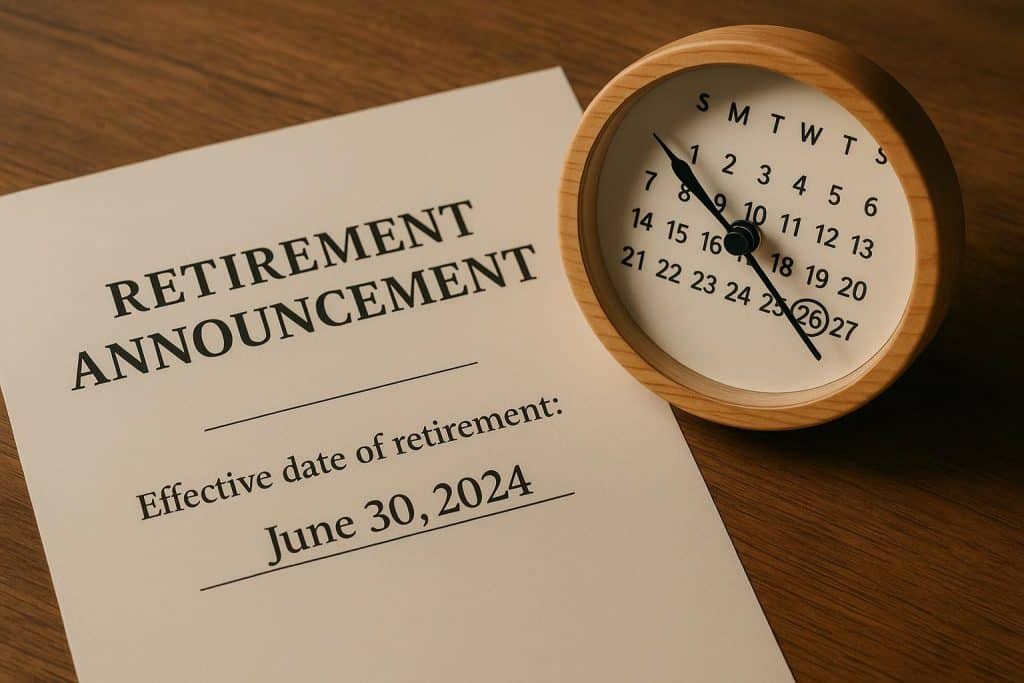
Most people pick a retirement date the way they pick a moving date: whenever feels convenient. End of the year, right after a birthday, the day a lease is up. It’s an understandable approach. But the calendar page you land on can quietly shape your finances, your health coverage, and even how the first year of retirement feels.
This isn’t about superstition or lucky months. It’s about the fact that your retirement date triggers a cascade of real, practical events, and depending on when that trigger fires, you either get to work some of them in your favor, or you don’t. In fact, the specific month you retire can shift your tax bill, your healthcare timeline, and even how smoothly the transition feels.
The Money Side of the Calendar
Income and taxes don’t reset the moment you decide to stop working. They reset on the calendar year. That means how much of the year you’ve already worked before you retire directly affects your tax bracket for that year.
Retire earlier in the calendar year, and you’ve earned less of your usual annual income by the time you stop. That can open a window, sometimes a fairly generous one, for moves that are much more expensive to make in a normal, full-income year. Some retirees use that lower-income year to shift money between account types in a more tax-efficient way. Others use it to realize investment gains at a reduced rate. The specific tactics vary, but the underlying mechanism is the same: a lower-income year is a limited-time opportunity, and the timing of your retirement date determines whether you get one.
Retire on December 31st, on the other hand, and you’ve already banked a full year of normal income. That “clean break” feeling comes at the cost of losing most of that planning window entirely.
The Health Coverage Timeline
Healthcare is another area where timing isn’t neutral. If you’re retiring before Medicare eligibility, the way your coverage transitions and how long any gap lasts depends heavily on when you pull the trigger. Higher earners also need to be aware that Medicare premiums are calculated using income from a couple of years prior, which means a lower-earning year around retirement can have ripple effects on healthcare costs down the line, for better or worse depending on how it’s handled.
There’s also a practical, less glamorous piece: whatever dental, vision, or elective care you’ve been putting off is usually cheapest to knock out while you’re still on an employer plan. It’s an easy thing to forget in the excitement of leaving.
The Human Side Nobody Puts in a Spreadsheet
Beyond the numbers, there’s a softer factor that deserves more attention than it usually gets: how the first several months of retirement actually feel. The transition out of a career is a bigger psychological shift than most people expect, and the environment you retire into, including routine, structure, even something as simple as the weather, plays a real role in how smoothly that adjustment goes.
The Compensation Calendar
For anyone with a pension, bonus structure, or equity compensation, the “best” month to retire often has very little to do with taxes or seasons at all. Pension eligibility dates, bonus payout schedules, and vesting timelines can be worth far more than any tax strategy, and missing one by a few weeks can be a costly, entirely avoidable mistake.
There’s No Universal Answer, But There Is a Better Question
The point isn’t that everyone should retire in a specific month. It’s that the question “when should I retire?” deserves the same level of scrutiny as “how much do I need to retire?” and most people never give it that scrutiny at all.
Before locking in a date, it’s worth asking: What does my income picture look like this year versus next? What’s my healthcare bridge going to look like? Am I about to walk away from a bonus, vesting date, or pension milestone I haven’t fully priced in? What kind of first six months am I actually setting myself up for?
Answer those honestly, and a specific month usually starts to stand out. Not because it’s magic, but because it’s the one that lines up your finances, your coverage, and your well-being all at once.
For a full walkthrough of exactly how these factors play out, including which months tend to work best and why, plus the specific tax and healthcare mechanics behind them, this guide on the Best Time of Year to Retire breaks it all down in detail.