

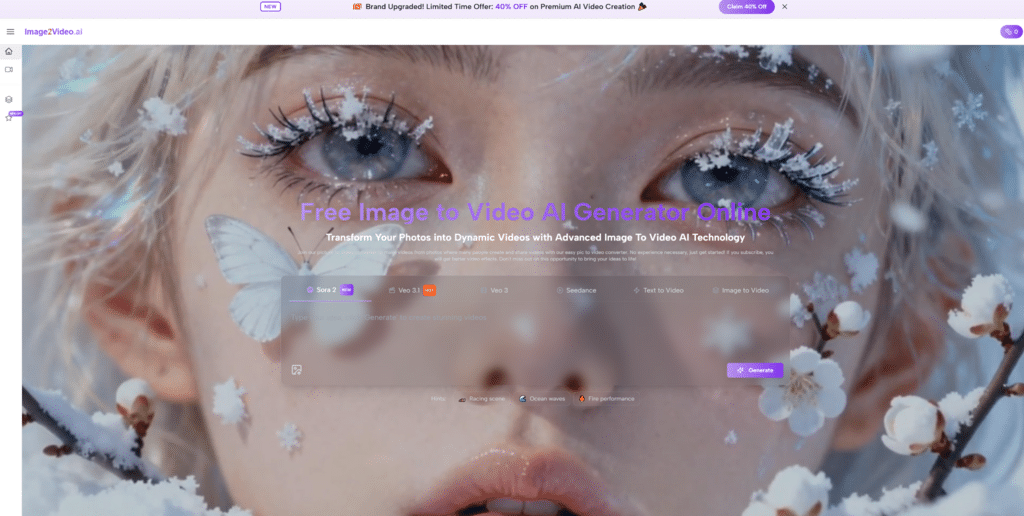
The gap between imagination and execution has always been a quiet barrier in visual storytelling. You may have a compelling photo, a clear idea, and even a strong emotional direction—but turning that into motion used to require editing software, timelines, and technical skill. What I found interesting while exploring Image to Video AI is that the process is no longer about editing frames. It is about describing intent.
That shift changes who gets to create moving images. It also changes how quickly ideas can be tested, discarded, and refined.
Why Static Visuals Are No Longer Enough
There was a time when a single image could carry attention. That time is fading.
Attention Now Requires Motion
Short-form video platforms have redefined baseline expectations. A static image now feels incomplete in environments built around movement.
Production Friction Still Exists
Traditional video production introduces friction:
- Editing timelines
- Motion keyframes
- Rendering pipelines
These are not just tools—they are barriers for non-editors.
AI Changes the Starting Point
Instead of asking “how do I animate this,” the question becomes:
- What should move?
- How should it feel?
That shift is subtle but important.
How The System Interprets Creative Intent
What stands out is not just generation—but interpretation.
From Description To Motion Logic
Language Becomes Instruction
In my testing, phrases like:
- “slow cinematic zoom”
- “gentle wind movement”
- “dramatic lighting shift”
are translated into actual motion patterns.
This suggests the system is mapping language to visual behaviors rather than applying fixed templates.
Image As Structural Anchor
The uploaded image is not just input—it defines:
- composition
- subject placement
- visual hierarchy
Everything else adapts around it.
Model Selection Matters
Different models (such as cinematic vs stylized outputs) appear to influence:
- motion smoothness
- realism
- interpretation consistency
The system does not expose technical parameters, but the variation is noticeable.
How The Workflow Actually Feels In Practice
The official flow is minimal, and in practice it stays that way.
Three Steps From Idea To Output
Step 1 Upload A Base Image
You start with a JPEG or PNG. This defines the entire scene.
Step 2 Add A Prompt Description
You describe motion, atmosphere, and style using natural language.
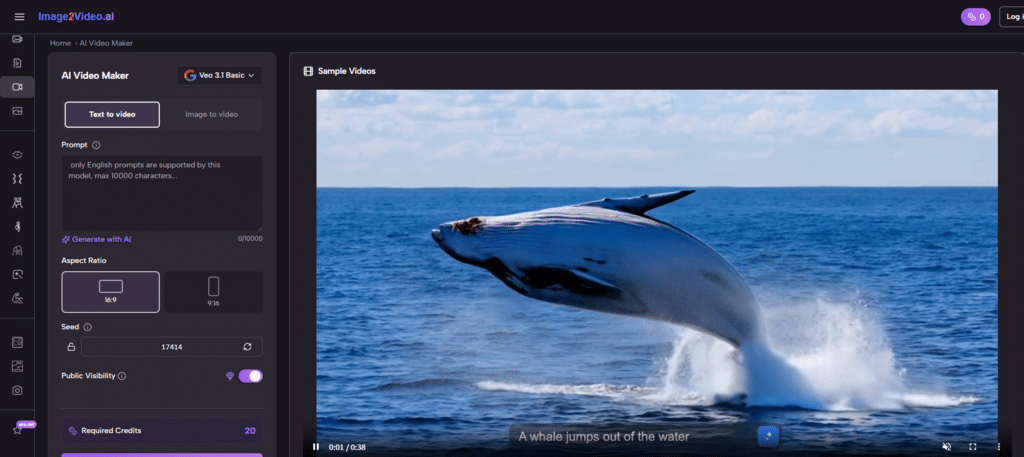
Step 3 Generate And Wait
The system processes the request, typically taking a few minutes, and returns a video output.
There are no intermediate editing steps. That is both the strength and limitation.
Comparing This Approach With Traditional Methods
| Aspect | AI-Based Generation | Traditional Editing |
|---|---|---|
| Entry Barrier | Very low | High |
| Time To Output | Minutes | Hours |
| Control Precision | Medium | High |
| Learning Curve | Minimal | Steep |
| Iteration Speed | Fast | Slow |
This comparison is not about replacement. It is about workflow differences.
Where This Approach Feels Most Natural
Not every use case benefits equally.
Social Content Creation
Short videos, especially those built around mood or reaction, benefit from:
- speed
- experimentation
- variation
Concept Visualization
When exploring ideas:
- you can test multiple directions quickly
- discard weak ones early
Personal Storytelling
Turning old photos into motion sequences feels less like editing and more like reinterpreting memory.
Where Limitations Still Appear
No system removes trade-offs.
Prompt Dependency
Results vary significantly based on how clearly intent is described.
Inconsistent Motion Detail
In some outputs, fine motion details can feel slightly artificial.
Iteration Required
Getting a precise result often requires multiple attempts.
These are not flaws unique to this system—they are typical of current generative pipelines.
What This Signals About The Direction Of Creation
The most interesting shift is not speed. It is abstraction.
From Tools To Intent Layers
Instead of manipulating:
- frames
- keyframes
- transitions
you describe:
- mood
- movement
- pacing
The system fills in the mechanics.
A Different Kind Of Creative Skill
The skill is no longer technical execution. It becomes:
- describing clearly
- refining prompts
- understanding visual language
Where Photo To Video Fits In This Transition
Later in my testing, I explored the broader idea of Photo to Video workflows—not as a feature, but as a category. The key difference is that the transformation is not linear editing. It is interpretive generation.
That distinction matters. It suggests future tools may rely less on manual control and more on expressive input.
What This Means For Creators Moving Forward
The implication is not that traditional tools disappear.
It is that:
- early-stage ideation accelerates
- experimentation becomes cheaper
- more people can participate in visual storytelling
For many creators, the first version of an idea may no longer be edited. It may be generated.
And that alone changes how creative processes begin.