

If you live in Denver, you do not need much experience with Colorado weather to know how quickly a summer afternoon can change. A warm, sunny day can turn into a severe thunderstorm in a matter of hours, bringing heavy rain, strong winds, lightning, and sometimes hail. For homeowners, that raises a practical question every year: when is hail season in Denver, and when should the house and roof be ready for it?
Colorado’s hail season is longer than many homeowners realize. The Colorado Climate Center describes the broader Colorado hail season as roughly mid-April through mid-September, while destructive hailstorms are more concentrated from late May through late August. Historical climate data also identifies June as Colorado’s most likely month for hail.
That does not mean a Denver homeowner can circle one date on the calendar and assume the rest of the year is safe. Hail is weather-dependent, and severe storms can vary from one neighborhood to another. The more useful approach is to understand when the risk increases and make sure the roof and other vulnerable parts of the property are in reasonable condition before the most active part of the season arrives.
When Is Hail Season in Denver?
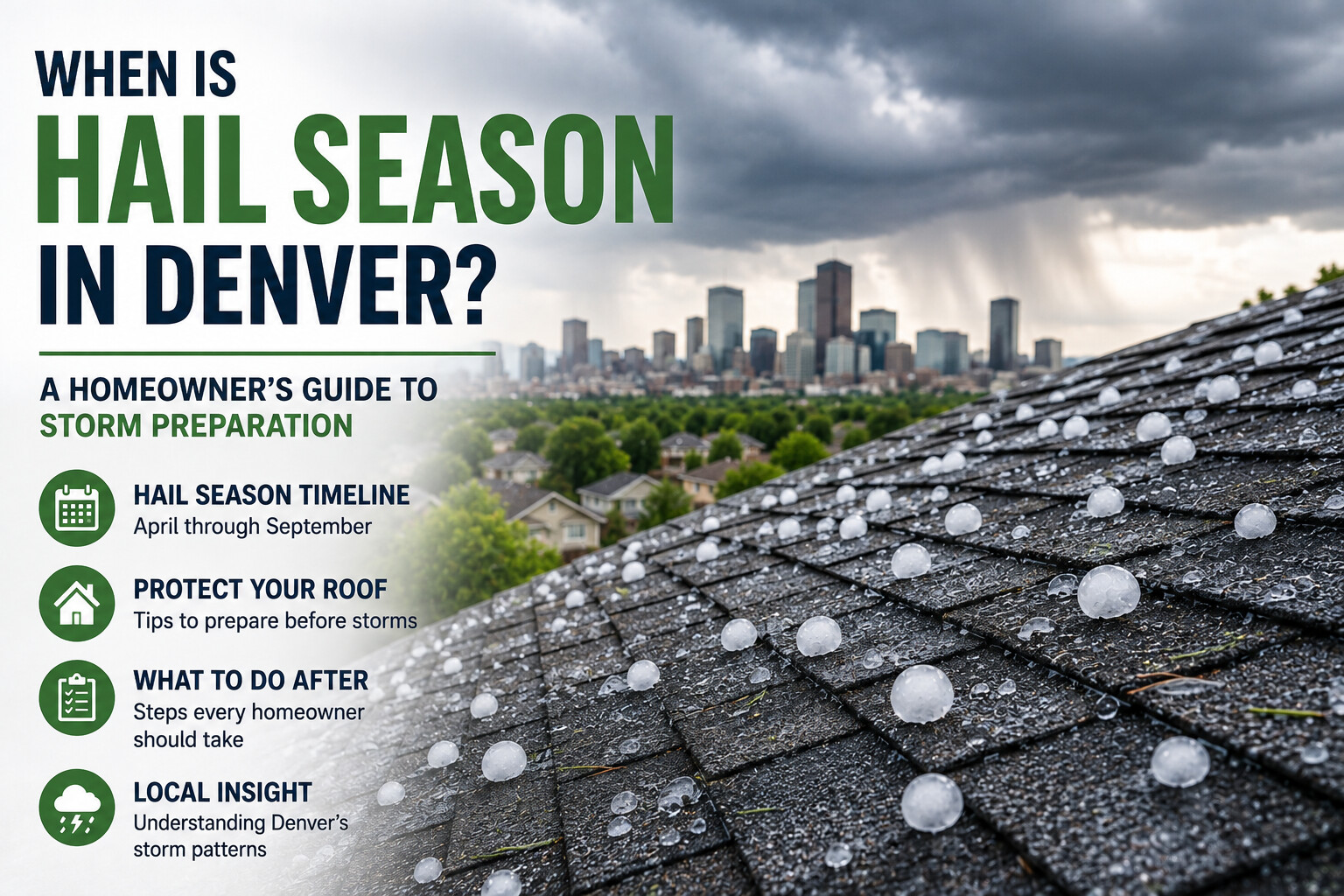
For practical planning purposes, Denver homeowners should start paying closer attention to severe weather from spring onward. Colorado’s broader hail season generally runs from about April 15 through September 15, but the period with the greatest concern for destructive hail is shorter, generally running from late May through late August.
June deserves particular attention. Historical Colorado hail data identifies June as the month when hail is most likely statewide, although the exact timing and severity of storms change from year to year. Denver’s long-term climate records also show June as an important month in the area’s warm-season weather pattern.
For a homeowner, the takeaway is fairly simple. You do not want to wait until the first major storm of June to start thinking about the condition of the roof. By that point, the more sensible preparation work should already be done.
Why Denver Experiences So Much Hail
Colorado’s geography plays a major role in its weather. The state sits between the Rocky Mountains and the eastern plains, creating a complicated environment where different air masses and elevations interact. During spring and summer, thunderstorms become common across the eastern plains and along the eastern slopes of the mountains, and some of these storms can become severe.
Denver’s location along the Front Range puts homeowners in an area where strong spring and summer thunderstorms are a regular part of the climate. That does not mean every storm produces damaging hail, and it certainly does not mean every home in the metro area experiences the same level of exposure. Storm tracks can be highly localized, which is why one neighborhood may see significant hail while another nearby area receives mostly rain.
That local variation is one reason homeowners should pay attention to the condition of their own property rather than assuming that a storm either affected every home equally or caused no damage at all.
When Should Denver Homeowners Start Preparing for Hail Season?
Preparation should begin before severe weather becomes a regular part of the forecast. For most homeowners, that means looking at the condition of the property during spring rather than waiting until a major storm is approaching.
The roof is an obvious place to start because it is one of the largest exposed surfaces on the property. Look for visible signs of aging, previous repairs, loose or damaged roofing materials, and problems around areas such as flashing and roof penetrations. Gutters and downspouts deserve attention as well because they play an important role in moving water away from the house.
If you already know that your roof is older or has developed problems, the beginning of hail season is not the ideal time to discover those issues for the first time. Understanding the roof’s condition beforehand gives you an opportunity to address maintenance concerns while the weather is cooperative.
If you already know that your roof is older or has developed problems, the beginning of hail season is not the ideal time to discover those issues for the first time. Understanding the roof’s condition beforehand gives you an opportunity to address maintenance concerns while the weather is cooperative. A Trusted Denver Roofing Contractor can help homeowners evaluate the roof before severe weather becomes more frequent.
What Should You Check on Your Roof Before Hail Season?
A homeowner does not need to climb onto the roof to perform a useful preliminary check. From the ground, you can look for obvious problems such as missing or visibly displaced shingles, areas that appear significantly different from the surrounding roof, damaged gutters, or other exterior components that are clearly deteriorating.
Pay attention to previous repairs as well. A roof that has already had several repairs may deserve a closer professional evaluation, particularly if it is also getting older. Flashing around roof penetrations and other vulnerable areas can also become important as a roof ages.
The goal is not to diagnose hail damage yourself. It is to identify conditions that deserve attention before the property enters the more active part of Colorado’s storm season.
If something looks questionable, taking a photograph from the ground can be useful. What you should not do is climb onto the roof simply to get a better view. Roofing surfaces can be difficult to navigate safely, and there is little benefit in creating a safety problem while trying to perform an inspection that a professional can handle.
Does Roof Age Matter Before Hail Season?
It does. A roof that has already experienced years of Colorado weather exposure may not have the same condition or remaining service life as a newer roof.
That does not mean an older roof automatically needs to be replaced before hail season. Roof age is only one part of the assessment. The material, installation quality, maintenance history, previous repairs, and current condition all matter.
What age does provide is useful context. If a roof is already approaching the later part of its expected service life, a homeowner may want to understand its condition before severe weather arrives rather than waiting for a storm to expose an existing weakness.
This is particularly useful when planning a property budget. Knowing that a roof is aging is very different from discovering after a major storm that the roof was already in poor condition.
Can You Actually Prepare a Roof for Hail?
There is no way to make a residential roof completely immune to severe hail. Roofing materials are designed to withstand weather, but extreme conditions can still cause damage.
Preparation is therefore less about trying to make a roof “hail-proof” and more about making sure the roofing system is in good condition before the storm season becomes active. Addressing loose materials, deteriorated components, drainage problems, and other known issues can help prevent a small maintenance concern from becoming a larger problem.
Homeowners replacing a roof can also discuss material choices with a qualified roofing professional. In areas where hail is a recurring concern, impact-resistant roofing products may be worth considering. The right choice depends on the property, budget, roof design, and the homeowner’s priorities, so it should be treated as a roofing decision rather than a guarantee against future damage.
Should You Have Your Roof Inspected Before Hail Season?
A professional inspection can make sense when the roof is older, has a history of repairs, shows visible signs of wear, or simply has conditions that the homeowner cannot confidently evaluate from the ground.
The advantage of checking before storm season is that you establish a clearer understanding of the roof’s existing condition. If a major storm later affects the property, you have a better reference point for determining what changed and what may have already been present.
That distinction can be particularly important when dealing with storm damage because not every roofing problem discovered after a hailstorm was necessarily caused by that particular storm. Normal aging, previous damage, and maintenance issues can exist alongside genuine storm damage.
A pre-season inspection is therefore not about assuming that something is wrong. It is about knowing what condition the roof is in before the weather becomes more demanding.
What Should You Do When a Hailstorm Is Forecast?
When severe weather is expected, the priority should be keeping people and property safe rather than trying to inspect the roof during the storm. Pay attention to local weather alerts and move vehicles and vulnerable outdoor belongings to a safer location when practical.
Do not go onto the roof to check its condition while a storm is approaching or immediately afterward while surfaces are wet and conditions may still be unsafe. A homeowner can inspect the property from a safe location once the weather has cleared.
It is also useful to know ahead of time who you would contact if the property experiences storm damage. Having a local roofing professional you can call can save time when a major storm affects a large number of homes and contractors become busy with inspections.
What Can Hail Do to a Denver Roof?
Hail can affect different parts of a roofing system depending on the severity of the storm and the materials used on the home. Asphalt shingles can experience surface and impact damage, while vents, flashing, gutters, skylights, and other exposed components can also be affected.
Not every sign of damage is immediately obvious. Some conditions are easier to identify during a professional inspection than from the ground, particularly when the roof is large or has complicated slopes and penetrations.
Homeowners should also avoid assuming that every mark on an older roof is evidence of the latest storm. Roofing materials naturally change over time, and previous weather exposure can leave signs that look similar to newer damage.
The important question after a storm is whether there is evidence that the roofing system’s condition has changed and whether anything now requires attention.
What Should You Do After a Hailstorm in Denver?
Once the weather has cleared, start with a safe inspection of the property. Look at the gutters, siding, screens, exterior metal components, and other areas that can provide visible evidence of hail impact. If you see something unusual, take photographs and keep a record of when the storm occurred.
Inside the house, look for new ceiling stains, damp areas, or other signs of water intrusion. A new moisture problem following a severe storm deserves attention even if there is no obvious damage visible from the street.
If you believe the roof may have been affected, a professional evaluation can help determine what actually happened. Homeowners should not feel pressured to make an immediate replacement decision simply because a storm occurred. The first objective should be understanding the condition of the roof.
For a more detailed look at what homeowners should know when their roofing system has been affected by a storm, you can also review this guide on hail damage to your roof. hail damage to your roof.
Why Storm Preparation Is About More Than the Roof
The roof is an important part of storm preparation, but it is not the only part of the property that deserves attention.
Gutters and downspouts should be able to move water away from the home. Exterior areas that are already loose or damaged may become more vulnerable during strong winds. Trees and branches near the house can also create additional concerns during severe weather.
The goal is not to make a home completely protected from every possible storm. That is unrealistic. Good preparation is about identifying obvious vulnerabilities and dealing with reasonable maintenance issues before the weather becomes more severe.
For homeowners, this approach is much more useful than trying to predict exactly which storm will cause damage.
How Often Should You Check Your Roof?
There is no need for a homeowner to constantly inspect the roof. A seasonal check, along with attention to visible changes and major weather events, is a more practical approach.
Spring is a particularly useful time to review the property’s condition because it comes before the most active part of Colorado’s severe-weather season. A check after a significant hailstorm or wind event can also be appropriate when there are visible signs of damage.
If the roof is older or has a history of problems, more regular professional maintenance may make sense. The appropriate schedule depends on the roofing material, age, condition, and history of the individual property.
How Denver Homeowners Can Be Better Prepared for Hail Season
The best storm preparation is not complicated. Know roughly when Denver’s active hail period occurs, understand the current condition of your roof, keep drainage components maintained, and pay attention to severe-weather alerts.
Colorado’s broader hail season can extend from spring into early fall, while destructive hail is more concentrated in the late spring and summer. That gives homeowners a useful window to prepare before the highest-risk period rather than waiting until the first major storm arrives.
If your roof is already showing signs of age or damage, getting professional advice before the season becomes active can also make the process less stressful. A homeowner who knows the condition of the roof beforehand is in a much better position to evaluate any changes after a storm.
If you are considering having your roof evaluated before the season, it is also worth looking at HRI Roofing & Construction customer reviews to see what other local homeowners have experienced.
Frequently Asked Questions
When is hail season in Denver?
Colorado’s broader hail season generally runs from about mid-April through mid-September. Destructive hailstorms are more concentrated from late May through late August, with June historically being the month when hail is most likely across Colorado.
What months have the most hail in Denver?
The greatest concern for damaging hail is generally from late May through August. Historical Colorado data identifies June as the most likely month for hail, although severe weather varies from year to year.
When should I prepare my roof for hail season?
Spring is a sensible time to review the condition of your roof, gutters, downspouts, and other exterior components before the most active part of the severe-weather season arrives.
Can hail damage a roof without causing a leak?
Yes. A roof can experience storm-related damage without producing an immediate interior leak. If a severe storm passes through and there are other signs of property damage, a professional evaluation may help determine whether the roof was affected.
Should I inspect my roof before hail season?
A professional inspection can be useful if the roof is older, has previous repairs, shows visible signs of wear, or has conditions that cannot be confidently evaluated from the ground. It can also establish a clearer understanding of the roof’s condition before severe weather arrives.
What should I do if my roof is damaged by hail?
Start by documenting visible damage from a safe location and looking for any new signs of water intrusion inside the home. If you have concerns about the roof, arrange a professional evaluation rather than climbing onto the roof yourself.
Does every hailstorm cause roof damage?
No. The severity of a storm varies considerably, and the effect on a roof depends on factors including hail size, wind, roofing material, roof age, and existing condition. A storm occurring nearby does not automatically mean every home sustained significant damage.
Final Thoughts
For Denver homeowners, hail season is not a single week or even a single month. Colorado’s broader hail season can begin around mid-April and continue into mid-September, while the period of greater concern for destructive hail generally falls between late May and late August. June has historically been the most active month for hail across Colorado.
That makes spring a practical time to look at the condition of your roof and address known maintenance concerns. Once severe weather becomes more common, homeowners should focus on monitoring local forecasts, keeping the property maintained, and knowing what to do if a storm produces visible damage.
A little preparation cannot prevent every storm-related problem, but it can give you something valuable as a homeowner: a clear understanding of your property’s condition before the weather tests it.