

Managing diabetes is often hard work. You count your carbohydrates, track your activity levels, and meticulously measure your insulin doses. Yet, despite your best efforts, you might notice that your glucose levels don’t always respond the same way to the same dose.
Why does the same insulin dose sometimes lower blood sugar quickly and sometimes slowly?
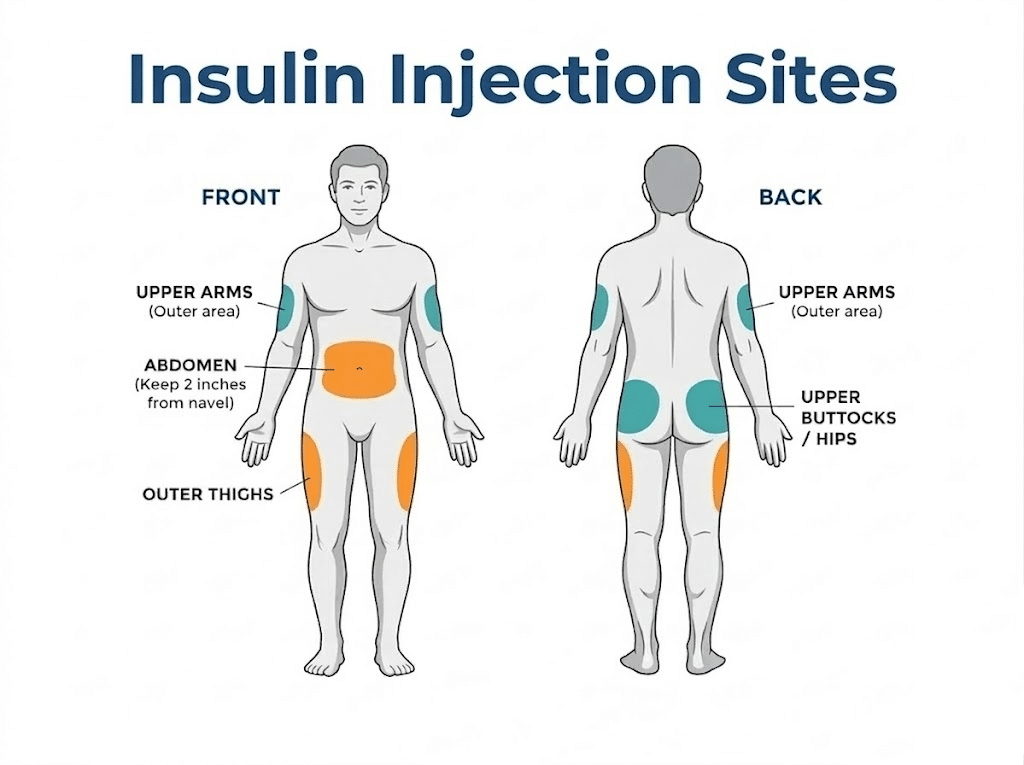
One of the most overlooked factors is the insulin injection sites, including the abdomen, upper arms, thighs, and buttocks. They can affect absorption speed, duration of action, and overall stability. Understanding these impacts helps control the blood sugar effectively.
4 Common Insulin Injection Sites
Before discussing “Where to give insulin shots,” it is important to understand that insulin types act differently. Rapid-acting insulin works quickly and for a short time. Long-acting insulin works slowly but lasts longer.
Because of this, the choice of insulin injection sites can influence how well each type performs.
Abdomen
The abdomen is a common site to inject insulin.
This area has active blood flow and a stable layer of subcutaneous fat. It’s easy to operate and less painful. Insulin injected here is absorbed faster and more consistently than in many other sites. Daily movement also has less impact on absorption compared with the legs.
For these reasons, the abdomen is often recommended for rapid-acting or short-acting insulin before meals.
However, there are a few precautions:
- Avoid injecting within about 5 cm (2 inches) around the navel.
- Avoid areas that are frequently compressed by belts or tight clothing.
- Rotate different insulin injection sites across the abdominal area.
Upper Arms
The outer part of the upper arm is another common option. It’s the tricep region at the back of the arm, about halfway between your elbow and shoulder.
Insulin absorption here is generally moderate: slightly slower than the abdomen but still reliable. Because of this, it can work well for intermediate-acting or long-acting insulin.
However, there are a few practical considerations when choosing these insulin injection sites:
- The fat layer in the arm is thinner, so using a shorter needle is better, and a skin-pinching technique is usually recommended to ensure the needle enters the fat.
- Many people need assistance from healthcare professionals to inject safely.
Thighs
The front and outer sides of the thigh are also convenient insulin injection sites.
Compared with the abdomen and arms, insulin absorption in the thighs is generally slower. Thus, thigh insulin injection locations are often used for long-acting insulin.
However, exercise such as swimming, cycling, or running increases blood flow in the legs, allowing insulin to enter the bloodstream faster than expected.
There are also some tips:
- Avoid injecting into the thigh right before heavy exercise.
- Avoid the inner thighs with dense blood vessels.
- Rotate insulin injection sites regularly.
Buttocks
Among the common insulin injection locations, the buttocks usually have the slowest insulin absorption.
The fat layer in this area is thicker, and blood flow is relatively lower. Because of this, insulin enters the bloodstream slowly.
This makes the buttocks a suitable option for long-acting insulin.
Other advantages include:
- More stable absorption
- Less influence from daily movement
However, these insulin injection spots are often difficult to reach without assistance. Patients require help from healthcare professionals.
Importance of Rotating Injection Sites
When choosing insulin injection sites, it is also important to rotate them regularly.
Frequently injecting insulin into the same small area can lead to lipohypertrophy, causing lumps to form. Insulin injected into these lumps cannot be absorbed properly, leading to a delayed effect of the insulin. Common rotation guidelines are:
- 1 cm: Each injection should be given at least 1 cm (about one finger’s width) away from the previous injection site.
- Division: Divide the abdomen into four areas and rotate the injection site according to the injection frequency.
Regular Blood Sugar Monitoring
In addition to understanding the impact of insulin injection sites, proper blood sugar management also depends on regular blood glucose monitoring, as it can still change due to diet, stress, illness, or physical activity.
Checking glucose levels allows patients to:
- Detect blood sugar fluctuations early
- Evaluate how different places to inject insulin affect glucose levels
- Adjust insulin timing and dosage with medical guidance
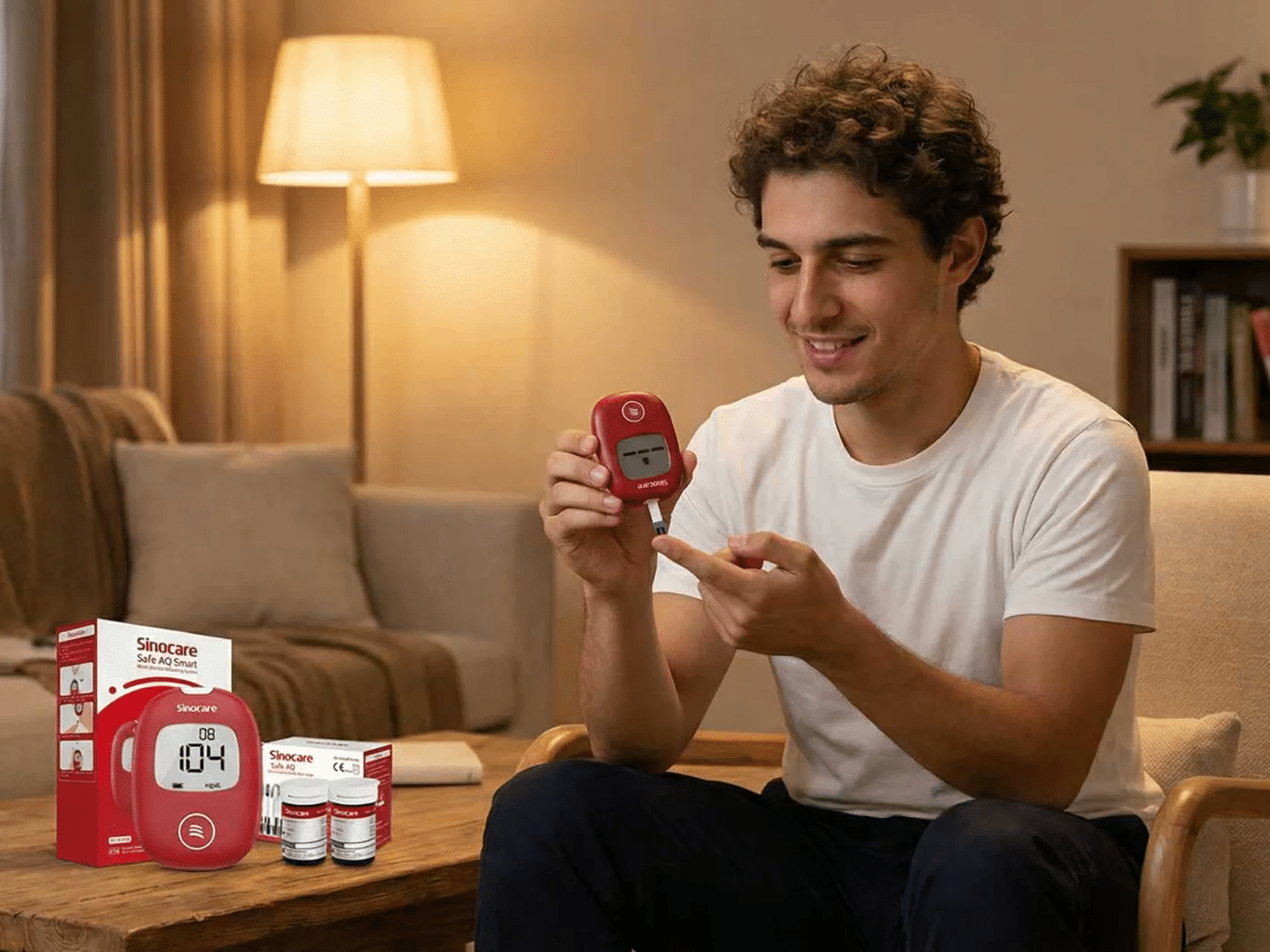
Traditional blood glucose meters provide a single blood glucose reading using disposable test strips. They are particularly suitable for users on a limited budget or those whose daily blood sugar levels remain relatively stable.
What Happens If You Inject Insulin into the Muscle?
Regardless of the injection site, insulin is typically injected subcutaneously, which is the fatty tissue beneath the skin. This ensures controlled absorption of the medication and reduces pain and bruising at the injection site.
If injected into the muscle, insulin will be absorbed rapidly, causing a sharp drop in blood sugar over a short period; consequently, the medication is metabolized more quickly, and its duration of action in the body becomes shorter. Due to the denser network of nerve endings in the muscle layer, you will likely experience noticeable stinging or soreness.
Injecting into the muscle can happen when:
- The needle is too long.
- The fat layer is thin, such as on the outer arm or front of the thigh.
- The injection angle is incorrect.
Conclusion
Different insulin injection sites absorb insulin at different speeds. The abdomen usually provides the fastest absorption, while the buttocks absorb insulin more slowly. Arms and thighs fall somewhere in between. The selection depends on insulin types and needs.
Patients should also rotate insulin injection spots regularly to prevent lipohypertrophy. Combined with regular glucose monitoring, you can improve overall diabetes management!
For more about blood sugar management and monitoring, you can visit the Sinocare website.