

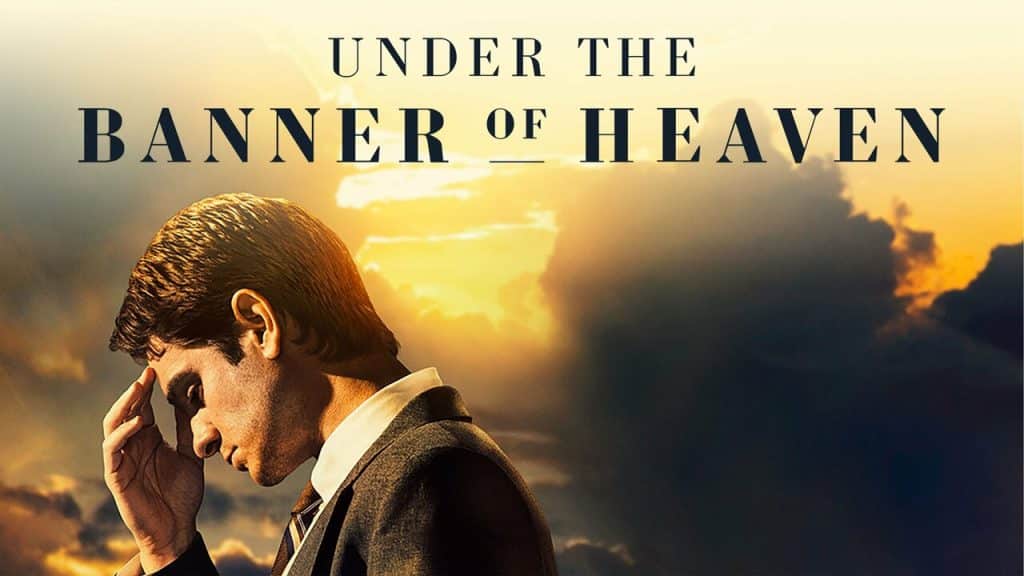
On a quiet July day in 1984, the devout community of American Fork was shattered by the true story of Brenda Lafferty’s murder, a crime justified by the killers as divine will. Through the lens of the fictional detective Jeb Pyre, played by Andrew Garfield, Under the Banner of Heaven investigates a chilling reality: how distorted theological justifications can transform a suburban family into violent fundamentalists.
Under The Banner Of Heaven: How the 1890 Manifesto Created the Fundamentalist Schism
The origins of groups like the Lafferty brothers trace back to a pivotal moment when the Mormon faith fractured. By the late 19th century, the U.S. government threatened to seize church assets over the practice of polygamy, forcing leadership to make an impossible choice: adhere to the original teachings of Joseph Smith or survive as a legal institution. In 1890, Church President Wilford Woodruff issued “The Manifesto,” officially banning plural marriage to secure Utah’s statehood. While the mainstream Church of Jesus Christ of Latter-day Saints (LDS) moved toward modernization and acceptance, a specific faction viewed this pivot as a catastrophic betrayal of God’s law.
This historical rupture created the modern distinction between the mainstream church and fundamentalist sects. Fundamentalists believe the 1890 Manifesto was a political surrender rather than a divine revelation, arguing that they alone are keeping the “fullness” of the gospel alive. This mindset drives the major differences seen today:
- Polygamy Stance: The mainstream LDS Church excommunicates members for plural marriage, while fundamentalists view it as a requirement for the highest heaven.
- Political Alignment: Mainstream members integrate into society and follow civil laws; fundamentalists often reject government authority that conflicts with religious doctrine.
- Priesthood Authority: Fundamentalists claim the mainstream church lost its divine authority to act in God’s name when it abandoned polygamy.
The Lethal Logic of the School of the Prophets and Blood Atonement
While the historical schism provided the context, the Ron and Dan Lafferty criminal case required a specific catalyst to turn belief into action. The brothers found this accelerant in the “School of the Prophets,” a revival of an early church organization originally designed by Joseph Smith for theological instruction. In the hands of 1980s fundamentalists, however, the origins of the School of the Prophets were twisted, mutating from a study group into a hotbed for anti-government sentiment and extremism. Here, isolated from mainstream society, the brothers were encouraged to reject modern laws in favor of literal interpretations of archaic scripture, creating an echo chamber where violent impulses were reframed as divine obedience.
The most dangerous of these resurrected concepts was the doctrine of blood atonement from early Mormonism, which suggested that the blood of Christ could not cleanse certain grievous sins—only the shedding of the sinner’s own blood would suffice. Ron Lafferty weaponized this theology, claiming he received a “removal revelation” directly from God commanding the elimination of his sister-in-law, Brenda, and her infant daughter. Under the Banner of Heaven reveals how these twisted historical justifications allowed the brothers to murder innocent family members while believing they were saving their souls.
Under The Banner Of Heaven: Faith vs. Fanaticism: Lessons from Jon Krakauer’s Investigative Journey
The Lafferty case illustrates how isolation and absolute authority can warp faith into weaponized action. Through the investigative journalism of Jon Krakauer, it becomes clear that religious extremism in the United States often follows a predictable historical script rather than random insanity. Recognizing these patterns helps identify red flags before isolation turns dangerous. Ultimately, understanding how religious fanaticism influences violent behavior forces a confrontation with the terrifyingly thin line between absolute devotion and lethal delusion.