

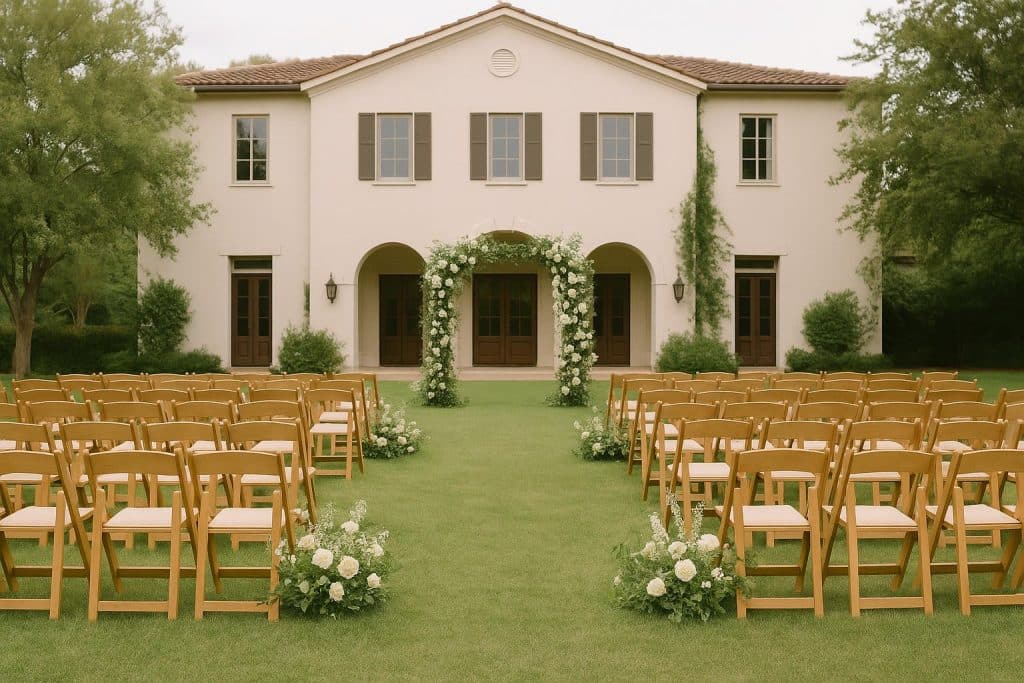
Most wedding venue research focuses on the highlights couples see during a tour. The questions that actually shape how the day feels surface much later, often after the contract is already signed.
Wedding planning has a predictable rhythm. The early months are full of energy and broad strokes. Couples tour venues, fall in love with one or two, and sign a contract. The middle months focus on vendors, design, and logistics. Then, somewhere around six months out, the questions get specific. Where exactly will the bridal party get ready? How will the rain plan actually work if the forecast turns? What does the timeline look like when the photographer wants forty minutes for portraits between ceremony and cocktail hour? At that point, couples either feel reassured by the answers their venue provides or quietly realize they should have asked sooner. The questions themselves are not a secret. They just rarely come up during the romantic first tour.
Getting-Ready Spaces Are Not All Created Equal
The hours before the ceremony shape how the day feels for the couple and the wedding party. Adequate space, good light for hair and makeup, mirrors in useful places, room for clothing and bags, food and drink that has been planned rather than scrambled, and access to the ceremony location without a long disruptive walk all matter. Some venues build these spaces with the same attention they give to event spaces. Others treat them as afterthoughts. The difference shows up in the energy of the first photos and in how rested the couple feels when guests arrive.
The right questions during a tour go beyond seeing the room. How early can the wedding party arrive? Is the space climate controlled? Where is the nearest restroom? How is the room set up by default and what flexibility exists. Is there a separate space for the partner getting ready, or do groups share. Each of these answers reveals how the venue actually thinks about the parts of the day that are not the ceremony or reception themselves.
The Rain Plan Conversation
Outdoor ceremonies and outdoor cocktail hours bring genuine risk in nearly every climate. The right question is not whether the venue has a rain plan but how confident the couple feels about how that rain plan will actually unfold on the day. When does the call get made? Who makes it. How long does the changeover take? What does the indoor backup look like compared to what the couple originally pictured outdoors. Venues that handle weather well have practiced answers because they have lived through enough weather events to know what works. Venues without practiced answers often produce stressful day-of decisions that consume energy the couple needs for everything else.
The Logistics of a Real Timeline
A wedding day timeline looks straightforward on paper. Ceremony at four. Cocktail hour at five. Reception at six. Behind that simple structure are dozens of transitions that each take real time and each can run smoothly or poorly. Vendors arriving and setting up. Florals being placed. Music being tested. Guests being seated. The wedding party was being staged. Photos before, during, and after the ceremony. The couple’s first private moments. The cocktail hour transition. The reception space being flipped if it doubles as the ceremony space. Toasts, dances, dinner service, cake. Each transition needs space, time, and coordination.
- Vendor load-in timing including catering, floral, rental, and entertainment, with realistic windows that match each vendor’s actual needs
- Photo locations on the property and how long it actually takes to walk between them with a wedding party in formal attire
- Cocktail hour transitions including where the wedding party is during this time and how guests are guided to the reception space
- Reception flipping logistics if the ceremony and reception share a space, including how guests are managed during the transition
- Late-night logistics including how vendors load out, where guests and the wedding party can decompress, and what time the venue actually closes
Vendor Relationships and Approved Lists
Some venues maintain preferred vendor lists that strongly steer couples toward specific caterers, planners, florists, and other vendors. Other venues are open to any qualified vendor the couple wants to bring. Both approaches have advantages. Preferred lists usually mean those vendors have worked at the venue many times, know its quirks, and produce predictable results. Open vendor policies allow couples to bring vendors they have already chosen for personal reasons. The key question is honest disclosure of any preferred-vendor financial arrangements and clarity about what flexibility actually exists.
Couples who plan to use vendors not on a preferred list should ask specifically about the venue’s experience working with outside vendors, whether walkthroughs are required, and whether any additional fees or insurance requirements apply. These questions are routine and venues that handle them gracefully reveal a confident operating culture.
Guest Experience Beyond the Couple
Couples naturally focus on their own experience of the day, but guests carry away their own impressions that shape how the wedding is remembered by everyone who attended. Parking that works smoothly or causes frustration. Climate that is comfortable or uncomfortable. Restrooms that are adequate or scarce. Audio that everyone can hear or that frustrates the back rows. Seating that fits everyone or leaves family members standing. Each detail matters more in aggregate than any single one suggests.
Asking the venue how it handles peak guest moments, like arrival, cocktail hour transitions, and end-of-night departures, reveals how seriously it takes guest experience. Venues that think about these flows produce events where guests notice nothing except how nice everything was. Venues that do not think about these flows produce events where guests remember small frustrations that compound across the evening.
Choosing the Right Venue for the Right Reasons
Tours feel like the moment of truth in venue selection, but the real moment of truth is six months later when the practical questions begin. Couples who choose venues that handle those questions confidently end up with weddings that flow naturally and feel celebratory rather than stressful. Couples who choose venues that struggle with those questions often end up doing more of the operational work themselves and feeling the strain on the day.
Couples evaluating a wedding venue for the kind of celebration they want should look beyond the photogenic features visible on a tour to the operational questions that surface later in planning. Venues that combine beautiful spaces with deep operational competence consistently produce the best experiences for couples and guests alike. Venues that excel at one without the other produce events that look good in pictures but feel different in person, which is the opposite of what most couples actually want from their wedding day.
What to Carry Into the Decision
Beautiful spaces are common. Well-run beautiful spaces are not. The combination of a venue the couple loves visually with operational depth that handles the ten thousand small details of an actual wedding day is what separates a memorable celebration from a stressful one. The questions to ask during the tour are the questions that will matter on the day. Asking them early, listening carefully to how they are answered, and choosing a venue whose answers feel grounded rather than improvised is the most valuable preparation work a couple can do in the early months of planning.