

As the tax season unfolds, it’s important to understand your obligations and options when it comes to filing taxes. While the IRS uses the term “voluntary” to describe the system, this can be misleading. Taxpayers are required to file accurate returns and pay any taxes owed. Failure to comply can result in penalties, interest, or even substitute returns being filed on your behalf.
Understanding the “Voluntary” Tax System
The IRS describes the tax system as “voluntary” because taxpayers are responsible for determining the correct amount of tax and filing their own returns. This does not mean filing taxes is optional. Under the Internal Revenue Code, sections 6011(a), 6012(a), and 6072(a) clearly establish that eligible individuals must file returns each year. Failing to do so can trigger enforcement actions from the IRS.
What Happens if the IRS Has No Record of Your Return
If you receive a CP 59 notice from the IRS, it indicates that the agency has no record of your prior year tax return. This notice is serious: it means the IRS expects you to either file your return immediately or provide a valid reason why you are not required to file. Ignoring this notice can lead to further penalties and collection actions.
Substitute for Return (SFR)
When a taxpayer fails to file, the IRS may file a Substitute for Return (SFR) on their behalf. The SFR calculates your tax liability based on information the IRS has from employers, banks, and other sources, but it does not include deductions or credits you may qualify for. This typically results in a higher tax bill than if you had filed your own return. Filing your return promptly ensures that you can claim deductions, credits, and other benefits to potentially lower your tax liability.
How to File a Tax Extension
If you need more time to prepare your taxes, the IRS allows you to request an extension. Filing an extension does not delay your obligation to pay any taxes owed—it only gives you extra time to submit the paperwork.
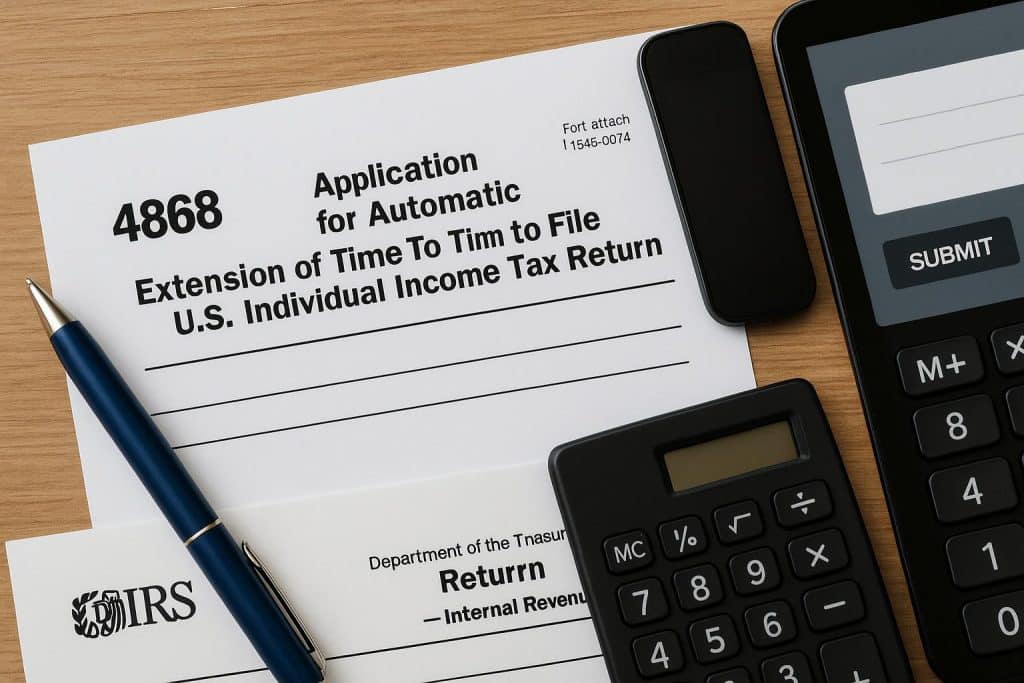
To request an extension, file Form 4868, Application for Automatic Extension of Time to File U.S. Individual Income Tax Return. You can submit this form:
- By mail
- Electronically through IRS e-file partners
- Through a tax professional
Extensions typically give you six additional months to file your return. However, any unpaid taxes are still subject to interest and penalties from the original due date.
Failure to File Penalty
Failing to file a tax return on time can result in a failure to file penalty. The IRS calculates this penalty based on the amount of tax owed and how late the return is filed. Typically, the penalty is 5% of unpaid taxes per month, up to a maximum of 25% of the unpaid amount. If your return is more than 60 days late, a minimum penalty may also apply. For example, late returns due after December 31, 2025 that are more than 60 days past due will incur a minimum penalty of $525 or 100% of the unpaid tax, whichever is less.
In addition to the failure to file penalty, you may also face a failure to pay penalty if you do not pay the taxes owed by the original due date. Interest accrues on unpaid amounts until the balance is fully paid.
When both the failure to file and failure to pay penalties apply in the same month, the IRS adjusts the calculation so that the combined penalty does not exceed 5% per month. In this case, the standard 5% failure to file penalty is reduced by the 0.5% failure to pay penalty, resulting in a total combined penalty of 5% for that month rather than 5.5%.
How to Lower Your Tax Bill
Even if you are filing late or have received an SFR, there are legal strategies to reduce your tax liability:
- Claim all eligible deductions and credits: Itemize deductions or take the standard deduction as appropriate. Credits like the Child Tax Credit or education credits can lower taxes owed.
- Contribute to retirement accounts: Contributions to 401(k)s, IRAs, and similar accounts may reduce taxable income.
- Use Health Savings Accounts (HSA): Contributions to HSAs are tax-deductible and grow tax-free.
- Report business expenses accurately: For self-employed taxpayers, documenting business expenses such as office supplies, mileage, or home office costs can significantly reduce taxable income.
- Consider tax relief programs if eligible: Options such as installment agreements, Offers in Compromise (OIC), or Currently Not Collectible (CNC) status can help manage large balances while reducing penalties and interest accumulation.
Avoiding Common Mistakes
Filing errors can be costly. The IRS encourages taxpayers to:
- File returns even if paying in full is difficult
- Respond promptly to IRS notices
- Keep documentation organized to support deductions, credits, and income reporting
- Avoid ignoring notices or allowing the IRS to file an SFR unnecessarily
Proactive management of your tax obligations can prevent higher penalties, interest, and unnecessary collection actions.
Frequently Asked Questions
How to file a tax extension?
To file a tax extension, submit Form 4868 by the original due date of your tax return. You can do this online via IRS e-file partners, by mail, or through a tax professional. The extension gives you six extra months to file, but does not delay payment of taxes owed.
What is the penalty for filing taxes late?
The failure-to-file penalty is generally 5% of unpaid taxes per month, up to 25% of the tax owed. If your return is more than 60 days late, a minimum penalty may apply. Interest also accrues on unpaid balances.
What is the failure to file penalty?
The failure to file penalty is assessed when you do not submit your return by the deadline. It is calculated based on your unpaid taxes and increases each month until your return is filed, potentially adding significantly to your total tax liability.
How can I lower my tax bill?
You can lower your tax bill by claiming eligible deductions and credits, contributing to retirement accounts, using HSAs, accurately reporting business expenses, and exploring IRS tax relief programs like Offers in Compromise or installment agreements if eligible.