

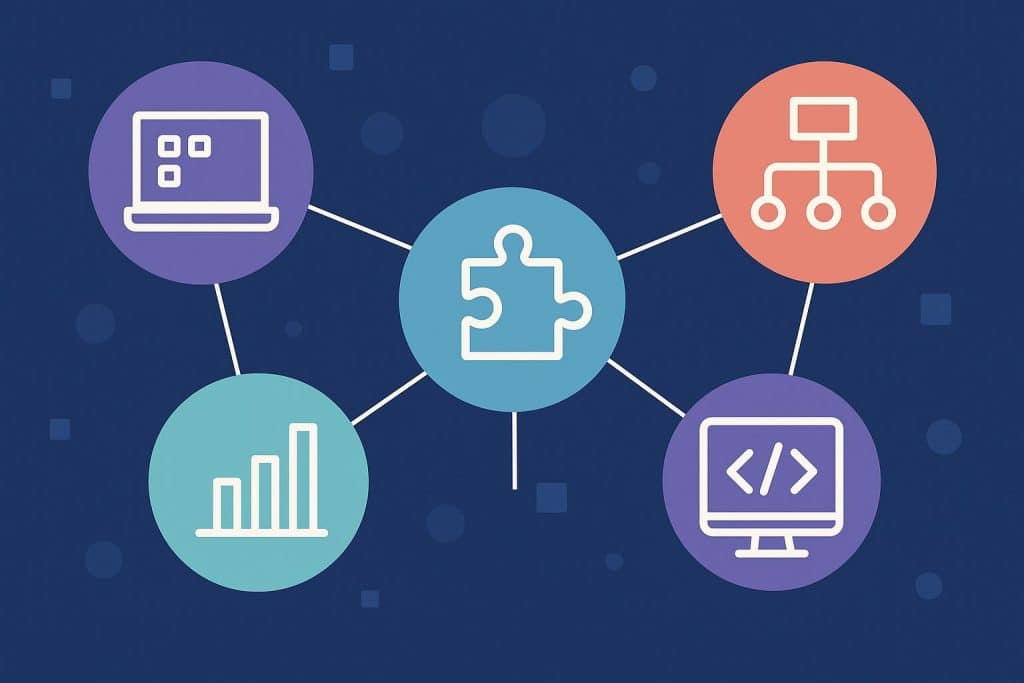
For decades, the “gatekeepers” of the technology industry were those who could write complex syntax in languages like Java, Python, or C++. However, a fundamental shift is occurring in how digital products are built and maintained. The rise of no-code platforms—tools that allow users to create sophisticated software through visual interfaces—has opened the door for a new generation of professionals. These individuals are not just “non-technical” placeholders; they are highly skilled builders who use logic, design, and automation to solve business problems at speeds that traditional development rarely matches. So, you don’t have to code a site like Jokacasino Casino Australia from scratch, you can just design it and let the software developers handle it. Below are five career no-code path to take in tech.
The No-Code Developer
The most direct path in this new landscape is the role of the No-Code Developer. Unlike traditional software engineers, these professionals use robust platforms like Bubble, Webflow, or FlutterFlow to build fully functional web and mobile applications. Their expertise lies in understanding database logic, API integrations, and responsive design without needing to write the underlying code manually.
A No-Code Developer is often the primary choice for startups launching a Minimum Viable Product (MVP) or for enterprise teams building custom internal tools. They bridge the gap between a simple website and a complex engineered system, enabling businesses to iterate on their products daily rather than wait for monthly development sprints.
The Operations and Automation Specialist
Modern businesses run on a complex web of software—CRM systems, email marketing tools, project management boards, and financial trackers. The Operations and Automation Specialist ensures these disparate tools “talk” to each other. By using automation engines such as Zapier or Make, these professionals design intricate workflows that eliminate manual data entry and human error.
An automation specialist might build a system that automatically creates a folder in a cloud drive, sends a personalised message in a chat app, and adds a task to the sales team’s calendar when a new lead comes from a website. This role is essentially the “architect” of a company’s internal efficiency, focusing on the logic of business processes to maximise productivity across the entire organisation.
The Modern Product Manager
Product management has always been about the intersection of business, design, and technology. Traditionally, Product Managers (PMs) had to rely entirely on engineering teams to test even the smallest feature ideas. In the current environment, the “No-Code PM” has a massive advantage. They can build high-fidelity, interactive prototypes themselves to gather real-world user data before a single line of traditional code is ever written.
By using no-code tools for rapid prototyping, PMs can significantly reduce project risk. They can validate assumptions, show stakeholders a working version of a feature, and refine the user journey in real-time. This hands-on approach speeds up the development lifecycle and ensures that when the engineering team does step in, they are building something that has already been proven to work.
The Full-Stack UX/UI Designer
The boundary between “designing” and “building” is rapidly disappearing. For years, designers would hand over static images to developers, hoping the final product would look like the original vision. Today, the Full-Stack UX/UI Designer uses platforms like Framer or Webflow to build the actual front-end interface while they design it.
This path allows designers to take full ownership of the user experience. They can implement complex animations, transitions, and layouts exactly as intended. By eliminating the “lost in translation” phase between design and development, these professionals ensure a higher level of polish and a more cohesive end product for users.
The Growth Marketing Technologist
Growth marketing is no longer just about writing catchy copy or buying ads; it is about building technical systems that drive acquisition. A Growth Marketing Technologist uses no-code tools to create custom landing pages, set up A/B tests, and manage lead generation funnels without needing constant support from a web team.
These professionals might use Airtable to manage content calendars that automatically push updates to a website, or they might build custom calculators and interactive quizzes to capture user data. Their goal is to turn marketing into an automated, data-driven engine. Because they can develop their own tools, they can move faster than competitors slowed by technical bottlenecks, allowing them to capitalise on market trends the moment they emerge.