

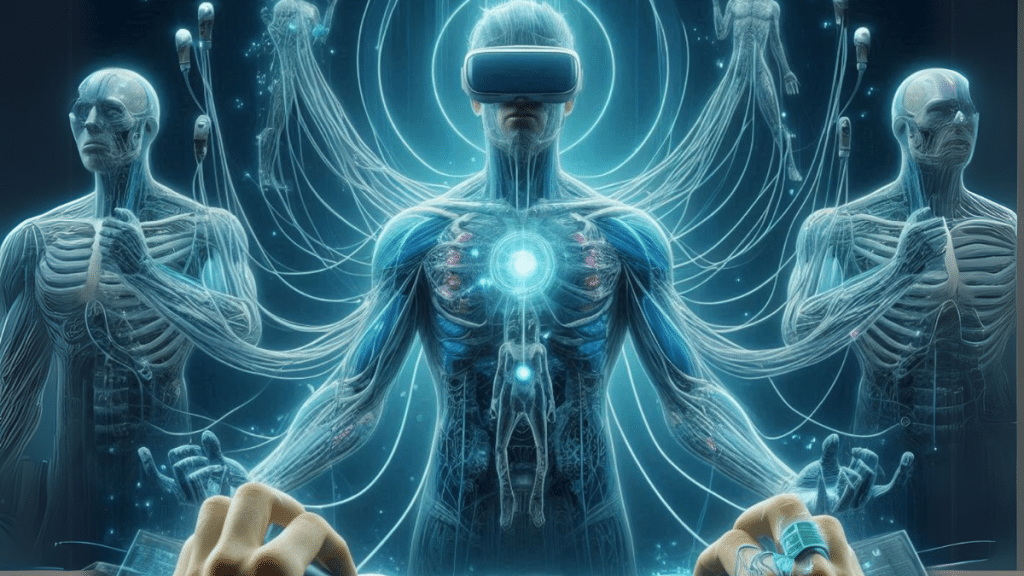
How we play virtual reality (VR) gaming has changed in recent years: The emergence of more-immersive technology supported by biofeedback integration is leading to a situation in which the capabilities of digital worlds and their size are growing all the time. Part and parcel to this transformation is the above developments themselves, where biometric data (heart rate, skin conductivity, brain activities, etc.) serve as inputs for a novel kind of interaction with computer games that can’t help take hold! Biofeedback, a method of measuring biological information and conveying it to the user, has been around for decades in meditative and biofeedback therapies. Its incorporation in VR gaming is nothing short of unprecedented in its ability to draw players deeper into these worlds. Unlike fixed-logic video games, biofeedback systems respond on the fly to a player’s physiological state. This means that a game can react as you become anxious or excited more and more- which makes the whole experience feel entirely tailored to you.
In VR gaming, some of the best applications of biofeedback are with heart rate monitors. These devices use heart rate changes to estimate your emotional state-lowering when you are afraid, for example. Imagine playing horror VR games with a continual adjustment for ambient intensity according to the degree of terror you express 1:00 a.m., turning off lights in room gives way to shadows-and thus more surprises. A Sudden rise in heart rate triggers a single jump scare (If we feed these two types together.) On the other hand, if your stress level rises the game may give you some time to rest before continuing. This kind of dynamic feed back blurs the boundaries between virtual and actual reality, so that when players are playing games they really feel as if they were there.
Brain-Computer Interfaces (BCIs) open up a further world of possibilities for biofeedback in VR. With them, games can read what you are concentrating on and what makes you relaxed, just by taking measurements of the brain’s electrical impulses. An example of this has been incorporated into the VR strategy game Sword and Spirit, where a player in focus mode might win new abilities or strategic advantages. This live adaptation not only makes gameplay more absorbing but also helps to foster a closer bond between the player and his virtual surroundings. Out of this comes the development of VR games that reward calm and mental effort for Virtual Reality developers.
Yet another biometric signal that may be useful in VR gaming is skin conductance, which measures the electrical conductance of skin as it reacts to perspiration. For developers, it is particularly good for judging emotional arousal, and provides a means of refining the pacing and intensity of their games. In the competitive V.R. multiplayer game Sairento, for instance, skin conductance might be used to adjust the level of difficulty or cause one’s opponent to act in response to that diabolical pulse. This way ensures that games remain tough but fun, serving both veteran and new player alike.
It is to this end that the marriage of biofeedback with VR gaming has significant implications for disability access. For players with physical disabilities, biometric data can function as another method of input. It may then be used to control a game in the same way as one would interact with it by moving a piece on a board, in response to signals transmitted by subtle physiological changes in their bodies. This universal approach ensures that games are still a medium of entertainment and expression available to everyone. game developers in India, famed for their innovative techniques and cost-effective solutions, are ideally placed to be pioneers in developing VR games that utilize biofeedback technology in order to become more accessible.
However, there are challenges that must be addressed in implementing biofeedback for VR gaming. The hardware used to collect biometric data, such as heart rate monitors and EEG headsets, needs to be not only accurate but also comfortable for players. If these devices are too bulky or cause discomfort, such as skin irritation, the immersion experience could be compromised. This makes it essential for developers to prioritize ergonomic design to ensure seamless integration into gameplay. In the rapidly evolving field of VR gaming development, striking this balance between technical precision and player comfort remains a critical focus for developers. Additionally, interpreting meaningful biometric information involves navigating a myriad of complex variables. These systems must be capable of distinguishing between genuine emotional responses and simple physiological fluctuations; otherwise, the flow of gameplay could be disrupted, diminishing the player’s experience.
There are also privacy issues that need to be considered when using biometric data in game like this. If players are acting on the other side of a camera or do not trust what it might be used and where to store sensitive physiological information, they may not want to share. It is necessary for building trust among users to promote transparency and put in place robust data protection measures. For VR game developers, addressing these concerns through clear communication and secure systems is paramount.
Nonetheless, despite the obstacles, the potential gains in such a marriage are vast. That technology has uses beyond mere entertainment is precious. VR games incorporating biofeedback can help people to develop skills of emotional regulation, so they hold meaning for intervention in mental health problems. For example, a VR meditation app could use its heart rate data to lead users through relaxation exercises; adjusting the environment and pace accordingly.
The gaming industry, driven by growth, has created a breeding ground for innovation. Around the world, developers are exploring new ways to engage players. A hub of creativity and technology, India is one such place where biofeedback integration into VR gaming has become embraced by developers. With a highly talented pool of resources and access to advanced tools, they are developing immersive experiences that are reverberating on the global stage.
The widening frontier of VR gaming points to a growing place for bio feedback. Merging biometric data and virtual environments opens a new era of interactive entertainment. Here, players are no longer passive participants but active partners in their own sites of experience. Consequently, Integrating Biofeedback into VR Gaming is something more than merely a technical innovation; it re-imagines the relationship of players with virtual worlds. Entertainment biofeedback, as advocated by MIT’s Tiny Systems group of VR developers (see www3.gvradio.org/), boasts such techniques as adaptable gameplay that reflects emotional states and playable design for people who have disabilities of all kinds. This method promises us fishier experiences. More on target. Right now in India, as the future of gaming looks both exciting and profoundly human, VR developers and game designers are making possible exciting interactive biofeedback games that we shall soon come to know.