

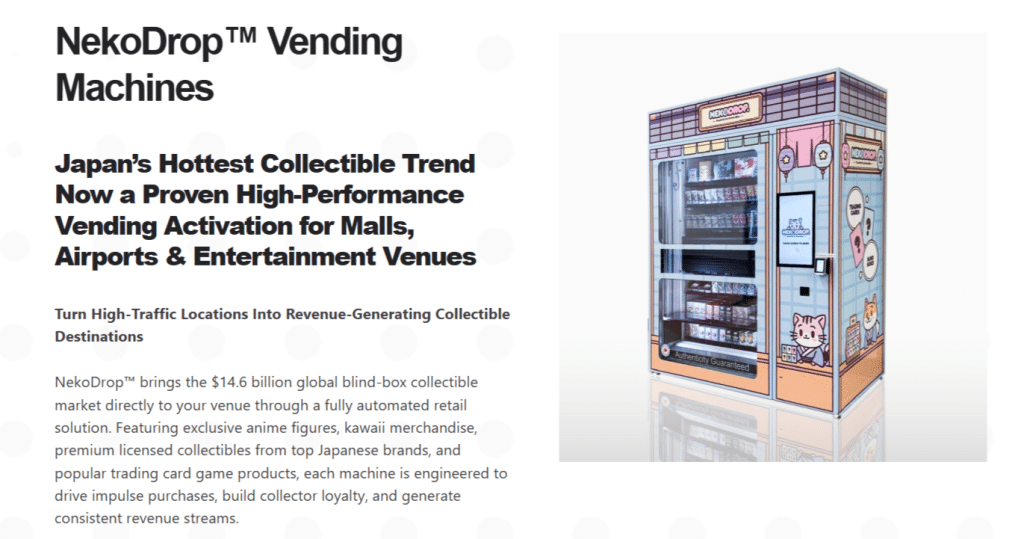
The landscape of automated retail is shifting away from the era of lukewarm coffee and expired candy bars toward a more lucrative, engaging experience. For entrepreneurs looking to capitalize on modern consumer behavior, NekoDrop offers a sophisticated entry point into the high-margin world of designer toy vending. Unlike traditional machines that rely on low-cost, low-reward snacks, this model leverages the booming “blind box” culture to turn small footprints into high-revenue retail hubs. By focusing on collectibility and a seamless user experience, the brand has effectively redefined what passive income looks like in the twenty-first century, moving beyond the limitations of perishable goods and into the realm of high-demand lifestyle products.
The Evolution of the Vending Industry
For decades, the vending machine industry was synonymous with convenience at the cost of quality. Machines were stocked with items that had short shelf lives and razor-thin profit margins. An entrepreneur in the traditional snack space would have to sell hundreds of bags of chips just to cover the overhead of fuel and labor required to restock the machine. However, the rise of the “kidult” economy (adults who purchase toys and collectibles) has created a vacuum in high-traffic locations like malls, airports, and entertainment centers.
Modern consumers are no longer just looking for a quick bite; they are looking for an experience. This is where the collectible vending model excels. Instead of a transaction fueled by hunger, the transaction is fueled by curiosity, the thrill of the hunt, and the desire for social status through collection. This shift represents a fundamental change in the ROI potential of a single square meter of floor space.
The Psychology of the Blind Box
At the heart of this retail revolution is the “blind box” phenomenon. For the uninitiated, a blind box is a type of packaging that keeps its contents hidden. A customer knows which series or collection they are purchasing from, but they do not know which specific figure they will receive until they open the box.
This “mystery” element taps into the same psychological triggers as gamification. The dopamine hit associated with the “reveal” creates a powerful incentive for repeat purchases. If a customer is seeking a “chase” figure (a rare variant found in only a small percentage of boxes), they are likely to purchase multiple units in a single sitting. In a high-traffic environment, this translates to a significantly higher Average Order Value (AOV) compared to a machine selling sodas or granola bars.
From an entrepreneurial standpoint, this psychology is a goldmine. It transforms a one-off customer into a recurring one. The social aspect also cannot be ignored; collectors often film “unboxing” videos for social media, providing free organic marketing for the machine and the location it occupies.
High Margins vs. Traditional Snacks
When evaluating a passive income opportunity, the most critical metric is the margin. Traditional vending operates on a high-volume, low-margin scale. The cost of goods sold (COGS) for a soda might be fifty cents, with a retail price of two dollars. After accounting for credit card processing fees, electricity, and commissions to the venue, the net profit is minimal.
Collectibles, such as those found in high-end vending machines, operate on a completely different financial plane. A designer vinyl figure may retail for fifteen to twenty-five dollars. While the COGS is higher than a bag of chips, the net profit per unit sold is exponentially greater. Furthermore, these products do not expire. There is no risk of “shrinkage” due to spoilage, which is a constant headache for traditional vending operators.
For venue owners, this means a more premium aesthetic and a higher commission potential. A mall or an airport would much rather host a sleek, brightly lit machine that draws a crowd of enthusiastic shoppers than a noisy, dated machine that sells sugary drinks.
The “Done-For-You” (DFY) Advantage
The biggest barrier to entry for many aspiring entrepreneurs is the “active” part of “passive income.” Finding reliable suppliers, negotiating with landlords for placement, and managing the logistics of inventory can quickly turn a side hustle into a full-time job. This is where the Done-For-You (DFY) business model changes the game.
Under a DFY arrangement, the heavy lifting is handled by experts. This includes:
- Site Selection: Utilizing data-driven analytics to place machines in the highest-traffic areas where the target demographic (Gen Z and Millennials) is most active.
- Inventory Management: Sourcing the most popular collectible brands and ensuring the machines are always stocked with the latest series.
- Maintenance and Support: Handling the technical side of the machines so the owner doesn't have to worry about hardware failures or software glitches.
For the passive income seeker, this model allows for true scalability. It is much easier to own ten machines when you aren’t the one driving around to restock them. This allows the entrepreneur to focus on the “big picture” of their portfolio while the machines generate revenue around the clock.
Why High-Traffic Venues are Moving Toward Collectibles
Malls and airports are currently in a state of reinvention. With the rise of e-commerce, physical spaces must offer something that a website cannot: immediate gratification and a sensory experience. High-end collectible machines act as a destination rather than just a convenience.
In an airport, a traveler might buy a blind box to pass the time during a layover or as a last-minute gift for a child. In a mall, a group of friends might gather around the machine to see what each other “pulled” from their boxes. This level of engagement increases “dwell time” in the venue, which is a metric that landlords value highly. Because these machines have a small footprint but a high visual impact, they provide an incredible return on “per-square-foot” revenue for the property owner.
Sustainability and the Future of Automated Retail
As we look toward the future, the trend of automated retail is only going to accelerate. However, the winners in this space will be those who offer premium products and unique experiences. The move toward collectibles is also more sustainable for the operator. Fewer trips to the machine mean a smaller carbon footprint and lower fuel costs. The durable nature of the products means less waste.
Furthermore, the integration of digital payments and real-time inventory tracking allows owners to monitor their business from a smartphone. You can see exactly which items are selling the best and when a machine needs attention without ever having to step foot on-site.
Conclusion: A New Era for Entrepreneurs
The transition from “vending” to “automated retail” is more than just a change in terminology. It represents a sophisticated approach to commerce that aligns with modern consumer habits. By combining the high-margin nature of collectibles with the psychological pull of the blind box and the ease of a DFY business model, entrepreneurs are finding a path to passive income that is both stable and exciting.
For those standing on the sidelines of the passive income world, the message is clear: the most profitable opportunities are no longer found in the snack aisle. They are found in the intersection of pop culture, technology, and strategic placement. As the retail landscape continues to evolve, those who embrace the collectible revolution will be the ones who see the highest returns on their investment, transforming high-traffic corners into miniature powerhouses of profit.