

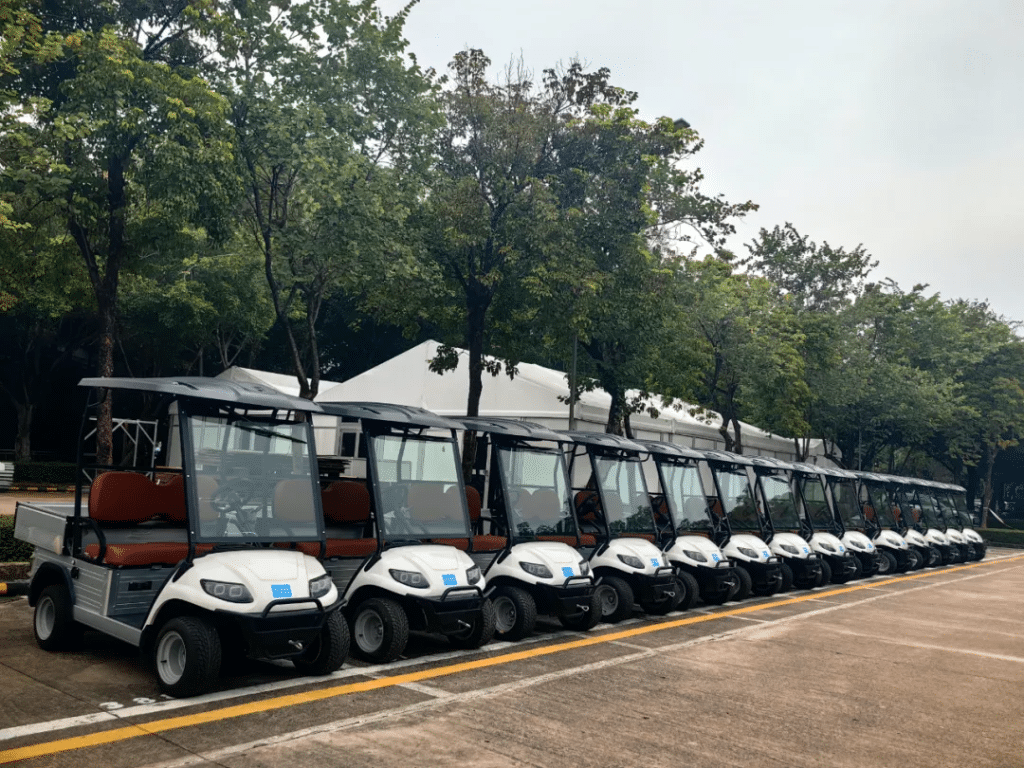
For managers at golf courses and resorts, vehicle uptime is vital for operational efficiency. While modern units are built for durability, they eventually require technical attention.
Mastering the identification of common electric golf cart problems is essential for any professional managing a fleet of low-speed vehicles. This guide explores the five most frequent issues and provides clear, actionable solutions.
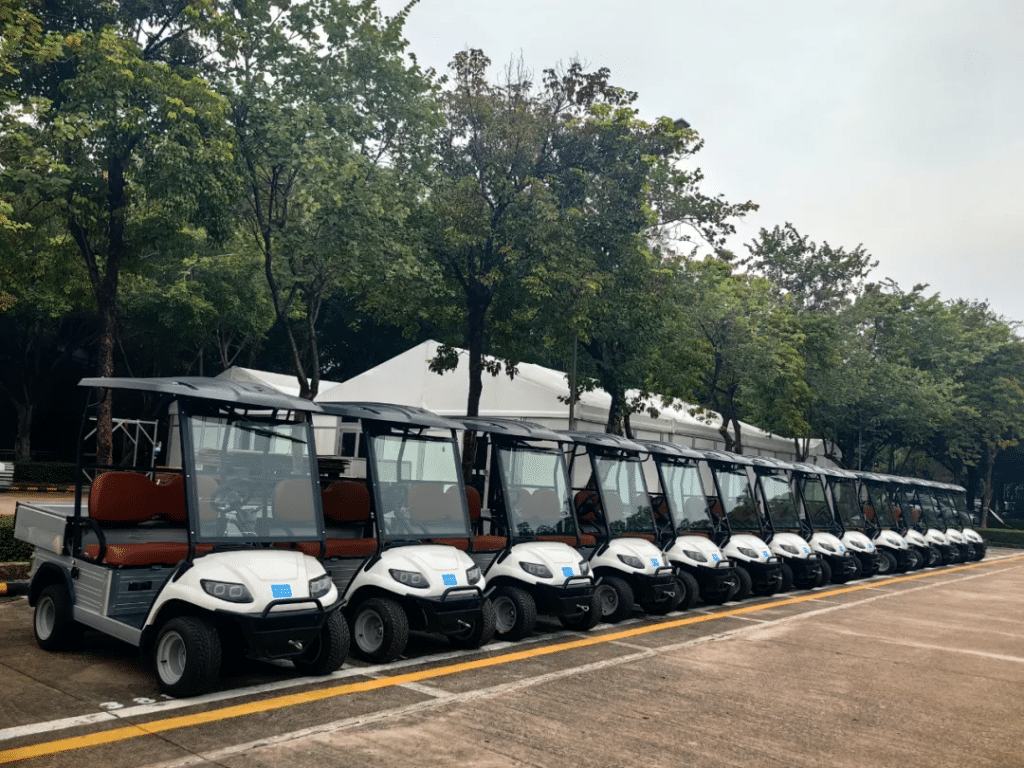
Troubleshooting Electric Golf Cart Problems
Here are the five most common electric golf cart issues you are likely to encounter.
- The Cart Won’t Start or Has Low Power (Battery Issues)
The battery is the “heart” of the vehicle. In B2B environments where carts are in constant use, battery degradation is the primary cause of downtime.
- Symptoms:
The cart feels sluggish on inclines, has a significantly reduced range, or fails to power on despite being charged.
- Fix:
Start by checking the voltage with a multimeter. For a 48V system, a full charge should read between 50V and 52V; a 72V system should read around 84V.
If you use lead-acid batteries, ensure distilled water levels cover the plates but do not overflow. Check terminals for “white or green” corrosion and clean them with a baking soda and water solution.
For lithium-ion users, check the Battery Management System (BMS) for error codes. If the battery is over four to six years old and cannot hold a steady voltage, a full pack replacement is usually required.
- Cart Doesn’t Start, but You Hear a “Click” (Solenoid Failure)
The solenoid acts as the “nerve center” switch, allowing high-current electricity to flow from the battery to the motor.
- Symptoms:
When you press the accelerator, you hear a distinct “clicking” sound, but the vehicle remains stationary.
- Fix:
A click indicates the control circuit is working, but the internal contacts of the solenoid may be burnt or carbonized. Use a multimeter to measure the voltage across the two large terminals while the solenoid is engaged. If there is no power passing through when the accelerator is pressed, the solenoid is faulty. In most cases, a faulty solenoid must be replaced to restore reliable operation.
- No “Click” and Cart Won’t Start (Ignition and Electrical Switch Issues)
If there is total silence when the pedal is depressed, the problem likely lies in the activation circuit rather than the powertrain.
- Symptoms:
No sound, no movement, and the dash lights may or may not function.
- Fix:
First, check the battery condition, and then verify that the “Run/Tow” switch is in the “Run” position. Next, inspect the master fuse—usually located near the controller or battery bank. If the fuse is intact, the problem may be the key switch or the pedal micro-switch. These small switches can oxidize over time. Test for continuity using a multimeter; if the switch does not close the circuit when activated, it requires replacement.
- Jerky or Inconsistent Speed (Speed Controller or Motor Issues)
The controller is the “brain” that regulates power delivery. Inconsistent acceleration is often a communication error between the pedal and the controller.
- Symptoms:
The cart “stutters” during takeoff, reaches a sudden speed limit, or stops unexpectedly.
- Fix:
Many modern carts have a reset button on the motor itself (often red). Try pressing this button first. If that doesn’t work, inspect the speed controller for any signs of overheating or loose wiring. The controller manages how much voltage goes to the motor; if it’s failing, it may need professional recalibration or replacement to ensure smooth acceleration.
- Cart Won’t Go Forward or Reverse (FNR Switch Failure)
The Forward-Neutral-Reverse (FNR) switch is one of the most heavily used mechanical components in a fleet vehicle.
- Symptoms:
The cart moves perfectly in one direction but is completely dead in the other.
- Fix:
This is typically a failure of the micro-switches inside the FNR housing. Inspect the wiring behind the switch for loose or melted connections. You can test the continuity of the switch in both positions; if one side fails to show continuity, the switch assembly or the specific micro-switch needs to be replaced.
Essential Electric Golf Cart Maintenance Tips
To mitigate recurring electric golf cart issues, you can maintain your fleet by adhering to the following tips:
- Battery Care
Proper battery care is essential for maintaining golf cart performance and extending battery life. Recharge the golf cart after every use instead of allowing deep discharge, and always use the correct charger for your battery type.
For flooded lead-acid batteries, check water levels monthly and add only distilled water as needed. Keep battery terminals clean, dry, and corrosion-free to ensure efficient power delivery and reliable operation.
- Tire Pressure
Maintaining correct tire pressure improves ride comfort, steering control, and driving range. Most golf cart tires operate best between 15 and 25 psi, with 20–22 psi common for standard use—always follow manufacturer recommendations.
Check tire pressure at least monthly and adjust based on driving conditions and tire type. Underinflated tires reduce efficiency and handling, while overinflated tires cause uneven wear and a harsher ride.
- Brake Checks
Inspect brakes every 3–6 months, or sooner if you notice decreased stopping power, noise, pulling, or a soft pedal. Check pads or shoes for wear and inspect cables or hydraulic components for damage. After any brake service, test braking at low speed in a safe area.
- Cleaning and Storage
Clean the cart regularly using mild soap and water, drying thoroughly to prevent corrosion. Avoid high-pressure water near electrical components. For storage, fully charge batteries, maintain tire pressure, store in a dry, ventilated space, and use a breathable cover for protection.
Reliable Electric Golf Cart Manufacturer Recommendation
To reduce the common electric golf cart problems, fleet managers must prioritize superior engineering from the very start. CENGO is a premier global manufacturer whose products fully comply with international safety standards, including CE, DOT, VIN, and LSV certifications, as well as ISO45001 and ISO14001.
The brand’s reliability is evidenced by high-profile deployments, such as providing customized vehicles for the 2025 Aramco Team Series in Shenzhen. For the National Games across Guangzhou, Shenzhen, Hong Kong, and Macau, CENGO developed long-endurance batteries that support 12 hours of high-frequency operation and offer a cycle life of over 3,000 times—exceeding industry standards by 40%. In the Guangzhou division alone, CENGO sightseeing vehicles achieved 1,200 hours of zero-fault operation.
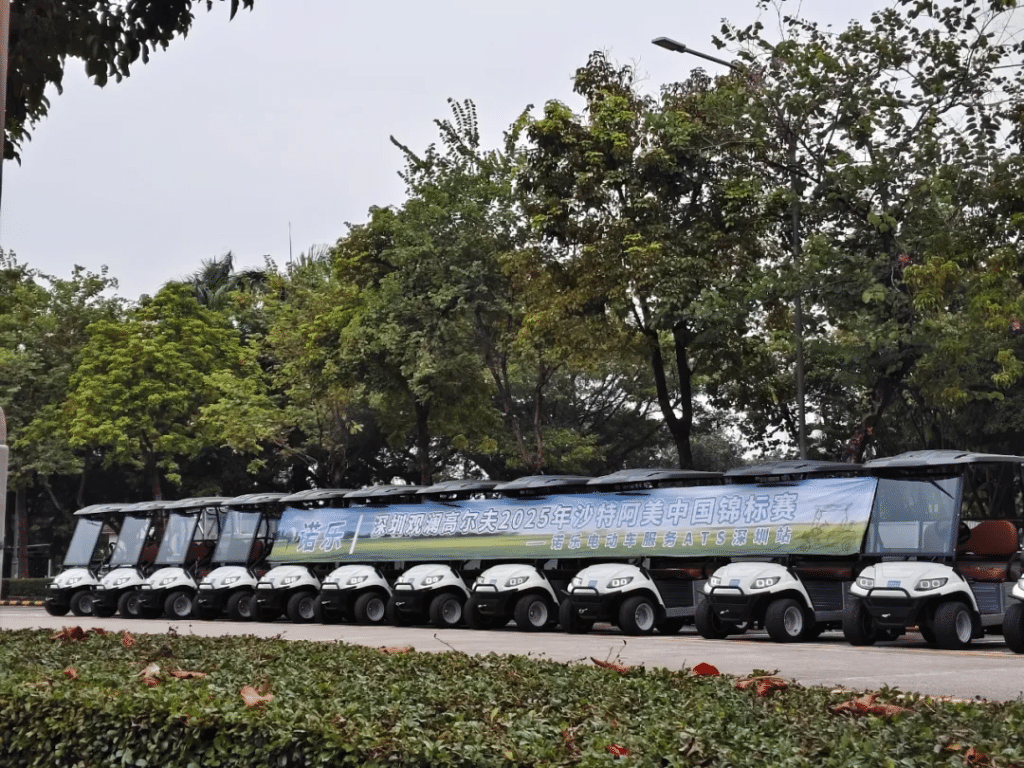
CENGO also excels in tailoring products for diverse markets, such as optimizing battery cooling systems for the Middle Eastern heat and enhancing safety designs for European compliance. With a recent 100-unit order from Saudi Arabian clients at the 138th Canton Fair, the company now exports to over 20 countries.
If you are looking for reliable electric golf carts, this golf cart manufacturer from China could be your ideal partner.
Conclusion
While electric golf cart problems are inevitable over time, proactive maintenance and quality manufacturing significantly reduce their impact. For dependable electric golf carts built to international standards and real-world conditions, you may reach out to CENGO for detailed product information and support!