

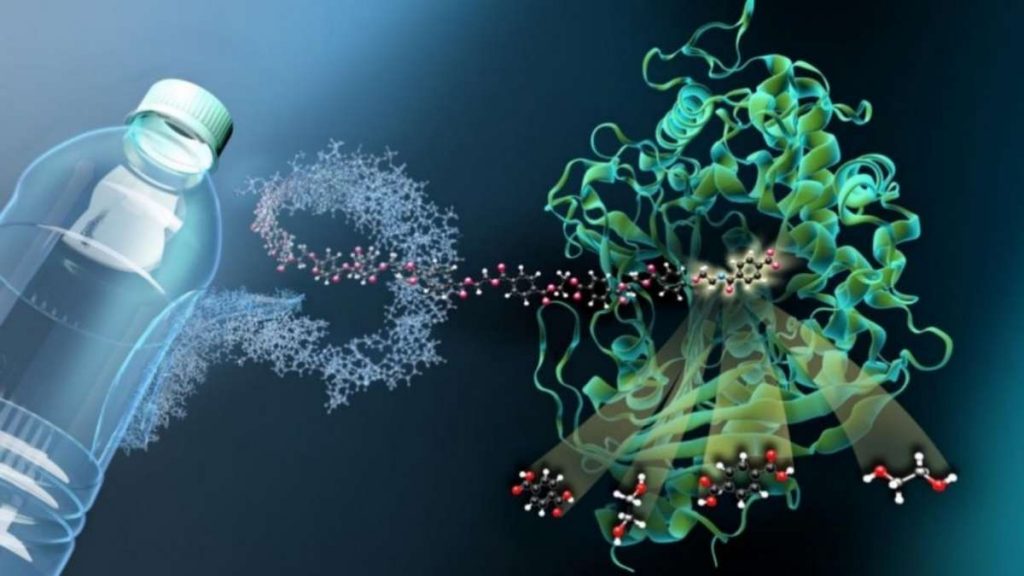
Bacteria, it turns out, might just be the simple solution to our pollution crisis. Certain variants have exhibited plastic-eating capabilities, and this shows immense promise for the future of pollution management. The scientific discovery seems to have given the world hope in a moment that it seemed certain that the ocean would revolt, and we would eventually drown in a sea of our own plastic.
How was this Discovered?
This plastic-eating bacteria was first discovered by scientists in Japan. They noticed the presence of a bacteria that was able to erode some of the plastic that they were examining at a bottle recycling facility near Osaka. It should be noted that this type of bacteria – Ideonella sakaiensis – is only able to erode a specific type of plastic. This plastic is PET, and it is the most common type of plastic used to manufacture bottles.
This one discovery alerted scientists all over the world to the potential for bacteria and fungus to function as potent waste-disposal mechanisms. Waves of excitement and inspiration quickly rippled through the scientific and environmentalist community.
A Series of Additional Discoveries
In 2017, a year after the discovery of the Ideonella sakaiensis bacteria, scientists in Islamabad, Pakistan, discovered a fungus that was capable of ‘eating’ the plastic that populated a local waste disposal site. In the same year, a similar discovery was made in Houston, Texas, at an oil site.
Last year, in 2020, samples were collected at a waste disposal site in Leipzig. The evidence found here echoed the previous discoveries in that there was clear evidence of plastic-eroding bacteria. In this case, the bacteria were able to erode polyurethane plastic. These discoveries inspire hope that an array of bacteria and fungi will be discovered that can consume all forms of plastic – not just PET.
We Still Have Much to Learn
While these discoveries seem promising – and they are – we still have a long way to go. We should bear in mind that the bacteria that decomposes fruit and vegetables have had thousands to millions of years to evolve. On the evolutionary timeline, plastic is a new-born creature. Therefore, the bacteria that has evolved to decompose plastic takes an unpractically long time to do so.
If these bacteria are to be helpful in the fight against plastic, we need to pull off a serious feat of bioengineering. The scientific community is confident that this is possible. The main issue here is speed. These bacteria need to be tweaked to erode their respective plastics at a rate that is thousands of times faster than they currently are.
Although there are currently no large-scale establishments for the enzymatic decomposition of these plastics, there are hopes of a PET-focussed plant to be built over the next year. Anyone keen on saving the planet will want to register right now when these plants swing into action. Carbios, the company spearheading the endeavour, have partnered with major companies such as PepsiCo in an attempt to support their move towards more sustainable forms of packaging creation and disposal. A long road lies ahead of us – we just need a little perseverance, passion, and ingenuity.