

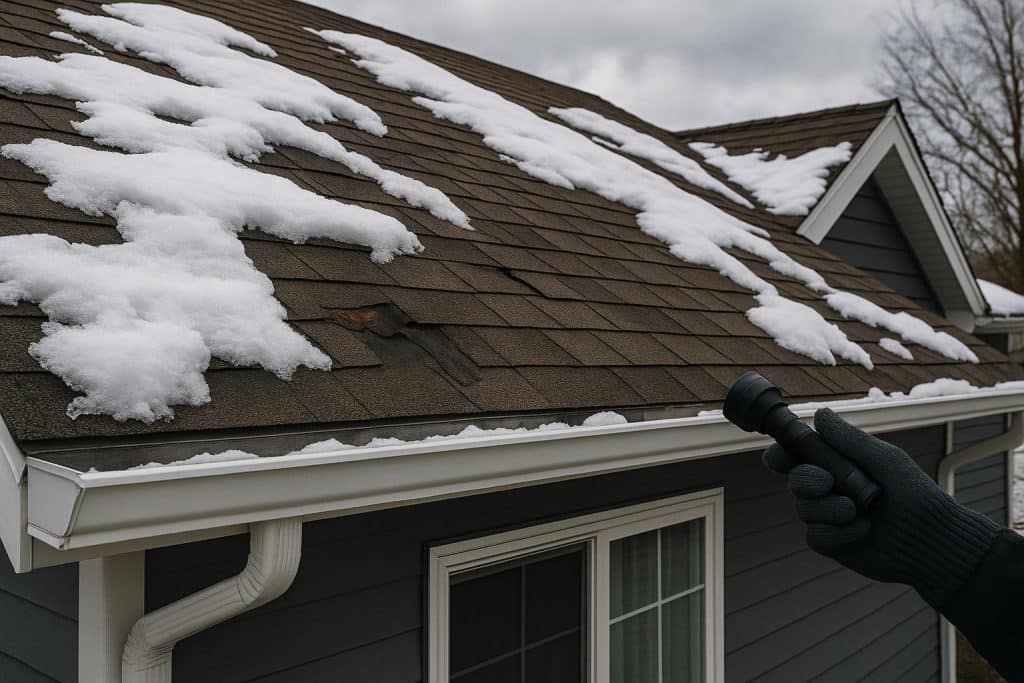
Utah roofs have to handle more than ordinary seasonal wear. Heavy snow can place additional weight on a roofing system, while strong winds can loosen shingles, damage flashing, and expose areas that were previously protected. The effects are not always obvious from the ground, either. Some damage only becomes apparent after snow melts or moisture works its way beneath the roofing materials.
A careful inspection after significant winter weather can help homeowners identify problems early. While some checks can be performed safely from the ground or inside the attic, roof surfaces should generally be left to trained professionals, particularly when they are icy or wet.
Start With a Ground-Level Inspection
After a storm, walk around the property and look at the roof from several angles. Binoculars can make it easier to inspect higher sections without climbing a ladder.
Look for shingles that appear lifted, curled, cracked, or missing. Wind can disturb shingles along roof edges, ridges, and exposed slopes. You may also notice roofing materials, flashing, or other debris on the ground that came from the roof.
Pay particular attention to areas where the roof changes direction or meets another structure. These locations often have flashing and other components designed to manage water, making them important points to evaluate after severe weather.
Check for Signs of Snow-Related Stress
Snow does not automatically damage a roof, but heavy accumulation can increase the load on the structure. The risk depends on factors such as snow depth, moisture content, roof design, and the condition of the existing roofing system.
One warning sign is a noticeable change in the roofline. Sagging or uneven sections can indicate structural stress or moisture-related deterioration and should be professionally evaluated.
Ice buildup can create another concern. When melting snow encounters colder roof edges, water may refreeze and interfere with normal drainage. Repeated freeze-thaw cycles can also affect roofing materials and flashing.
Homeowners should avoid standing beneath areas where substantial snow or ice has accumulated, particularly if there are signs of movement or structural distress.
Look Closely at Gutters and Downspouts
Gutters can provide useful clues about what happened during a storm. Check whether they remain securely attached and whether downspouts are clear of snow, ice, leaves, and roofing debris.
A section of gutter that has pulled away from the roofline may have been affected by heavy ice or snow. Granules collecting in gutters can also indicate shingle deterioration, although some granule loss is normal over the life of an asphalt roof.
Proper drainage matters after snow begins to melt. If water cannot move efficiently away from the roof, it may collect around vulnerable areas and increase the possibility of leaks.
Inspect the Attic for Hidden Moisture
The attic is often one of the best places to look for evidence that a storm has affected the roof. From inside, check for damp insulation, water stains, darkened wood, or visible moisture around roof penetrations.
A leak does not always appear directly beneath the damaged section of roofing. Water can travel along decking or framing before becoming visible, so the location of an interior stain may not identify the actual entry point.
Musty odors or unusually damp insulation can also justify further investigation, even when no active dripping is present.
Examine Flashing and Roof Penetrations
Chimneys, vents, skylights, and plumbing penetrations create transitions where water needs to be carefully directed away from the structure. Wind and repeated temperature changes can loosen flashing or deteriorate sealants around these areas.
These components deserve attention after severe weather because a small opening can allow water to enter without producing obvious exterior damage. If flashing appears displaced or damaged, it is better to have the area assessed rather than attempting a temporary patch without identifying the underlying issue.
When Should You Arrange a Professional Inspection?
Minor debris or a few superficial signs may not indicate serious damage, but active leaks, missing shingles, exposed decking, significant flashing damage, or a visibly sagging roof deserve prompt attention.
For homeowners who need Roofing repair in Salt Lake City, a professional inspection can determine whether the problem is limited to a specific area or whether the storm has affected a larger portion of the roofing system.
What About Small Leaks?
A small leak should not necessarily be considered harmless. Water can gradually affect insulation, decking, drywall, and structural wood. If a ceiling stain appears after heavy snow or wind, documenting the location and arranging an inspection can help establish whether moisture is still entering the home.
A Post-Storm Check Can Prevent Larger Problems
Heavy snow and wind do not always leave dramatic evidence behind. Some of the most important warning signs are subtle: a displaced shingle, loose flashing, damp attic insulation, or a gutter that no longer sits correctly.
Checking these areas after significant Utah weather gives homeowners an opportunity to catch damage while it is still manageable. When something looks unusual, a professional assessment is usually safer and more informative than climbing onto a potentially hazardous roof yourself.