

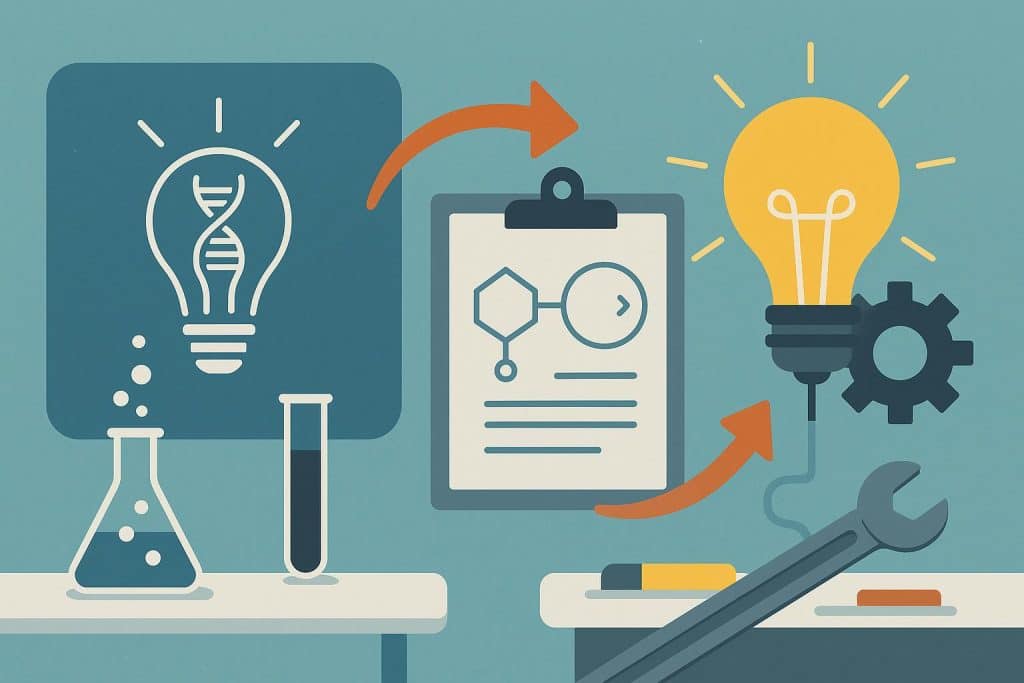
A scientific idea can look deceptively simple when it’s written down. There’s a problem to solve, a promising compound, a clever mechanism, or a new way of approaching something that existing products don’t do particularly well. On paper, it can all seem beautifully logical. The hard part is turning that idea into something that can actually be tested, manufactured, evaluated and, eventually, used in the real world.
That gap between discovery and practical application is where a lot of the difficult work happens. Researchers, biotech companies and healthcare innovators may need specialised pharmaceutical development services to help move a project from an early concept into a more structured development pathway. It’s rarely a straight line, and there are usually far more decisions involved than outsiders ever see.
A Good Idea Still Needs Evidence
Science doesn’t move forward because something sounds convincing. It moves forward because the evidence starts to hold up. An early-stage idea might begin with laboratory findings or a theoretical mechanism, but that’s only the start. Researchers need to understand how a substance behaves, whether it can be produced consistently, how stable it is, what dose might be appropriate, and whether it performs the way they expect under controlled conditions.
Each step creates new questions. Sometimes the results support the original idea. Sometimes they force the team to change direction. Occasionally, they reveal that the whole project needs to be reconsidered. That can feel frustrating, but it’s also the point of the process. Development is supposed to test assumptions rather than protect them.
Formulation Is More Complicated Than It Sounds
It’s easy to think that once you have an active ingredient, the rest is mostly packaging. In reality, formulation can be one of the most important parts of development. A compound might work in theory but be difficult to absorb, unstable in certain conditions, unpleasant to take, or hard to manufacture at a consistent quality. The way it’s delivered matters, and tablets, capsules, liquids, topical products and other dosage forms all come with different challenges.
Even seemingly small choices can affect performance. The excipients used, the manufacturing method, storage conditions and packaging can all influence how a product behaves over time. That means development often involves balancing science with practicality. The best formulation isn’t just the one that performs well in a lab; it also needs to be reproducible, stable and suitable for the people who may eventually use it.
Regulation Shapes The Journey
Pharmaceutical development doesn’t happen in a vacuum. Every stage sits within a regulatory framework designed to protect safety, quality and reliability. That means documentation matters. Testing methods need to be defensible. Manufacturing processes need to be controlled. Changes need to be recorded. Data has to be organised in a way that allows regulators and other stakeholders to understand what was done and why.
For small companies and emerging research teams, this can be one of the biggest challenges. They may have excellent scientific expertise but less experience navigating the development requirements around that science. Building regulatory thinking into the project early can save a lot of difficulty later, because it’s much easier to collect the right evidence as you go than to discover halfway through that an important piece of information is missing.
Development Is A Team Sport
Very few pharmaceutical projects are carried by one person or even one discipline. Chemists, formulation scientists, analytical specialists, regulatory professionals, manufacturers, clinicians and project managers may all be involved at different stages. That collaboration matters because each group sees the project differently. A scientist may be focused on biological activity. A manufacturer is thinking about scale and repeatability. A regulatory specialist is looking at evidence and documentation. A commercial team may be thinking about cost, timing and whether the final product solves a meaningful problem.
The challenge is getting all those perspectives to work together rather than pulling the project in different directions.
Failure Isn’t Always Wasted Work
One of the least glamorous truths about scientific development is that not every promising idea becomes a successful product. Some projects stall because the science doesn’t translate. Others become too difficult to manufacture, too expensive to pursue, or less compelling once better data emerges.
That doesn’t necessarily make the work pointless. A failed formulation can reveal something important about stability. An unsuccessful trial can show that a mechanism doesn’t work as expected. A development problem can push a team toward a better solution. Progress in science is often built from results that weren’t the ones people hoped for.
Useful Science Takes Patience
The journey from idea to application is rarely quick, neat or predictable. It’s a process of testing, refining, documenting, questioning and sometimes starting again. That may not sound as exciting as the initial breakthrough, but it’s where a promising concept becomes something real. Good science creates possibilities, and careful development is what gives those possibilities a chance to become useful.