

Jose M. Gracia Harvesting, Inc. has operated as a large-scale agricultural labor contractor since 1992, supplying American farmers, particularly in the eastern United States, with a legal workforce through the H-2A visa program. Under the leadership of Jose M. Gracia, the company manages a fleet of more than 300 vehicles that transport farmworkers and move produce from fields to processing and storage locations, including specialized converted buses designed to haul watermelons and cantaloupes in shaded, secure environments. The company trains its workers on field sanitation requirements, tractor and machinery safety, heat stress and environmental hazard awareness, and emergency response procedures across crops such as tobacco, sweet potatoes, watermelons, strawberries, and cantaloupes. That operational focus on vehicle safety and worker training reflects the broader transportation safety practices seasonal agricultural operations rely on to protect their workforce.
Transportation is an essential part of seasonal agricultural work. Workers may travel between housing and fields or ride in vehicles as part of their daily jobs. Because agricultural operations often involve long days, changing field conditions, and large numbers of workers and vehicles, transportation safety deserves the same attention as any other workplace hazard.
The risks are significant. Transportation incidents are a leading cause of fatal injuries among agricultural workers. The National Institute for Occupational Safety and Health (NIOSH) identifies transportation incidents as a major source of death in agriculture, forestry, fishing, and hunting, an industry group that had a fatal injury rate several times higher than the rate for all U.S. industries in 2022.
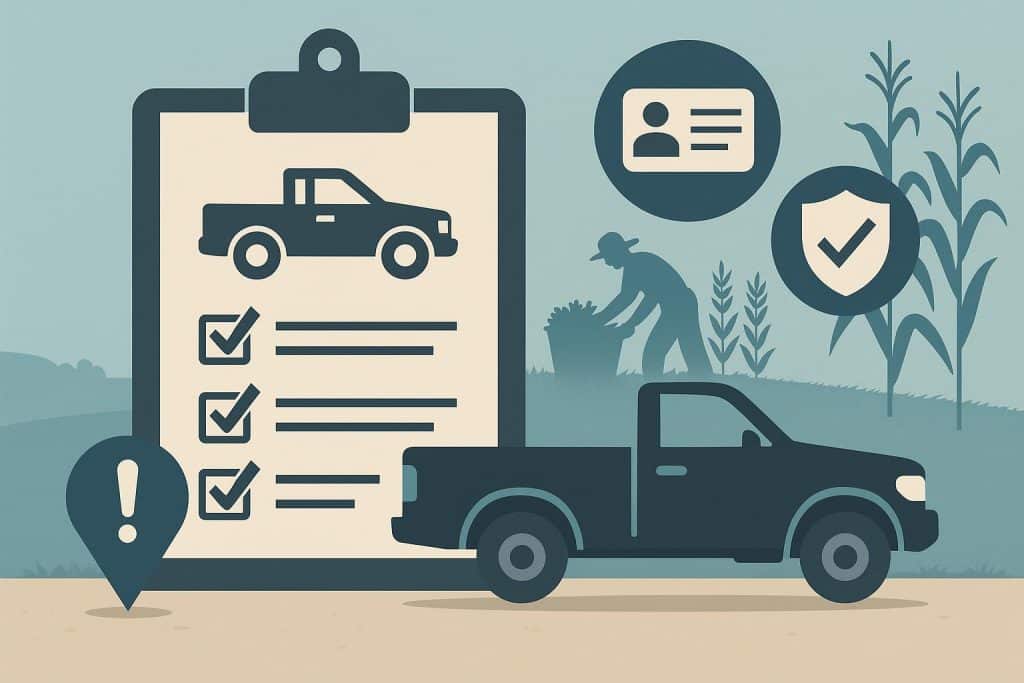
Safe transportation starts with the vehicle itself. Before workers are transported, vehicles should be inspected to make sure essential safety equipment and systems are functioning properly. Tires, brakes, lights, mirrors, seat belts, and other equipment should be checked regularly.
The U.S. Department of Labor provides a transportation safety checklist covering vehicle condition, licensing, and insurance to help agricultural employers meet applicable requirements.
Drivers have an equally important responsibility. Anyone operating a vehicle used to transport agricultural workers should have the appropriate driver’s license and understand the vehicle’s operating procedures. Drivers should also be trained to account for conditions common to agricultural transportation, including rural roads, changing weather, limited visibility, and interactions with farm machinery.
Fatigue can also become a concern during demanding seasons, making reasonable scheduling and attention to driver readiness important parts of a broader safety program.
Safe transportation does not end when a vehicle reaches the field. Workers frequently operate on foot around trucks and tractors. Drivers should know where workers are located before moving a vehicle, while workers should stay alert around vehicles and avoid entering areas where they may not be visible to the operator.
Communication between drivers, supervisors, and field workers can help reduce confusion when vehicles need to move through busy work areas. NIOSH specifically recommends caution around agricultural vehicles, particularly when visibility is limited during early morning or evening hours.
Agricultural employers also need to understand the legal requirements that apply to transporting seasonal workers. The Migrant and Seasonal Agricultural Worker Protection Act establishes transportation safety standards for covered agricultural workers.
Depending on the circumstances, employers and other parties providing transportation may have to comply with applicable federal and state vehicle safety requirements, as well as requirements involving drivers and insurance. Employers should review current federal requirements before each season because transportation rules can depend on the type of vehicle, who is providing the transportation, and where the workers are being transported.
Training is one of the most effective ways to reinforce these practices. Seasonal workers may be returning employees or completely new to an operation, so important procedures should not be assumed to be understood.
Training should explain how workers are expected to behave around vehicles and what to do if a safety problem is identified. Repeating key procedures throughout the season can reinforce good habits, particularly when field conditions or work assignments change.
A strong transportation safety program treats every trip as an opportunity to prevent an accident. Regular inspections and qualified drivers are important, but safety also depends on workers understanding how to move safely around vehicles and knowing when to speak up about a potential hazard. Consistent attention to these practices can help seasonal agricultural workers arrive at work and return home safely.
About Jose M. Gracia Harvesting, Inc.
Jose M. Gracia Harvesting, Inc. has provided manual agricultural labor to American farmers since 1992, primarily in the eastern United States. Under the leadership of Jose M. Gracia, the company supplies a legal workforce through the H-2A visa program and manages a fleet of more than 300 vehicles that transport farmworkers and produce. The company trains workers on field sanitation, machinery safety, and emergency response procedures across crops including tobacco, sweet potatoes, watermelons, and strawberries.