

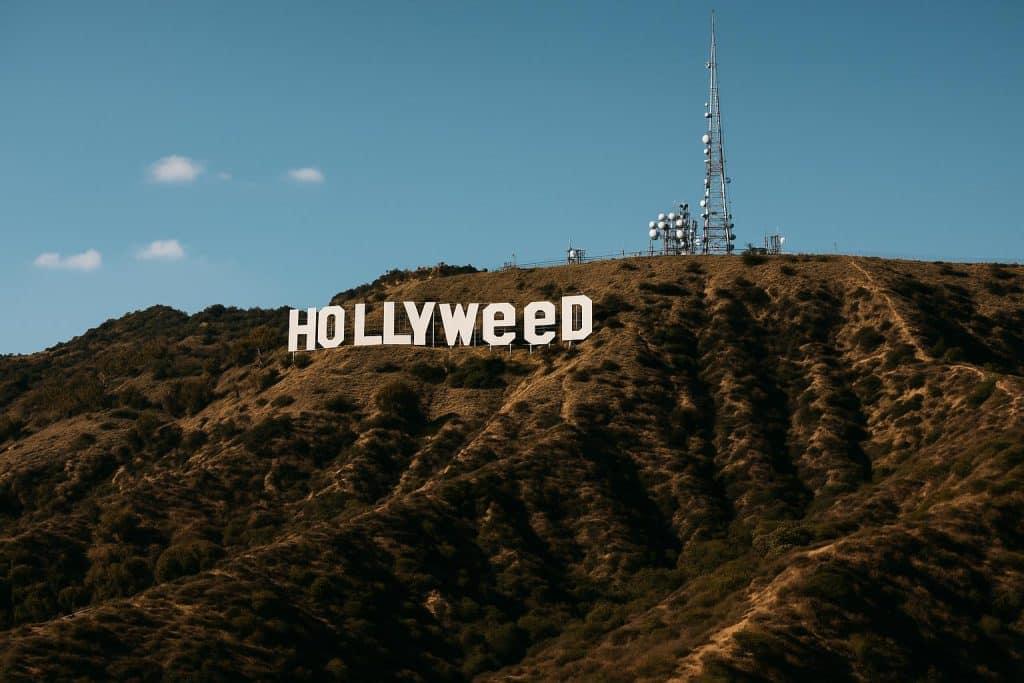
LA’s a city where art, entertainment, fashion, and cultural experimentation just kind of blur together, always has been. Nowhere makes that clearer than the Hollywood sign — that instantly recognizable landmark people keep turning into a canvas for public expression, again and again. In 2017, one temporary alteration turned the familiar name into a phrase that ended up taking on a life of its own: “Hollyweed.”
These days the name’s tied to more than just that one LA moment. Apparel, graphics, merchandise, a whole lifestyle aesthetic. So really, this isn’t a story about one sign getting altered — it’s a story about how an image travels from a local art intervention straight into popular visual culture.
The 2017 Moment That Put Hollyweed in the Spotlight
New Year’s Day, 2017. LA residents wake up, and the Hollywood sign’s reading “HOLLYWeeD.” According to the Los Angeles Times, someone had placed tarpaulins over the sign’s two O’s, turning them visually into E’s. Security footage caught a person climbing the hillside and reaching the sign in the early morning hours.
Turned out to be Pomona artist Zachary Cole Fernandez, working under the name “Jesus Hands” (or “Jesushands,” depending who you ask). Fernandez told reporters he’d done it with creative partner Sarah Fern. The sign wasn’t damaged, for what it’s worth — though climbing up there unauthorized still landed him a trespassing case.
News and social media picked it up fast. What could’ve easily just been a one-day prank turned into a genuinely recognized piece of LA visual culture instead.
There’s an older story behind it, too. The Los Angeles Times reported that Fernandez and Fern called their work an homage to Daniel Finegood — a Cal State Northridge student who’d pulled off nearly the same trick back in 1976, changing the sign to “HOLLYWeed” on New Year’s Day as an art-class project about scale and public imagery.
Worth knowing that history, honestly, because it means “Hollyweed” didn’t just appear out of nowhere in 2017. It was already plugged into a tradition of messing with the Hollywood sign as a form of artistic or cultural commentary.
When a Viral Image Becomes an Identity
The 2017 version didn’t last long physically, but the image stuck around way longer than the tarps did. Hollyweed fused two things already deeply tied to LA — Hollywood’s global entertainment identity, and California’s long history with cannabis culture.
Part of why it worked so well: no explanation needed. You saw it, you got it instantly. One familiar landmark, one altered word, and suddenly this established symbol felt irreverent, current, distinctly Californian.
That kind of simplicity’s exactly what makes something travel in visual culture. A recognizable word can turn into a logo, a graphic, a print, a piece of clothing — and it still drags the memory of the original moment along with it wherever it goes.
From Public Art to California-Inspired Streetwear
Going from viral sign moment to actual apparel follows a pretty well-worn path in streetwear, really. Cultural references that start as images, jokes, art pieces, or internet flashpoints have a habit of eventually becoming something wearable.
Hollyweed’s current lineup shows exactly that — graphic tees, hoodies, crewnecks, sweatpants, hats, socks. The Hollyweed name and sign imagery show up alongside a bunch of other graphic concepts throughout the collection.
Makes total sense for streetwear specifically. Unlike traditional fashion branding, streetwear runs on cultural recognition and visual storytelling. A bold graphic communicates an attitude, a place, a reference — no lengthy explanation required.
And the whole aesthetic just fits naturally into SoCal’s visual language. LA street style’s always mixed casual clothing with loud graphics, music and entertainment references, skate culture, artistic experimentation, a real emphasis on standing out. Hollyweed sits right in the middle of all that — not off to the side somewhere.
The Hollyweed Sign as a Lasting Graphic Reference
Here’s the interesting part: the original sign modification keeps working as a reference point, even though it physically only existed for a short stretch of time.
Hollyweed’s website itself frames the 2017 event as the origin story, positioning the name as part of a lifestyle identity mixing design, cannabis, and culture together.
That gap between an ephemeral artwork and permanent merchandise says something about how modern brands preserve cultural moments now. A photo of an altered landmark circulates for a few days and fades. A graphic printed on a hoodie stays visible for years.
In a way, the clothing becomes its own kind of archive. A shirt with the Hollyweed name on it isn’t literally recreating the original event — it’s just carrying the memory of it forward, letting it keep existing.
More Than a Name
Hollyweed sticking around this long says something about how LA culture turns fleeting moments into lasting symbols. The 2017 sign alteration grew out of an older tradition of messing with the landmark for artistic and cultural expression, and its modern version now lives on through streetwear, graphic design, merchandise, and California lifestyle culture broadly.
What started as fabric covering two letters for a day became a genuinely recognizable visual identity. Hollyweed.com carries that forward now through apparel and merchandise, giving the name a physical presence that goes well beyond the hillside where it first became a thing.
The bigger story here’s very LA, honestly — a landmark, an unexpected art intervention, a viral image, and eventually a design language that traveled far past where it started. Hollyweed keeps changing shape while staying tied to the city and creative spirit that gave it meaning in the first place.